
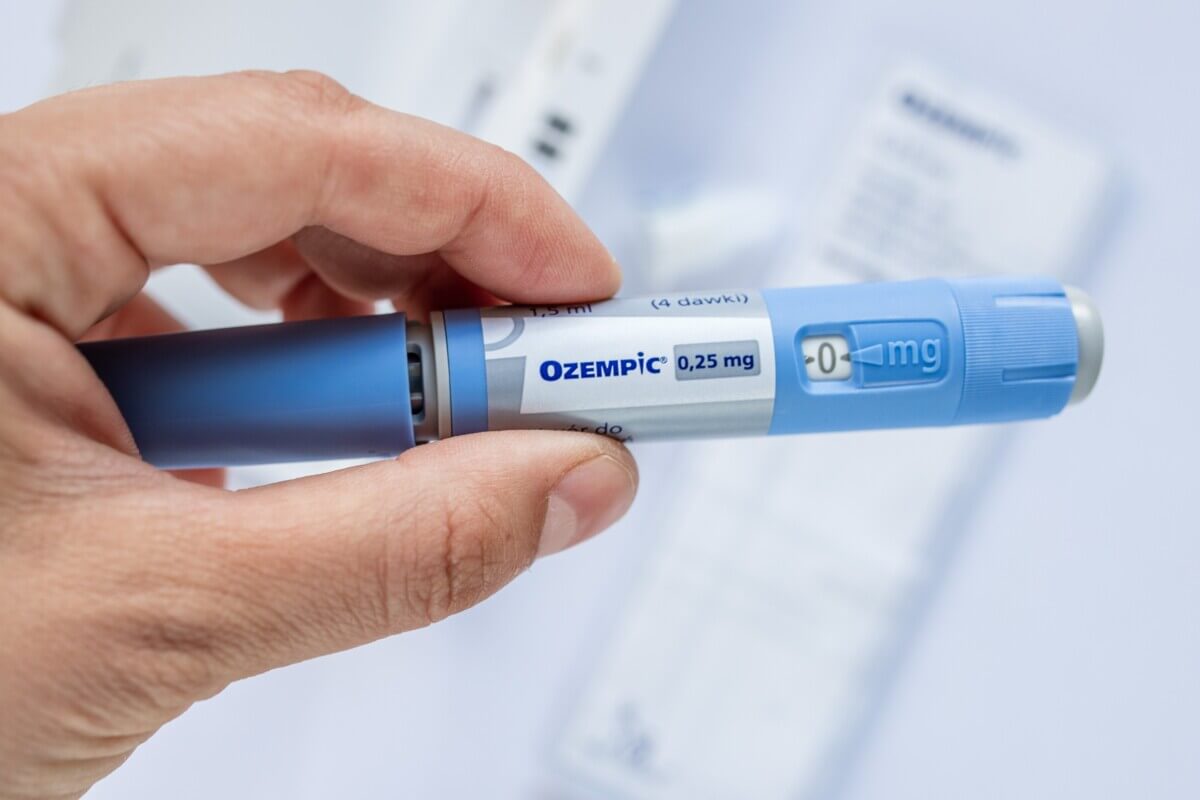
Ozempic, Wegovy, and Rybelsus all contain the same main ingredient: Semaglutide. (Photo by myskin on Shutterstock)
BOSTON — A groundbreaking new study has uncovered a potential link between a popular weight loss and diabetes medication and an increased risk of sudden vision loss. The drug in question, semaglutide, sold under brand names like Ozempic and Wegovy, has been hailed as a game-changer in the fight against obesity and Type 2 diabetes. However, this research suggests it may come with an unexpected and serious side-effect.
Semaglutide belongs to a class of drugs called GLP-1 receptor agonists. These medications mimic a hormone that helps regulate blood sugar and appetite. Since its approval by the FDA in 2017 for diabetes and later for weight loss, semaglutide has skyrocketed in popularity. By early 2023, it accounted for the highest number of new prescriptions among similar drugs in the United States.
But as more people turn to semaglutide for its benefits, researchers at Massachusetts Eye and Ear and Harvard Medical School have raised a red flag. Their study, published in JAMA Ophthalmology, suggests that patients taking semaglutide may face a significantly higher risk of developing a condition called nonarteritic anterior ischemic optic neuropathy, or NAION for short.
NAION is a serious eye condition that occurs when blood flow to the optic nerve is suddenly reduced or blocked. This can lead to rapid and often permanent vision loss, typically in one eye. While it’s the second most common cause of optic nerve-related vision loss in adults, it’s still relatively rare, affecting only two to 10 people per 100,000 in the general population.
The study’s findings are striking. Among patients with Type 2 diabetes, those taking semaglutide were over four times more likely to develop NAION compared to those on other diabetes medications. The risk was even higher for overweight or obese patients using semaglutide for weight loss – they were more than seven times more likely to experience NAION than those using other weight loss drugs.

These numbers are certainly attention-grabbing, but what do they mean in real-world terms? To put it in perspective, over a three-year period, about 9% of diabetes patients on semaglutide developed NAION, compared to less than 2% of those on other medications. For overweight or obese patients, the numbers were about 7% for semaglutide users versus less than 1% for those on other drugs.
“The use of these drugs has exploded throughout industrialized countries and they have provided very significant benefits in many ways, but future discussions between a patient and their physician should include NAION as a potential risk,” says study co-author Dr. Joseph Rizzo, the study’s corresponding author and director of the Neuro-Ophthalmology Service at Mass Eye and Ear, in a statement. “It is important to appreciate, however, that the increased risk relates to a disorder that is relatively uncommon.”
The timing of NAION onset is also noteworthy. The study found that the risk was highest in the first year after starting semaglutide, with most cases occurring within the initial 12 months of treatment.
It’s important to note that this study doesn’t prove that semaglutide directly causes NAION. Rather, it highlights the need for increased awareness and careful monitoring among both patients and healthcare providers.
The potential link between semaglutide and NAION is particularly concerning given the drug’s widespread use and growing popularity. As obesity rates continue to climb and Type 2 diabetes remains a major public health concern, medications like semaglutide play a crucial role in managing these conditions. The benefits of these drugs – including improved blood sugar control, significant weight loss, and reduced risk of heart disease – are well-documented and potentially life-changing for many patients.
As research continues, patients currently taking semaglutide should not panic or discontinue their medication without consulting their doctor. Instead, they should be aware of the potential risk and report any sudden changes in vision immediately. Healthcare providers may need to consider more frequent eye exams for patients on these medications, especially in the first year of treatment.
“Our findings should be viewed as being significant but tentative, as future studies are needed to examine these questions in a much larger and more diverse population,” says Rizzo, who is also the Simmons Lessell Professor of Ophthalmology at Harvard Medical School. “This is information we did not have before and it should be included in discussions between patients and their doctors, especially if patients have other known optic nerve problems like glaucoma or if there is preexisting significant visual loss from other causes.”
Paper Summary
Methodology Explained
The researchers conducted what’s called a retrospective matched cohort study. They looked back at medical records from a large academic hospital, focusing on patients who had been seen by neuro-ophthalmologists (eye doctors who specialize in conditions affecting the optic nerve) over a six-year period. They identified patients with Type 2 diabetes or obesity who were either taking semaglutide or other medications for their condition. To make the comparison fair, they used a technique called propensity score matching to ensure that the groups were similar in terms of age, sex, and other health conditions that might affect their risk of NAION. They then tracked how many people in each group developed NAION over time.
Key Results
The study found that among patients with Type 2 diabetes, those taking semaglutide had a 4.28 times higher risk of developing NAION compared to those on other diabetes medications. For overweight or obese patients, the risk was even higher – 7.64 times greater for those on semaglutide versus other weight loss drugs. The researchers also noticed that the risk was highest in the first year of treatment, with most cases occurring within the first 12 months.
Study Limitations
First, it was conducted at a single institution, which might not represent the broader population. Second, as a retrospective study, it relied on existing medical records, which can sometimes be incomplete or inaccurate. The researchers couldn’t confirm whether all patients actually took their medications as prescribed. Additionally, the study couldn’t prove that semaglutide directly causes NAION – it only showed an association. Finally, the study included a relatively small number of NAION cases, which can make the statistical estimates less precise.
Discussion & Takeaways
This study is the first to suggest a potential link between semaglutide and an increased risk of NAION. While the findings are concerning, the researchers emphasize that more studies are needed to confirm this association and understand why it might occur. They suggest that larger, multi-center studies or randomized clinical trials could provide more definitive answers.
In the meantime, the researchers advise that patients and healthcare providers should be aware of this potential risk. They recommend that patients on semaglutide should report any sudden changes in vision immediately. Doctors might consider more frequent eye exams for patients taking these medications, especially in the first year of treatment.
The study also highlights the importance of continued monitoring of drug safety even after medications are approved and widely used. As new classes of drugs like GLP-1 receptor agonists become more popular, it’s crucial to keep studying their long-term effects and potential side-effects.


