

3D Illustration Atomic structure. (© rost9 - stock.adobe.com)
TUCSON, Ariz. — Scientists at the University of Arizona have developed the world’s fastest electron microscope, capable of capturing the motion of electrons at unprecedented speeds. This mind-boggling new technique, dubbed “attomicroscopy,” allows researchers to observe electron behavior at timescales measured in attoseconds — a unit of time so brief that there are as many attoseconds in one second as there have been seconds since the Big Bang!
Published in the journal Science Advances, this advancement represents a significant leap forward in our ability to study and understand the fundamental behavior of matter at the atomic scale. The implications of this breakthrough extend far beyond the realm of pure science, potentially revolutionizing fields ranging from materials science to quantum computing.
At the heart of this innovation is a modified transmission electron microscope (TEM) that uses ultrafast laser pulses to manipulate electrons. By precisely controlling these laser pulses, the researchers were able to create incredibly short bursts of electrons, lasting just a fraction of a femtosecond — which is already one quadrillionth of a second.
“With this microscope, we hope the scientific community can understand the quantum physics behind how an electron behaves and how an electron moves,” says lead researcher Mohammed Hassan, associate professor of physics and optical sciences at the University of Arizona, in a statement.
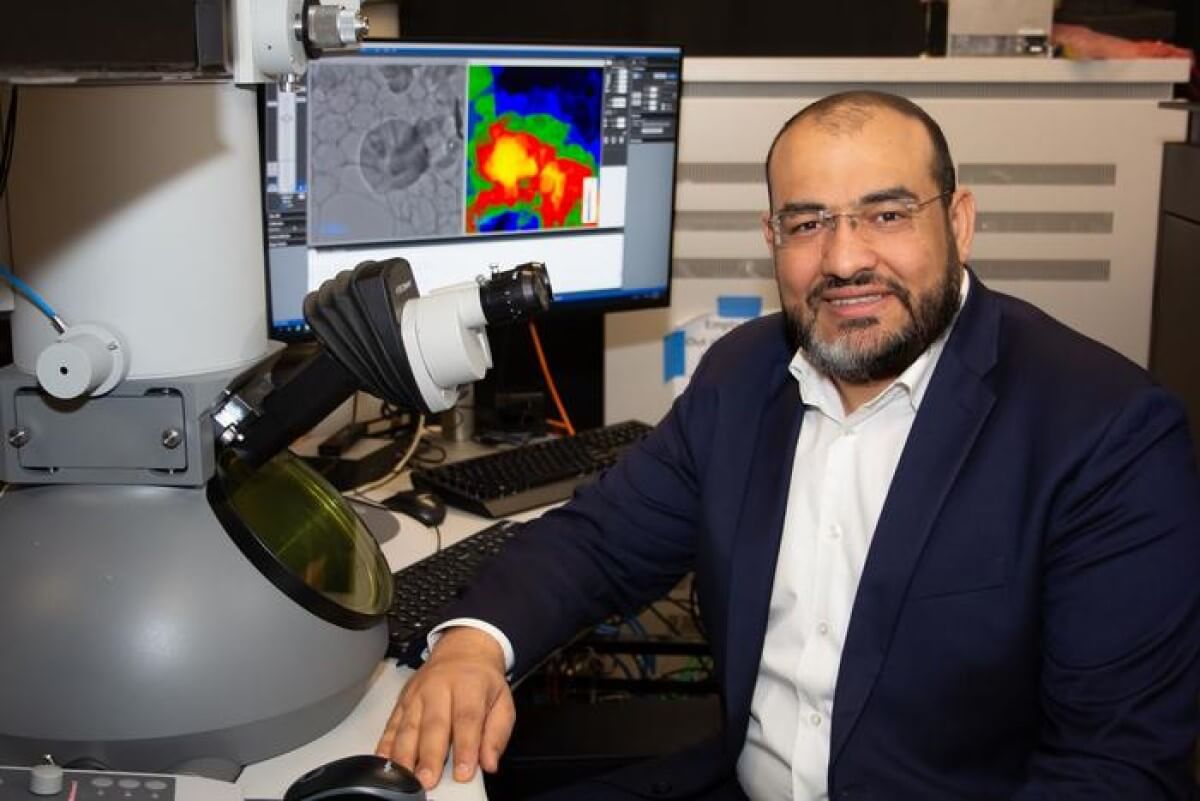
To demonstrate the capabilities of their new technique, the team used attomicroscopy to study the behavior of electrons in graphene, a material consisting of a single layer of carbon atoms arranged in a honeycomb pattern. Graphene has garnered significant attention in recent years due to its unique electrical and mechanical properties, making it an ideal subject for this pioneering research.
The experiments revealed that when exposed to intense laser pulses, the electrons in graphene behave in ways that were previously impossible to observe directly. The researchers were able to track the motion of these electrons as they responded to the electric field of the laser, moving between different energy states and across the material’s structure.
One of the most striking findings was the observation of how quickly electrons in graphene can respond to external stimuli. The study showed that these electrons could react to changes in the laser field within less than a femtosecond, demonstrating the potential for ultrafast electronic devices that could operate at speeds far beyond what is currently possible.
This level of detail in observing electron behavior has never been achieved before and opens up new avenues for understanding and potentially controlling the quantum world. The ability to watch electrons move in real-time could lead to advancements in fields such as solar energy conversion, where understanding the precise behavior of electrons is crucial for improving efficiency.
The development of attomicroscopy represents a significant technical achievement in itself. The researchers had to overcome numerous challenges to create and control electron pulses at such short timescales. This included developing new methods for synchronizing laser pulses with electron beams and designing specialized optical components to manipulate the electrons within the microscope.
Hassan and his colleagues based their work on the Nobel Prize-winning accomplishments of Pierre Agostini, Ferenc Krausz and Anne L’Huilliere, who won the Novel Prize in Physics in 2023 after generating the first extreme ultraviolet radiation pulse so short it could be measured in attoseconds.
While this research represents a significant step forward, it’s important to note that the field of attosecond science is still in its infancy. As with any new scientific technique, further refinement and validation will be necessary before attomicroscopy becomes a widely used tool. However, the potential applications are vast, and this breakthrough opens up exciting new possibilities for exploring the quantum world in unprecedented detail.
Paper Summary
Methodology
The researchers used a modified transmission electron microscope equipped with ultrafast laser systems. A powerful laser is split and converted into two parts – a very fast electron pulse and two ultra-short light pulses. The first light pulse, known as the pump pulse, feeds energy into a sample and causes electrons to move or undergo other rapid changes. The second light pulse, called the “optical gating pulse,” creates a brief window of time in which the gated, single attosecond electron pulse is generated. By carefully synchronizing these pulses, researchers can control when the electron pulses probe the sample to observe ultrafast processes at the atomic level.
Key Results
The attosecond electron pulses allowed the team to observe changes in the diffraction pattern of graphene with unprecedented time resolution. They were able to detect oscillations in the intensity of diffracted electrons that corresponded to the motion of electrons within the graphene lattice. These oscillations occurred on timescales of less than a femtosecond, revealing the ultrafast response of electrons to the applied laser field.
Study Limitations
While groundbreaking, this technique currently requires highly specialized equipment and expertise, limiting its immediate widespread adoption. The experiments were conducted on graphene, a relatively simple material, and applying the technique to more complex systems may present additional challenges. Additionally, the interpretation of the results relies on theoretical models that may need further refinement as the field progresses.
Discussion & Takeaways
The study demonstrates the feasibility of attosecond-resolution electron microscopy, opening up new possibilities for studying ultrafast electronic processes in materials. The ability to directly observe electron motion on these timescales could lead to a deeper understanding of phenomena such as photosynthesis, catalysis, and high-temperature superconductivity. The researchers suggest that this technique could be applied to a wide range of materials and could help bridge the gap between attosecond spectroscopy and ultrafast structural dynamics studies.
Funding & Disclosures
The research was funded by several organizations, including the Gordon and Betty Moore Foundation, the Air Force Office of Scientific Research, and the W.M. Keck Foundation. One of the researchers also acknowledged support from the Branco Weiss Fellowship. The authors declared no competing interests.


The speed of an electron that respond to an external stimulus.
how could we exist without electrons? How can any material exist without its own power station?
Color me humbled and amazed at this technology.