
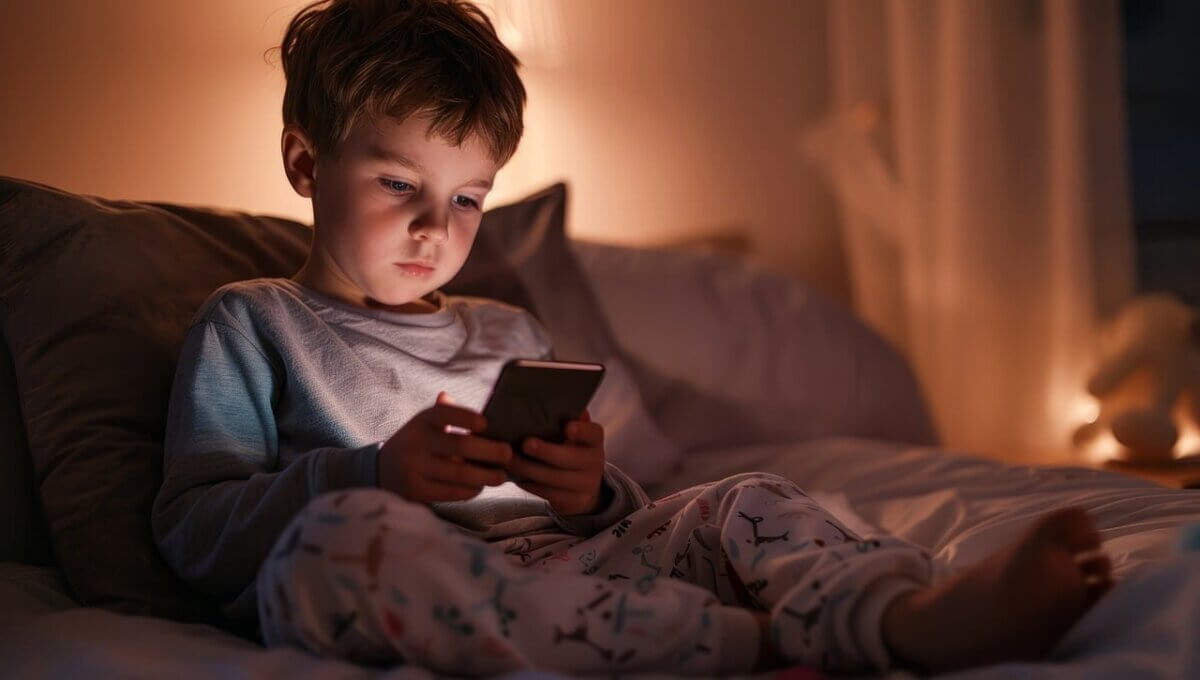
(Photo by TungArt7 from Pixabay)
ADELAIDE, Australia — The monsters keeping our children awake at night aren’t the stuff of fairy tales — they’re made of pixels and social media likes. A comprehensive study is pulling back the curtain on a troubling trend: nighttime phone use turning bedtime into a battleground for sleep and mental health. The research, conducted in Australia, reveals a troubling connection between late-night texting, cyberbullying, and psychological distress among kids as young as seven years-old.
Scientists say the childhood rite of passage of staying up past bedtime has taken a dark turn in the digital age. The study, published in the journal Adolescents, analyzed data from over 53,000 Australian children between the ages of seven and 19. For many kids, “lights out” is just the beginning of their nightly online activities — and the consequences are more serious than just next-day drowsiness.
The data collection took place between March and December 2019, utilizing a questionnaire that examined various aspects of resilience and well-being. This survey included demographic items, risk and protective behavior items, and optional risky behavior items.
To understand how the kids were feeling, the researchers used a special set of questions called the PHQ-4. This asked the kids if they had been feeling nervous, worried, sad, or not interested in things. They could answer from “Never” to “Nearly every day.”
Other questions included how often the kids used their phones at night, how well they slept, or if they had been bullied online. For example, they asked if kids got eight hours of sleep most nights and how many times they sent messages on their phones late at night. They also asked if the kids had been bullied at school recently.
One of the most striking discoveries was that about a third of primary school children (ages 7-11) and more than 60% of secondary school students (ages 12-19) reported using their phones at night at least once a week. This nighttime phone use was associated with shorter sleep duration and increased psychological distress across all age groups.
But it’s not just about losing sleep. The study also found that children who experienced cyberbullying were more likely to use their phones at night and report sleep issues and psychological distress. Approximately 15% of the children surveyed had experienced cyberbullying in the past school term, with rates peaking in early adolescence.
“Pre-teens are at higher risk for socio-emotional disorders because they are at a developmental stage where they are less prepared cognitively, behaviorally and neurobiologically,” says study co-author Dr. Stephanie Centofanti, a researcher from the University of South Australia, in a statement.

Centofanti and her team used a clever approach to examine the link between nighttime phone use, cyberbullying, sleep, and psychological distress. They looked at whether nighttime phone use might amplify the negative effects of cyberbullying on sleep and mental health.
Interestingly, the results showed some unexpected patterns. For boys, especially those in secondary school, nighttime phone use did indeed worsen the psychological distress associated with cyberbullying. However, this effect was actually stronger for boys who hadn’t experienced cyberbullying. The researchers suggest this could be due to a “ceiling effect” – cyberbullied children were already reporting such high levels of distress that there wasn’t much room for it to increase further.
When it came to sleep, nighttime phone use was found to worsen the negative impact of cyberbullying on sleep quality for both boys and girls across all age groups. Again, this effect was surprisingly stronger for children who hadn’t experienced cyberbullying.
The study’s findings are not as simple as saying “phones are bad.” Instead, the research points to the need for a better approach to managing children’s digital device use, especially at night.
For parents, educators, and healthcare providers, the study only strengthens the importance of addressing nighttime phone use as part of overall strategies to improve children’s sleep and mental health. This could involve setting household rules about device use after bedtime, educating children about the importance of sleep, and being vigilant for signs of cyberbullying.
“It is clear that parents need to pay closer attention to managing smartphone use at night, particularly if their children are more vulnerable to cyberbullying, and to ensure their children get enough sleep,” says Dr. Centofanti.
As our world becomes increasingly digital, understanding how technology impacts our children’s well-being is more crucial than ever. This study provides valuable insights that can help shape healthier digital habits for the next generation.
Paper Summary
Methodology
The researchers used data from a large-scale survey of Australian schoolchildren. The survey asked questions about nighttime phone use, sleep habits, experiences of cyberbullying, and psychological distress. To measure psychological distress, they used a brief 4-item questionnaire called the Patient Health Questionnaire-4 (PHQ-4). The researchers then used statistical techniques to analyze how these different factors were related to each other, looking at differences between age groups and genders.
Key Results
The study found that nighttime phone use and cyberbullying were both independently associated with shorter sleep duration and higher levels of psychological distress. When they looked at how these factors interacted, they found that nighttime phone use tended to worsen the negative effects of cyberbullying on sleep for all children.
For psychological distress, this worsening effect was mainly seen in boys, particularly those in secondary school. Interestingly, the negative impacts of nighttime phone use were often stronger for children who hadn’t experienced cyberbullying, possibly because those who had been cyberbullied were already reporting very high levels of distress and poor sleep.
Study Limitations
The study relied on self-reported data, which can be subject to bias. It also used single-item measures for some factors, like sleep and cyberbullying, which might not capture the full complexity of these issues. The cross-sectional nature of the study means it can’t prove cause-and-effect relationships. Additionally, the study didn’t capture information about the specific timing or content of nighttime phone use or whether cyberbullying occurred at night.
Discussion & Takeaways
The researchers emphasize the importance of managing digital device use at night as a strategy for addressing cyberbullying vulnerability and improving sleep health. They suggest that future research should look more closely at the timing of cyberbullying events and compare the effects of daytime versus nighttime cyberbullying. The study also highlights the need for age and gender-specific approaches to addressing these issues, as the patterns varied between different groups.
Funding & Disclosures
The study didn’t receive any external funding. However, it’s worth noting that some of the researchers are associated with Resilient Youth Australia, the organization that provided the data for the study. This connection is disclosed in the paper to ensure transparency about potential conflicts of interest.


