
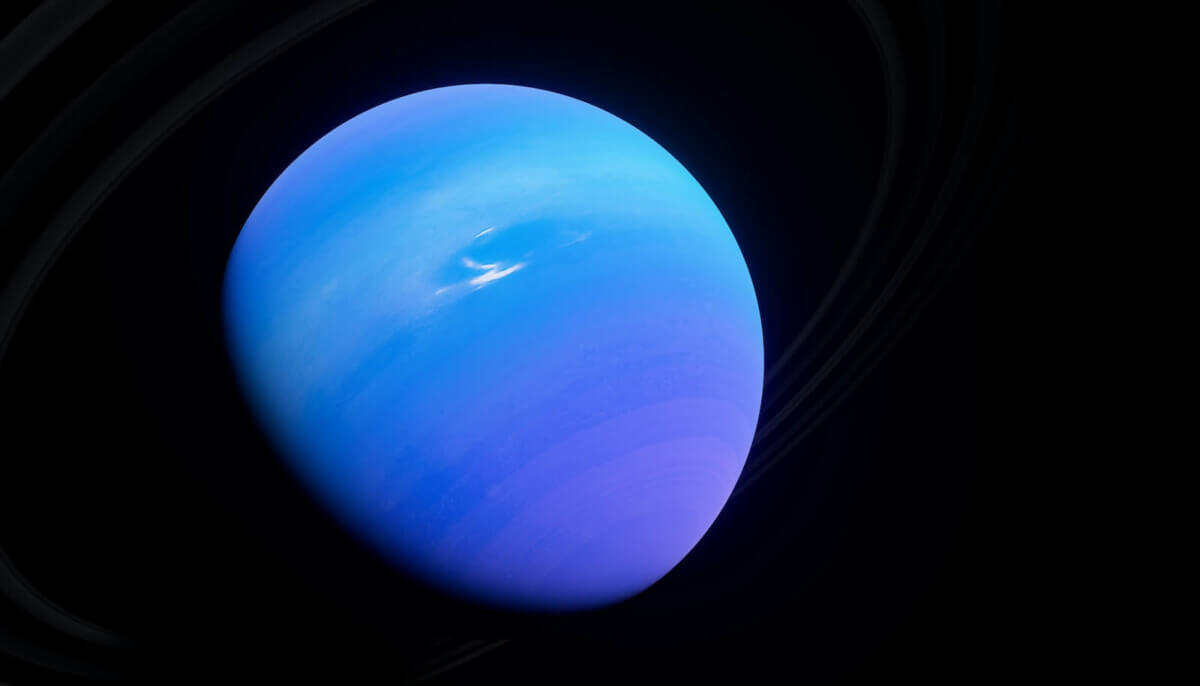
Photo by Planet Volumes???? from Unsplash
PASADENA, Calif. — For 38 years, the secrets of Uranus have remained just out of humanity’s reach. Now, however, a deep dive into data from NASA’s Voyager 2 spacecraft may change what we thought we knew about this distant planet. Astronomers are finally able to shed new light on the bizarre behavior of this icy giant witnessed four decades ago.
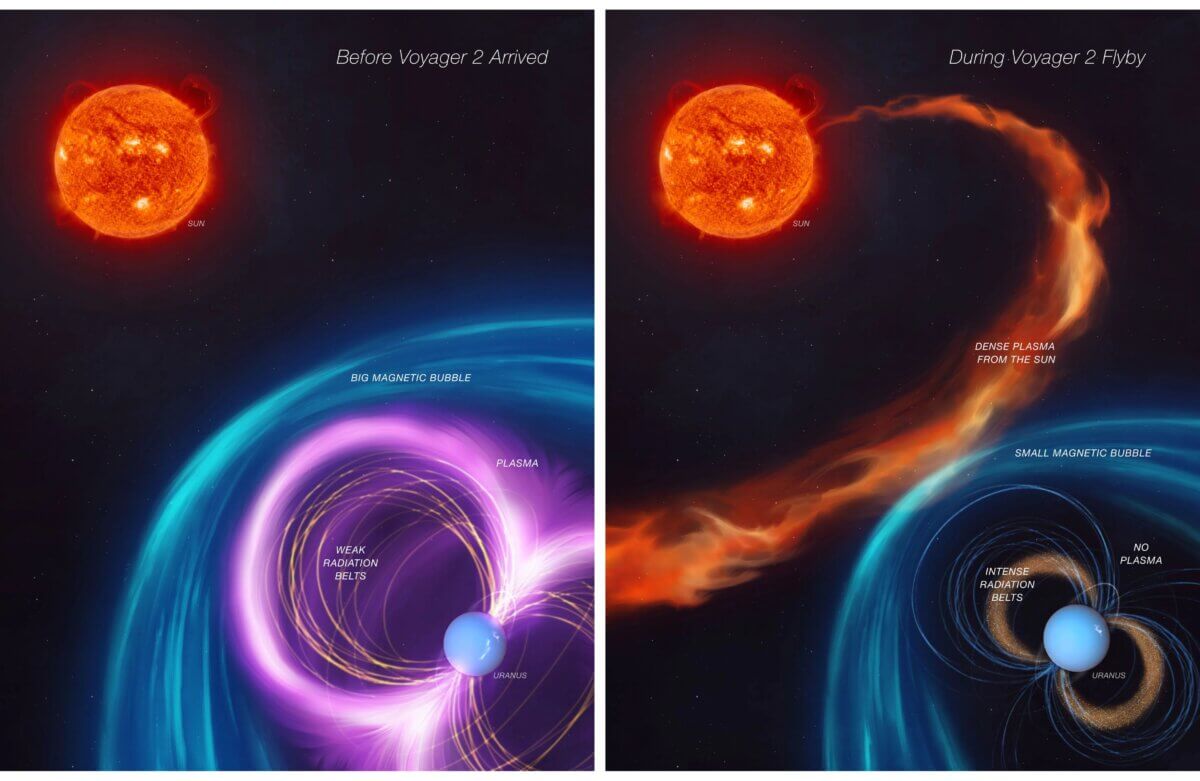
When Voyager 2 performed the first and only close flyby of Uranus in 1986, scientists were left scratching their heads. The planet’s magnetosphere – the protective bubble that shields it from the Sun’s powerful solar winds – was behaving in ways that just didn’t make sense. Uranus’ radiation belts were inexplicably intense, yet the rest of its magnetosphere was virtually devoid of the energized particles that usually fill such regions.
“The flyby was packed with surprises, and we were searching for an explanation of its unusual behavior,” recalls Linda Spilker, a Voyager 2 mission scientist who has since returned to lead the project, in a media release. “The magnetosphere Voyager 2 measured was only a snapshot in time.”
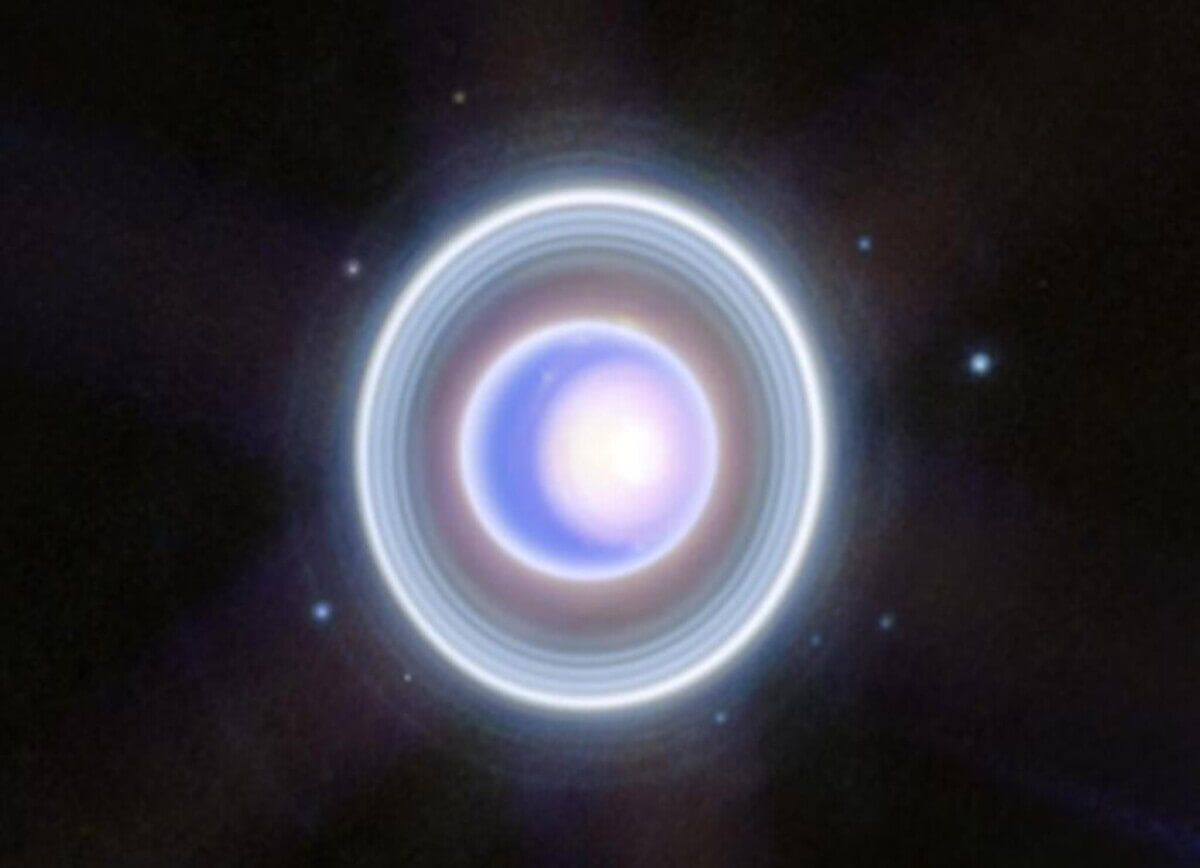
Now, thanks to a recent reanalysis of that decades-old data, scientists believe they’ve cracked the case. According to a new study in Nature Astronomy, the key to understanding Uranus’ magnetosphere lies in an unusual type of space weather that just happened to be occurring during Voyager 2’s fleeting encounter.
In the days before the flyby, the Sun had unleashed a powerful burst of ionized gas, or plasma, in the form of a “solar wind event.” This compressed Uranus’ magnetosphere, dramatically altering its behavior and giving Voyager 2 a distorted view of the planet’s true magnetic environment.
“If Voyager 2 had arrived just a few days earlier, it would have observed a completely different magnetosphere at Uranus,” explains lead author Jamie Jasinski of NASA’s Jet Propulsion Laboratory.
Magnetospheres are critical to a planet’s habitability, shielding its surface from the constant bombardment of charged particles streaming from the Sun. By understanding how Uranus’ magnetosphere responds to this kind of solar weather, scientists can learn more about the fundamental processes that shape the magnetic fields of our solar system and beyond.
The new findings also offer hope for the future of Uranus exploration. For years, the apparent inertness of the planet’s five major moons had puzzled scientists. But if the moons were indeed spewing ions into the magnetosphere all along, as the new study suggests, then they may harbor more geologic activity and potential for life than previously thought.
“This new work explains some of the apparent contradictions, and it will change our view of Uranus once again,” says Spilker.
With Uranus now firmly back on the scientific community’s radar, the stage is set for a long-overdue return visit. The National Academies’ 2023 Planetary Science and Astrobiology Decadal Survey has identified the ice giant as a priority target for a future NASA mission, offering a chance to unravel more of the planet’s enduring mysteries.
Paper Summary
Methodology
The study analyzed data from the Voyager 2 spacecraft’s 1986 flyby of Uranus. Researchers re-examined measurements of solar wind conditions and Uranus’s magnetosphere. Voyager 2 recorded these conditions before and during its approach to the planet, capturing real-time data on solar wind pressure, magnetospheric boundaries, and radiation belt intensities.
Using magnetohydrodynamic simulations, the team estimated how varying solar wind pressures would impact Uranus’s magnetosphere. They compared these simulated variations with the observed conditions to determine how often Uranus’s magnetosphere might look similar to the conditions Voyager 2 encountered.
Key Results
The analysis revealed that Voyager 2 likely encountered a rare event: Uranus’s magnetosphere was compressed by unusually high solar wind pressure. This compressed state could explain the intense electron radiation belts and the low plasma density Voyager 2 observed.
In typical conditions, Uranus’s magnetosphere would be less compressed, leading to a larger, more stable magnetic field around the planet. The study estimates that only 5% of the time does Uranus’s magnetosphere reach the compressed state Voyager 2 documented. This means the extreme magnetospheric conditions observed during the flyby may not represent Uranus’s average state.
Study Limitations
This study relies on data from a single flyby, limiting the ability to generalize these findings to typical conditions on Uranus. Additionally, gaps in the solar wind data during the flyby reduce the precision of exact pressure measurements. The simulations help model some variability but cannot capture the full complexity of Uranus’s magnetosphere. Multiple measurements over time would offer more comprehensive insights into Uranus’s magnetic environment.
Discussion & Takeaways
The study suggests that Uranus’s magnetosphere might not be as extreme as previously thought. The Voyager 2 flyby happened under unusually high solar wind pressure, which compressed Uranus’s magnetic field and created atypical magnetospheric features. This insight is valuable for planning future missions and developing a more accurate model of Uranus’s magnetosphere. Scientists now believe that the findings from the Voyager 2 flyby should not be considered representative of the planet’s typical magnetospheric conditions.
Funding & Disclosures
This research received support from NASA’s Jet Propulsion Laboratory and was carried out with contributions from institutions, including the California Institute of Technology and Johns Hopkins University. The authors have declared no competing interests.


