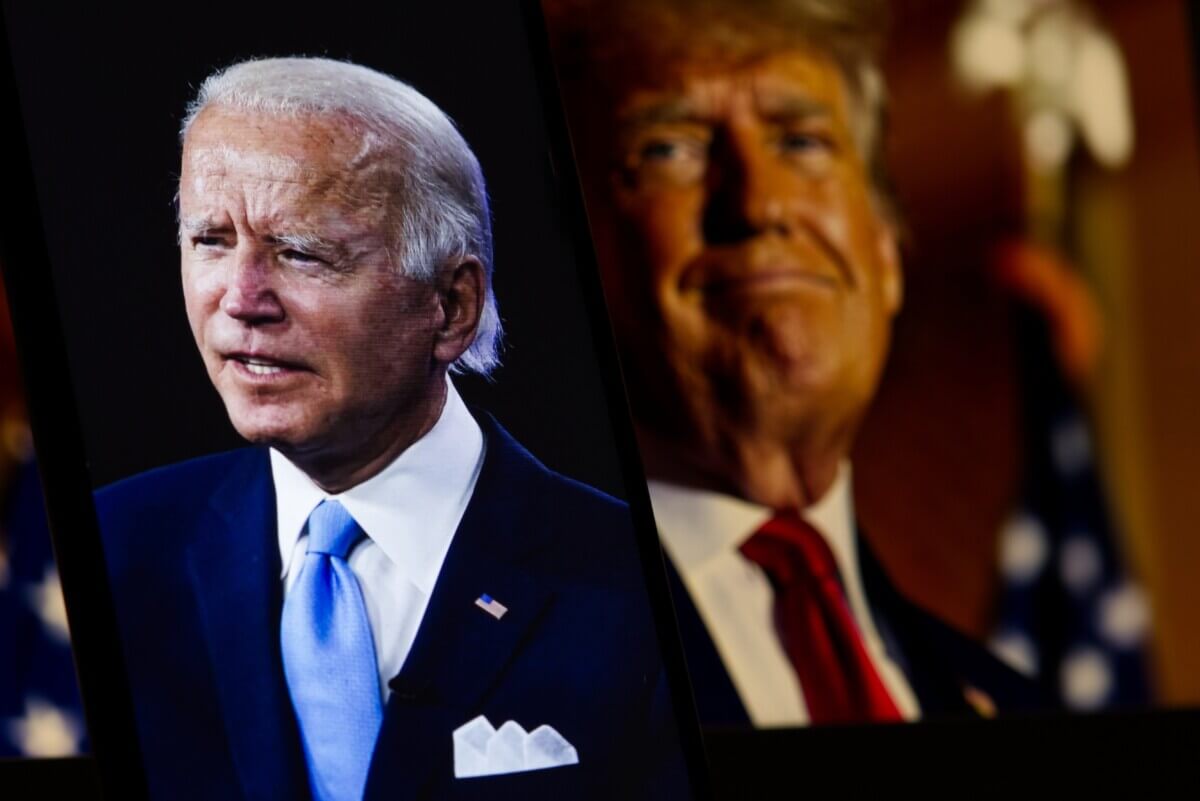
Democratic candidate Joe Biden in the foreground, Republican candidate Donald Trump in the background (Credit: Below the Sky/Shutterstock)
History usually happens at a leisurely pace, with major events months or even years apart. But this year, it seems like someone has pushed fast-forward, with significant events coming on a weekly or even daily basis. One company is now selling a T-shirt declaring “THIS IS MY LIVING IN UNPRECEDENTED TIMES SHIRT.”
The announcement on July 21, 2024, that Joe Biden would withdraw from the presidential race was the latest in a dizzying series of major domestic events in 2024. Here’s a brief list:
- April 15: Donald Trump’s New York hush money trial begins.
- April and May: Pro-Palestinian protests rock campuses around the country, and thousands are arrested.
- May 30: Trump is found guilty in New York of 34 felony counts related to hush money payments.
- June 27: Biden’s poor debate performance sets off intense speculation about his place on the Democratic ticket.
- July 1: A Supreme Court decision in Trump v. United States greatly expands presidential immunity from prosecution and raises serious questions about the status of various prosecutions of Trump.
- July 13: Trump is injured in an assassination attempt.
- July 15: A federal judge throws out the case against Trump for mishandling classified documents.
- July 15: Trump picks Ohio U.S. Sen. JD Vance as his running mate.
- July 15: The Republican Convention formally nominates Trump for president, capping a remarkable political comeback.
- July 21: Biden announces that he is withdrawing from the presidential race and endorses Vice President Kamala Harris for president.
- July 21-22: Harris is quickly endorsed by leading Democrats and seems almost certain to become the first Black woman of South Asian descent to head a major party ticket.
While 2024’s fast pace of events is rare in American history, it’s not unique.
1968: Assassinations, political turmoil, war
Many observers have already compared 2024 to 1968. Both years saw incumbent Democratic presidents bow out of the election, as well as tragic outbreaks of political violence. But 1968 also saw a rapid unfolding of other historic events. Here’s what happened that year:
- Jan. 23, 1968: North Korea captures the Navy ship USS Pueblo.
- Jan. 30: North Vietnamese and Viet Cong forces launch the Tet Offensive, undermining claims that the U.S. is winning the Vietnam War.
- Feb. 8: Alabama Gov. George Wallace, a segregationist, announces his third-party presidential bid.
- March 10: U.S. commander in Vietnam, Gen. William Westmoreland, requests 200,000 more troops.
- March 12: Minnesota U.S. Sen. Eugene McCarthy nearly upsets President Lyndon Johnson in the New Hampshire primary.
- March 16: New York U.S. Sen. Robert F. Kennedy announces his campaign for the Democratic presidential nomination.
- March 31: Johnson agrees to a partial halt in the bombing of North Vietnam in order to negotiate an end to the war. He also announces that he will not seek reelection.
- April 4: Martin Luther King Jr. is assassinated in Memphis, Tennessee. Major riots break out in several American cities.
- May 10: Vietnam War peace talks begin in Paris.
- June 5: Kennedy is shot in Los Angeles after winning the California primary. He dies the next day.
- Aug. 8: The Republican National Convention nominates Richard Nixon for president.
- Aug. 20: Soviet and Warsaw Pact forces move into Czechoslovakia, crushing the Prague Spring liberalization movement.
- Aug. 26-29: A bitterly divided Democratic convention nominates Vice President Hubert Humphrey for president. Outside the convention, Chicago police unleash a wave of violence against peaceful protesters.
- Sept. 30: Humphrey announces support for halting bombing in Vietnam and negotiating peace.
- Nov. 5: Nixon wins a narrow victory in the presidential election.
1940: War, US draft and FDR’s historic reelection
Two other years stand out for the rapid pace of significant events. The first is 1940, which was dominated by Nazi Germany’s invasions of European countries, the response to that aggression, and a precedent-setting third term for U.S. President Franklin D. Roosevelt.
- April 9, 1940: Nazi Germany invades and conquers Denmark and Norway.
- May 10: Nazi Germany invades the Netherlands, Belgium, Luxembourg and France. British Prime Minister Neville Chamberlain resigns and is replaced by Winston Churchill.
- May 15: The Netherlands surrenders to Germany.
- May 28: Belgium surrenders to Germany.
- June 4: Evacuation of 338,000 Allied troops from Dunkirk, France ends as Germany routs British and French armies.
- June 10: Italy declares war on France and Great Britain.
- June 22: France surrenders to Germany. Germany controls almost all of central and western Europe.
- July 17: Roosevelt is nominated by the Democratic National Convention for an unprecedented third term.
- June 24: The Republican convention nominates dark-horse candidate Wendell Willkie.
- Aug. 13: The Battle of Britain begins as Germany subjects Great Britain to intense aerial attacks.
- Sept. 16: The U.S. institutes the first peacetime military draft in its history.
- Nov. 5: Roosevelt is reelected for a third term.
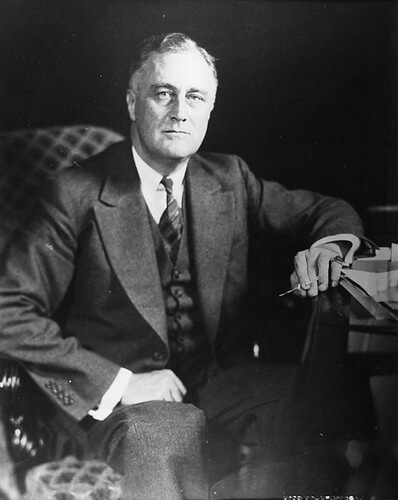
1973: Abortion, peace deal, Watergate, political mayhem
Finally, 1973 also witnessed a rapid sequence of historic events. The federal right to abortion was guaranteed by the U.S. Supreme Court. The Vietnam War ended after almost 60,000 Americans and millions of civilians were killed. War began in the Middle East. And Congressional hearings commenced in a political scandal that would, the next year, end Nixon’s presidency.
- Jan. 20, 1973: Nixon is inaugurated for a second term.
- Jan. 22: The Supreme Court issues its Roe v. Wade ruling, legalizing most abortions. Former President Johnson dies.
- Jan. 27: The Vietnam War officially ends with signing of the Paris Peace Accords.
- April 30: The Watergate scandal – involving a break-in at Democratic Party offices and a cover-up of it – explodes as Nixon announces that Attorney General Richard Kleindienst and White House aides Bob Haldeman and John Erlichman have resigned because of their roles in the scandal. Nixon also fires White House Counsel John Dean.
- May 17: Televised hearings of the Senate Watergate committee begin.
- May 18: Archibald Cox is appointed as special prosecutor to investigate Watergate.
- June 25. Dean testifies publicly and implicates Nixon in the Watergate cover-up.
- July 15: Nixon is hospitalized with pneumonia.
- July 16: White House aide Alexander Butterfield testifies that Nixon recorded his Oval Office conversations and phone calls.
- Oct. 6: Yom Kippur War begins as Egypt and Syria invade Israel.
- Oct. 10: Vice President Spiro Agnew resigns, pleading no contest to federal corruption charges.
- Oct. 20: Several Arab nations announce an oil embargo against the U.S. for its support of Israel, beginning the 1973-1974 energy crisis.
- Oct. 20: The Saturday Night Massacre: Attorney General Elliot Richardson and Deputy Attorney General William Ruckelshaus resign after refusing Nixon’s order to fire Special Prosecutor Cox. Solicitor General Robert Bork becomes acting Attorney General and fires Cox.
- Oct. 25: The Soviet Union threatens to intervene in the Yom Kippur War. In response, the U.S. raises its defense alert status from DEFCON 4 to DEFCON 3. The war ends with a United Nations-sponsored cease-fire.
- Oct. 30: The House Judiciary Committee votes to begin investigating the possible impeachment of Nixon.
- Dec. 6: After both houses of Congress vote to approve him, Gerald Ford becomes the first Vice President to assume that office via the 25th Amendment. That amendment, ratified in 1967, established the procedure for filling presidential and vice-presidential vacancies.
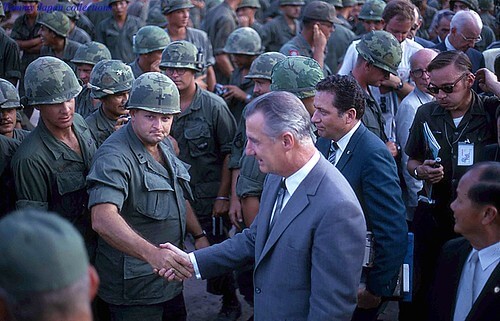
What do these years of unprecedented events have in common?
One factor seems to be that wars and presidential elections seem to generate a cascade of events. Second, important events seem to beget more events. In 1940, the Nazi invasions led to Churchill becoming British prime minister and probably boosted the likelihood of Roosevelt running for and winning a third term.
In 1968, the Tet Offensive helped trigger the challenges to President Johnson, which led to his decision to drop out. That helped set the stage for the calamitous Democratic convention that year.
Trump’s political and legal comebacks this year made Democrats even more desperate for a winning nominee, increasing the pressure on Biden after his poor debate performance.
We don’t know if the pace of news events this year will begin to slow down. What we do know is that most Americans might appreciate a bit of a breather before encountering another potentially historic event.
Philip Klinkner is the James S. Sherman Professor of Government at Hamilton College.
This article is republished from The Conversation under a Creative Commons license. Read the original article.


You gotta include 1979 and 1980 too. Crazy times. Gas lines and shortages all summer, people shooting each other in said gas lines, wildcat trucker strikes, 14.5% inflation, Iran hostages, USSR invading Afghanistan, Moscow summer olympics boycott, revolutions in Rhodesia and Nicaragua and Iran, Disco Demolition Night, Hunt Brothers trying to corner the silver market leaving a trail of failed banks, John Anderson’s third party bid, Jerry Brown’s hilariously botched TV speech in Madison, Chrysler bailout, ABSCAM, Rely tampons and toxic shock symdrome, biggest one-quarter drop in the GDP since the Great Depression caused by Carter severely curtailing consumer credit trying to stop runaway inflation, pop-up “cash for gold” stores all over the place, financial books all over the bestseller list advising you to bail entirely from the market and stockpile toilet paper, riots and violence at screenings of The Warriors, Klansmen opening fire on Communists in North Carolina, the song “Bomb Iran” all over the radio…
if you include the tail end of 1978 there’s also the Jonestown mass suicide and the Moscone-Milk assassinations within days of each other.
Want me to go on?
The result: Ronald Reagan in the White House.
Think things are bad now? They aren’t that bad.
I lived through all the eras you’ve described. It was NOT as you’ve painted with your “fantasy” slant.
Today is unprecedented and extreme beyond Thank you.. R. Hoover