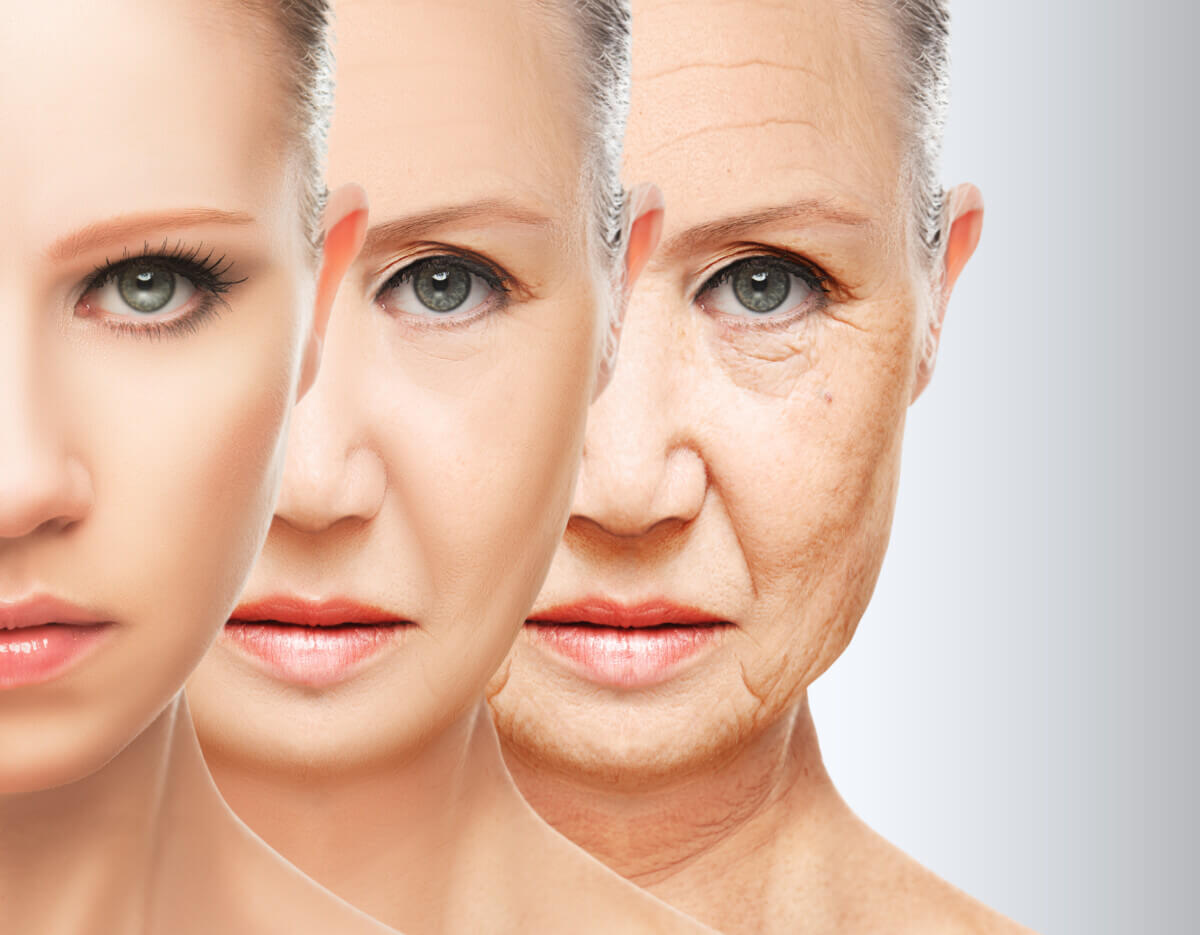
skin aging (© JenkoAtaman - stock.adobe.com)
STANFORD, Calif. — Have you ever felt like you woke up one day and suddenly everything in your body hurt? It turns out that you might not be imagining things. A shocking study by a team at Stanford Medicine finds that our bodies don’t just gradually wear down over time — they undergo dramatic molecular transformations at specific ages. Specifically, our aging speeds up at two particular points, in our 40s and 60s.
While this discovery may unnerve some who fear growing old overnight, researchers say their study could also revolutionize how we understand aging and approach age-related diseases.
For years, scientists believed that aging was a slow, steady process. However, this new research, published in Nature Aging, paints a different picture. By analyzing thousands of molecules and microbes in people between 25 and 75 years-old, researchers uncovered a surprising truth: our bodies experience rapid changes during these two key periods in our lives.
“We’re not just changing gradually over time; there are some really dramatic changes,” says Michael Snyder, PhD, professor of genetics and the study’s senior author, in a university release. “It turns out the mid-40s is a time of dramatic change, as is the early 60s. And that’s true no matter what class of molecules you look at.”
Think of it like your body hitting sudden growth spurts, but instead of getting taller, you’re undergoing invisible molecular shifts. These changes affect everything from how your body processes alcohol and caffeine to how it regulates your immune system and heart health.

The study tracked an astonishing 135,000 different molecules and microbes in 108 participants over several years. What they found was that around 81% of these biological markers didn’t change gradually. Instead, they showed significant increases or decreases at specific ages, clustering around two time periods: the mid-40s and early 60s.
This discovery could explain why the risk of certain diseases seems to spike at particular ages. For instance, the study found that molecules related to cardiovascular disease showed significant changes at both time points. This suggests that the foundations for heart problems might be laid long before symptoms appear.
Interestingly, these changes weren’t just limited to women experiencing menopause. When researchers looked at men separately, they found similar shifts occurring in their mid-40s, too. This suggests that there are broader biological factors at play beyond hormonal changes.
So, what does this mean for you?
While more research is necessary to fully understand these sudden shifts, the study’s findings highlight the importance of being proactive about your health, especially as you approach middle age.
“I’m a big believer that we should try to adjust our lifestyles while we’re still healthy,” Snyder says.
This could mean increasing exercise to protect your heart and maintain muscle mass or being more mindful of alcohol consumption as your body’s ability to process it changes.
As we unravel the mysteries of aging, this research offers a new perspective on how our bodies change over time. It’s not a slow, steady decline but a series of dramatic transformations. By understanding these hidden milestones, we might one day be able to navigate the aging process more smoothly, potentially preventing age-related diseases before they even begin.
Paper Summary
Methodology
The researchers behind this study took a comprehensive approach, analyzing various biological samples from blood, stool, and skin swabs to gather data. Over an average tracking period of 1.7 years, they amassed over 135,000 biological features from each participant, including transcripts, proteins, metabolites, cytokines, and microbiome data. This multi-omics profiling allowed them to track changes across the entire human body, providing a more detailed picture of how aging unfolds. Participants in the study were sampled every 3-6 months, enabling the researchers to capture these nonlinear shifts in real time.
Key Results
The study identified two critical periods in life where the body’s molecular profile undergoes significant changes: around ages 44 and 60. These periods correspond to a sudden dysregulation in various biological pathways, including immune regulation, carbohydrate metabolism, and lipid metabolism.
At around 44 years-old, the researchers observed shifts in molecules related to cardiovascular health and alcohol metabolism, potentially setting the stage for age-related diseases like heart disease. By age 60, changes in immune function and carbohydrate metabolism were more pronounced.
The researchers also found that while only 6.6% of molecules changed linearly (gradually over time), 81% showed nonlinear changes, highlighting the importance of these sudden shifts in understanding aging.
Study Limitations
The most significant limitation is the relatively short tracking period of 1.7 years, with the longest follow-up being 6.8 years. Aging is a process that unfolds over decades, and while the study’s findings are robust, longer-term studies are needed to fully understand the implications of these nonlinear changes.
Additionally, while the study included participants of various ethnicities and both genders, the sample size was relatively small at 108 individuals. Larger studies would help validate these findings and explore whether these nonlinear shifts are universal or if they vary across different populations.
Discussion & Takeaways
The discovery of these nonlinear molecular changes has profound implications for how we think about aging. Traditionally, aging has been seen as a gradual decline, but this study suggests that it’s more like a series of waves, with sudden shifts that dramatically alter our risk for age-related diseases.
This new understanding could lead to more effective interventions. If we can identify these critical periods of change early, we might be able to intervene before the body reaches a tipping point. For example, if we know that the immune system undergoes significant changes around age 60, we could develop therapies to bolster immune function before these changes lead to chronic conditions.
Moreover, this research highlights the importance of personalized medicine. The nonlinear nature of aging suggests that a one-size-fits-all approach to healthcare may not be effective. Instead, monitoring individuals’ molecular profiles over time could help tailor interventions to their specific needs, potentially extending health span and reducing the burden of age-related diseases.
Funding & Disclosures
The study was conducted by researchers from Stanford University School of Medicine in collaboration with other institutions. Funding sources for the research included the National Institutes of Health (NIH), the Howard Hughes Medical Institute, and several private foundations. The authors have declared no conflicts of interest.


Dang! I wanna go back to my 20s!