
Conceptual AI-generated image unaffiliated with the study depicting a woman wearing a brain stimulation headset. (© NEW KUNG - stock.adobe.com)
In A Nutshell
- AI-personalized brain stimulation improved sustained attention in people with low baseline focus.
- The technology worked best for people who needed help focusing — not for those already performing well.
- Participants completed brain stimulation sessions entirely at home — safely and effectively.
- While promising, the study has limitations — including a narrow age group and short-term testing.
SURREY, England — A computer can now analyze your brain’s unique characteristics and deliver precisely the right amount of electrical stimulation to sharpen your focus — all from your living room. New research has turned this futuristic concept into reality, showing that artificial intelligence can successfully personalize brain stimulation treatments delivered at home to improve sustained attention.
Published in npj Digital Medicine, the research represents a major step forward in making brain enhancement technology both accessible and effective for everyday people. The AI-driven approach worked best for individuals who initially struggled with attention tasks, potentially helping close the performance gap between high and low achievers rather than simply making already-focused people even sharper.
For millions of Americans dealing with attention difficulties — whether from ADHD, long COVID, depression, or everyday life demands—this technology could eventually offer a new support tool without the need for prescription medications or frequent clinical visits.
How AI Brain Stimulation Works to Improve Attention
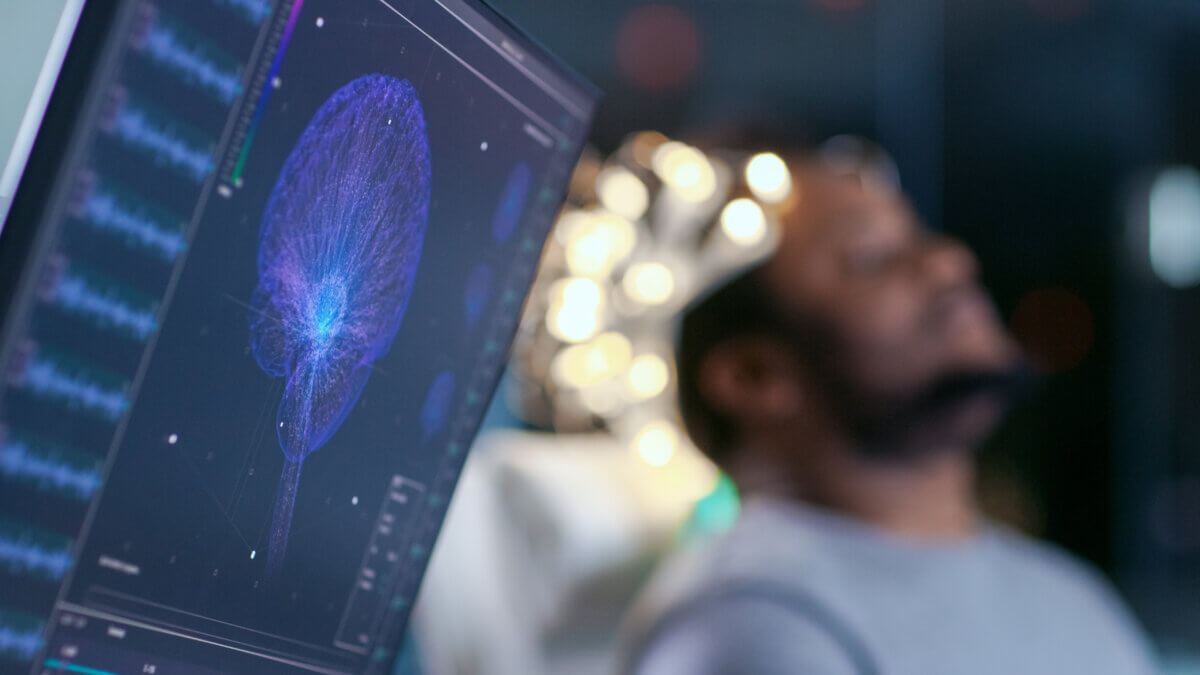
The system combines artificial intelligence with transcranial random noise stimulation (tRNS), a noninvasive technique that delivers mild electrical currents to the brain through electrodes placed on the scalp. Unlike earlier “one-size-fits-all” approaches, this method uses an AI algorithm that learns from each person’s unique traits to calculate optimal stimulation settings.
The algorithm personalizes treatment based on two key factors: baseline attention ability and head circumference, which affects how electrical current flows through the brain. Participants received home-delivered neurostimulation equipment, including a tablet and specialized headgear. After measuring their head size and completing baseline tests, the AI determined individualized settings for each person.
Participants wore the device while completing an air traffic control task developed by the U.S. Air Force Research Laboratory. It’s an activity designed to simulate sustained attention demands similar to those required for driving, working, or studying.
Brain Stimulation Most Effective for People with Attention Problems
Among individuals with low baseline performance, the personalized AI approach significantly outperformed both inactive “sham” stimulation and a standard one-size-fits-all protocol. People with already strong attention abilities, however, showed no improvement from any stimulation condition.
“These findings alleviate ethical concerns that neurostimulation might increase the mental gap between individuals,” the researchers noted.
The algorithm also found that people with larger head circumferences required higher stimulation intensities for optimal results. The relationship between attention ability and stimulation intensity followed a curved “sweet spot” pattern, meaning both too little and too much stimulation could impair performance.
Across three experiments — including algorithm development with 103 participants and a validation study with 35 — researchers showed that their personalized approach reliably improved attention in lower performers while avoiding overstimulation that could hinder results.
Home Brain Stimulation Could Supplement Traditional Attention Treatments
Sustained attention difficulties affect millions of people, from those with ADHD and depression to individuals with Alzheimer’s disease or recovering from long COVID. Current treatments often involve medications that can cause side effects or cognitive training programs with limited effectiveness outside laboratory settings.
This new home-based system offers a more accessible alternative. It eliminates the need for expensive MRI scans or in-person visits by relying on simple measurements like head circumference and remote digital monitoring.
Safety remained a top priority. Participants reported no adverse effects, and the system included built-in safeguards such as automatic shutdown if electrodes lost contact to prevent misuse. Sessions were monitored in real time via cloud-based systems, and equipment was preprogrammed to ensure participants couldn’t adjust intensity or frequency.
Running neuroscience research from participants’ homes introduced new challenges, such as technical issues, distractions, or incorrect equipment setup. Researchers tackled these hurdles using detailed video instructions, real-time support via video calls, and automatic alerts to troubleshoot problems.
The results suggest that sophisticated brain stimulation research can be successfully conducted in real-world environments. However, long-term effects, ideal treatment durations, and generalizability to broader populations remain open questions. This study only included healthy adults aged 18–35 living in the UK.
While the current research focused specifically on improving attention, the same AI-guided method could eventually be adapted for other brain-related functions or conditions. Rather than producing cognitive “haves” and “have-nots,” this technology appears to offer the greatest benefits to those who need them most — a rare example of scientific advancement that promotes equity rather than widening performance gaps.
Paper Summary
Methodology
Researchers developed a personalized Bayesian optimization (pBO) algorithm that uses artificial intelligence to customize brain stimulation parameters based on individual characteristics. The study involved three experiments: developing the AI algorithm using data from 103 participants, testing it against other optimization methods using computer modeling, and validating the approach in 35 new participants. Participants received transcranial random noise stimulation (tRNS) equipment at home, measured their head circumference, and completed attention tasks while wearing electrodes on their scalp. The AI system analyzed their baseline performance and head size to determine optimal electrical stimulation intensity for each person.
Results
The personalized AI approach substantially improved attention performance in people with low baseline abilities compared to both inactive stimulation and standard one-size-fits-all treatment. However, people who already had strong attention abilities showed no improvement from any type of stimulation. The algorithm identified that optimal stimulation intensity depends on both head circumference and baseline performance, following specific patterns that vary between individuals. Computer modeling confirmed that the personalized approach outperformed random selection and non-personalized optimization methods.
Limitations
The study included only healthy adults aged 18-35 living in the UK, limiting how broadly the findings apply to other populations. About 7% of data had to be excluded due to unreliable baseline performance in the home setting, which may limit the approach’s effectiveness for people who have difficulty maintaining consistent attention. The research focused only on short-term effects and didn’t examine whether improvements persist after treatment ends. Remote testing also presented challenges with equipment setup and environmental distractions.
Funding and Disclosures
The research was funded by the UK Defence and Security Accelerator as part of a project on personalized neurostimulation for cognitive performance. Lead researcher Roi Cohen Kadosh serves on scientific advisory boards for Neuroelectrics Inc. and Tech InnoSphere Engineering Ltd., and filed a patent related to the technology with co-author Vu Nguyen. Cohen Kadosh is also founder, director, and shareholder of Cognite Neurotechnology Ltd.
Publication Information
This study was published in npj Digital Medicine, volume 8, article number 463, in 2025. The paper is titled “Personalized home based neurostimulation via AI optimization augments sustained attention” and was authored by Roi Cohen Kadosh, Delia Ciobotaru, Malin I. Karstens, and Vu Nguyen. The research was published online on July 29, 2025, with the DOI: 10.1038/s41746-025-01744-6.


The assertion that individuals with ADHD can “train” their body to produce more neurotransmitters is not only scientifically inaccurate but also harmful. ADHD is a neurodevelopmental disorder where the brain naturally produces fewer neurotransmitters, particularly those involved in regulating attention, focus, and impulse control. It is misleading to suggest that these biological differences can be corrected simply through “training” or behavioral modification, in the same way it is impossible for someone with diabetes to train their body to produce more insulin.
Moreover, using ADHD as a marketing tool for profit is deeply troubling. Far too often, people with ADHD are given false hope and misguided solutions that only serve to benefit companies financially, rather than actually helping those who are struggling with the condition. ADHD is a lifelong, complex medical condition that requires a nuanced, evidence-based approach for management, not quick-fix solutions or trendy buzzwords.
It is important to acknowledge the reality of ADHD and the need for compassionate, informed treatment rather than perpetuating misinformation that can lead to confusion, frustration, and a lack of proper care for those who truly need it.