
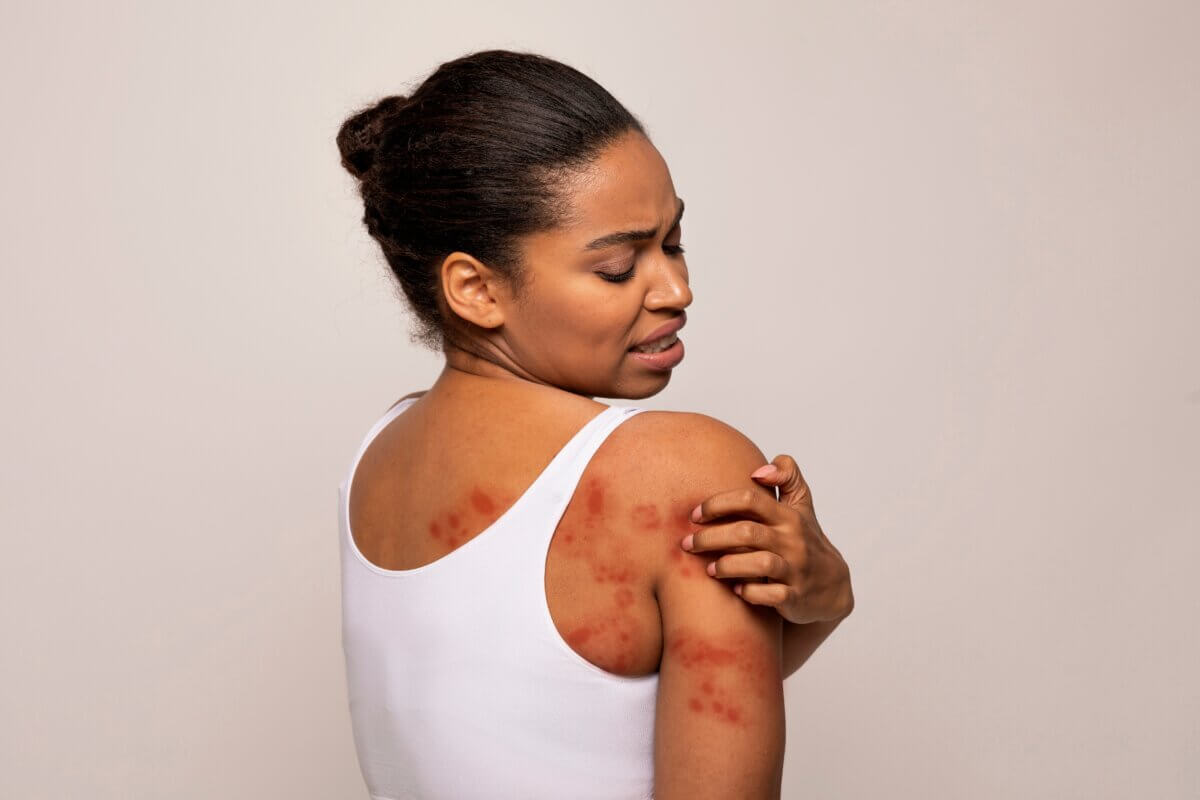
A new AI tool can analyze how severe eczema is with just a photo. (Prostock-studio/Shutterstock)
In a nutshell
- A new AI system can assess eczema severity from smartphone photos with accuracy comparable to dermatologist evaluations, offering a promising tool for at-home monitoring.
- The AI’s severity scores strongly matched expert assessments (R = 0.73) but had a weak correlation with patients’ self-reported itch levels (R = 0.11), highlighting the disconnect between how eczema looks and how it feels.
- While the technology shows great potential, it still needs validation across more diverse populations and skin types before widespread use in clinical settings.
TOKYO — Snapping a photo of an itchy, red patch on your arm could soon be all you need for an instant assessment of how severe your eczema really is. Researchers from Japan have developed an artificial intelligence system that can accurately evaluate atopic dermatitis severity from smartphone photos, and it might be more reliable than patients’ own perceptions of their condition.
A new study published in the journal Allergy reveals that AI can successfully identify body parts, detect eczema-affected areas, and assign severity scores that closely match those given by board-certified dermatologists. The technology analyzed nearly 10,000 real-world photos uploaded by users of Japan’s largest online eczema platform, representing a significant leap forward in digital health monitoring.
The AI system showed only a weak connection with patients’ self-reported itch intensity, suggesting that how much your eczema itches doesn’t necessarily reflect how severe it actually looks. This disconnect between what patients feel and what doctors see is often a challenge for dermatologists, and the new AI tool could help bridge that gap.
For the millions of Americans living with atopic dermatitis, a chronic skin condition affecting up to 13% of children and 7% of adults, this technology could revolutionize how they monitor their condition and communicate with healthcare providers. Currently, patients rely on subjective assessments that can vary wildly based on factors like stress, sleep deprivation, or simply having a bad day.
How the AI Detective Works
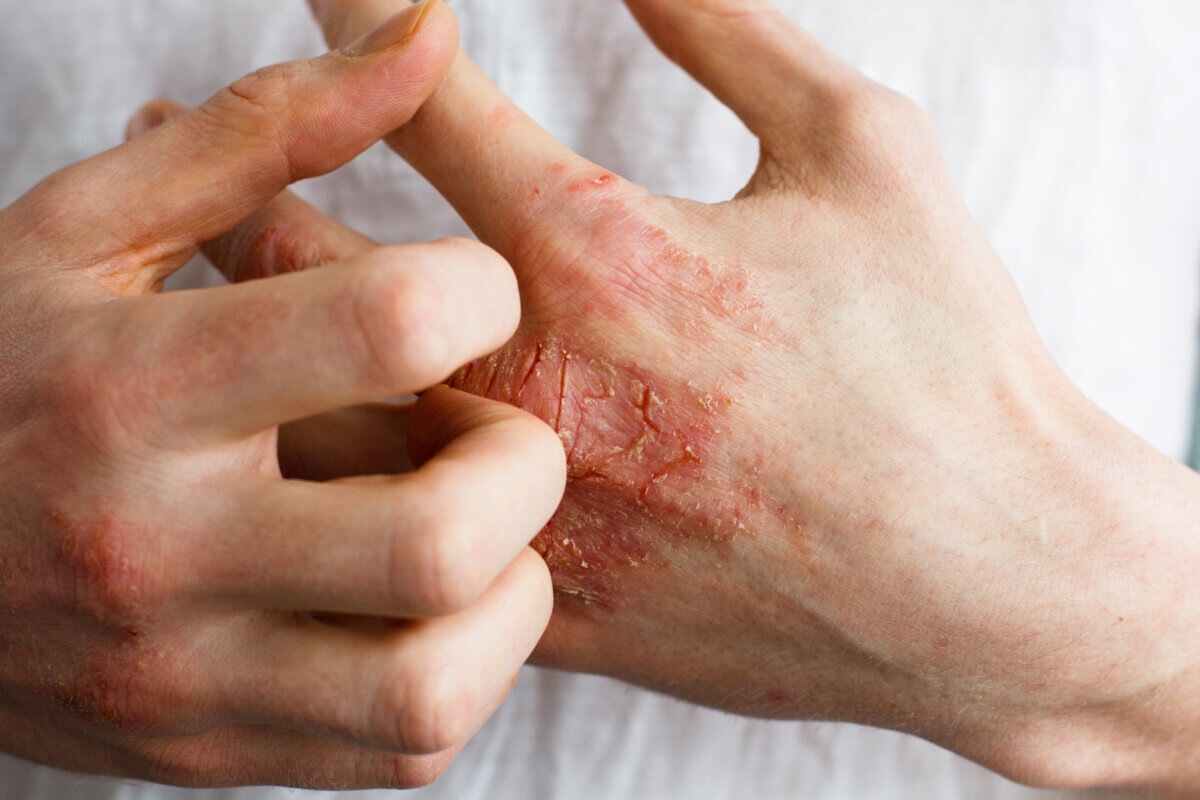
Researchers from Keio University and their collaborators trained their AI system using three sophisticated computer programs working together. First, the system identifies which body part is shown in the photo—whether it’s an arm, leg, face, or torso. Next, it pinpoints exactly where eczema lesions appear on that body part. Then, it evaluates the severity using what’s called the Three Item Severity score, which looks at three key factors: redness, swelling or bumps, and scratching damage.
The AI was trained on photos from “Atopiyo,” an online platform where more than 28,000 Japanese users have shared over 57,000 photos of their eczema symptoms along with comments about their experiences. From this massive dataset, researchers selected 9,656 high-quality images from 900 users to develop and test their system.
The AI correctly identified body parts 98% of the time and detected eczema areas with 100% accuracy. When compared to assessments made by dermatologists and allergy specialists, the AI’s severity scores matched closely, showing what scientists call a strong correlation of 0.73 on a scale where 1.0 would be perfect agreement.
When researchers compared the AI’s objective severity assessments with patients’ self-reported itch intensity on a scale of zero to five, they found only a weak correlation of 0.11. In simpler terms, having more severe-looking eczema doesn’t necessarily mean you’ll feel itchier, and vice versa.
Itch is a complex sensation influenced by factors beyond just visible skin damage. Stress, weather, hormones, sleep quality, and even psychological state can all affect how intensely someone experiences itching, regardless of how their skin actually appears.
The study found that itching in atopic dermatitis doesn’t always line up with how severe the condition appears on the skin. Because itch is highly subjective, the researchers suggest that tools like smartphone apps could offer a more consistent and objective way to assess eczema.
How This Can Help Patients
Study participants reflected a typical eczema population: mostly young adults with a median age of 33, predominantly female (68%), who had been living with the condition for an average of 25 years. This demographic mirrors what dermatologists see in their practices, lending credibility to the AI system.
For patients, this technology could mean more consistent monitoring between doctor visits. Instead of trying to remember how their skin looked last week or struggling to describe symptoms over the phone, they could simply take a photo and get an objective assessment. This could be particularly valuable for parents monitoring children’s eczema or for patients making treatment decisions.

Healthcare providers could also benefit from having more standardized data. Currently, eczema severity assessment can vary between doctors and even from visit to visit with the same physician. An AI system could provide consistent baseline measurements, helping track treatment progress more accurately.
The researchers do acknowledge that the system isn’t perfect. The study focused primarily on a Japanese population, and the technology would need validation across different ethnicities and skin types before widespread adoption. The relatively small sample of patients who also received clinical assessments (just 15 people) means more research is needed to fully validate the system’s accuracy.
The technology also can’t capture everything doctors consider when evaluating eczema, such as how lesions feel to the touch, detailed patient history, or subtle signs that require medical training to recognize.
Despite these factors, the fact that AI can match dermatologist assessments from simple smartphone photos suggests we’re entering an era where patients could have powerful diagnostic tools literally in their pockets.
This AI system could help patients better understand their condition and make more informed decisions about when to seek treatment, potentially leading to better long-term outcomes for millions of people living with this chronic, often frustrating skin condition.
Paper Summary
Methodology
Researchers developed an AI system using three integrated algorithms to assess eczema severity from smartphone photos. They trained the system on 9,656 images from 900 users of Japan’s “Atopiyo” platform, uploaded between August 2018 and January 2024. The AI uses Single Shot MultiBox Detector and Convolutional Neural Network technologies to first identify body parts, then detect skin lesions, and finally assign Three Item Severity (TIS) scores ranging from 0-9 based on redness, swelling, and scratch damage. The researchers validated their results by comparing AI assessments with those made by board-certified dermatologists and allergists, and analyzed correlations with patient-reported itch intensity scores.
Results
The AI system achieved 98% accuracy in body part detection and 100% accuracy in identifying eczema lesions. AI severity scores showed strong correlation (R=0.73) with assessments made by medical specialists across 220 test images. However, AI scores showed only weak correlation (R=0.11) with patient-reported itch intensity across 8,556 images, suggesting that objective disease severity doesn’t strongly correspond to subjective symptom experience. Among 15 patients who received clinical assessments, AI scores correlated moderately with standard clinical measures: R=0.61 with TIS, R=0.53 with objective-SCORAD, and R=0.4 with full SCORAD.
Limitations
The study was conducted primarily on a Japanese population, limiting generalizability across different ethnicities and skin types. The clinical validation group was small (only 15 patients), and the AI currently uses the simplified TIS scoring system rather than more comprehensive clinical measures like EASI or full SCORAD. The technology analyzes individual photos rather than full-body assessments, potentially missing the complete clinical picture that dermatologists consider during in-person evaluations.
Funding and Disclosures
This research was partially supported by the AMED (Grant Number: JP22ek0410090), the Scientific Research Fund of the Ministry of Health, Labour and Welfare, Japan (Grant Number: 21FE2001), and SECOM Science and Technology Foundation. Several authors disclosed consulting relationships with pharmaceutical companies and grants from various foundations, while one author is affiliated with Atopiyo LLC, the platform that provided the image data.
Publication Information
“AI-Based Objective Severity Assessment of Atopic Dermatitis Using Patient Photos in a Real-World Setting: A Digital Biomarker Approach” was published in Allergy journal in 2025, with DOI: 10.1111/all.16586. The study was conducted by researchers from multiple Japanese institutions including Keio University School of Medicine, Kyoto University Graduate School of Medicine, and other medical centers across Japan.


