
(© Pixel-Shot - stock.adobe.com)
In A Nutshell
- Chinese scientists created an AI model that delivers 5-day weather forecasts in seconds.
- The system adapts medical imaging AI that’s normally used for detecting tumors to analyze atmospheric patterns.
- A new “cascade prediction” method and learnable noise injection significantly improved accuracy.
- In competition tests, the system outperformed traditional models, with a 0.1944-point gain over the baseline.
XI’AN, China — Weather forecasting might be getting a major upgrade thanks to an unlikely source: the same artificial intelligence used to analyze medical brain scans. Chinese researchers have developed a new AI system that can generate five-day weather forecasts in mere seconds, rather than the hours or days required by traditional supercomputer models that can cost millions of dollars to operate.
The work, published in Atmospheric and Oceanic Science Letters, changes how meteorologists might predict everything from weekend rain to dangerous storms. While weather services worldwide rely on massive numerical weather prediction systems that solve complex physics equations, this new method learns patterns directly from decades of historical weather data.
“Deep learning-based methods have become alternatives to traditional numerical weather prediction systems, offering faster computation and the ability to utilize large historical datasets,” the researchers wrote. Traditional forecasting methods face inherent limitations due to approximations in complex atmospheric processes and “the chaotic nature of the atmosphere, which amplifies errors over longer lead times.”

How Medical AI Technology Improves Weather Forecasting
The research team, led by Congqi Cao from Northwestern Polytechnical University in Xi’an, China, discovered that AI models originally designed to identify tumors and analyze brain scans excel at recognizing weather patterns across regions.
These medical imaging models proved superior to weather-specific AI systems when predicting regional forecasts with limited historical data. Traditional global weather models are designed to work with massive datasets covering the entire planet, but they struggle when focusing on specific regions where data might be scarce.
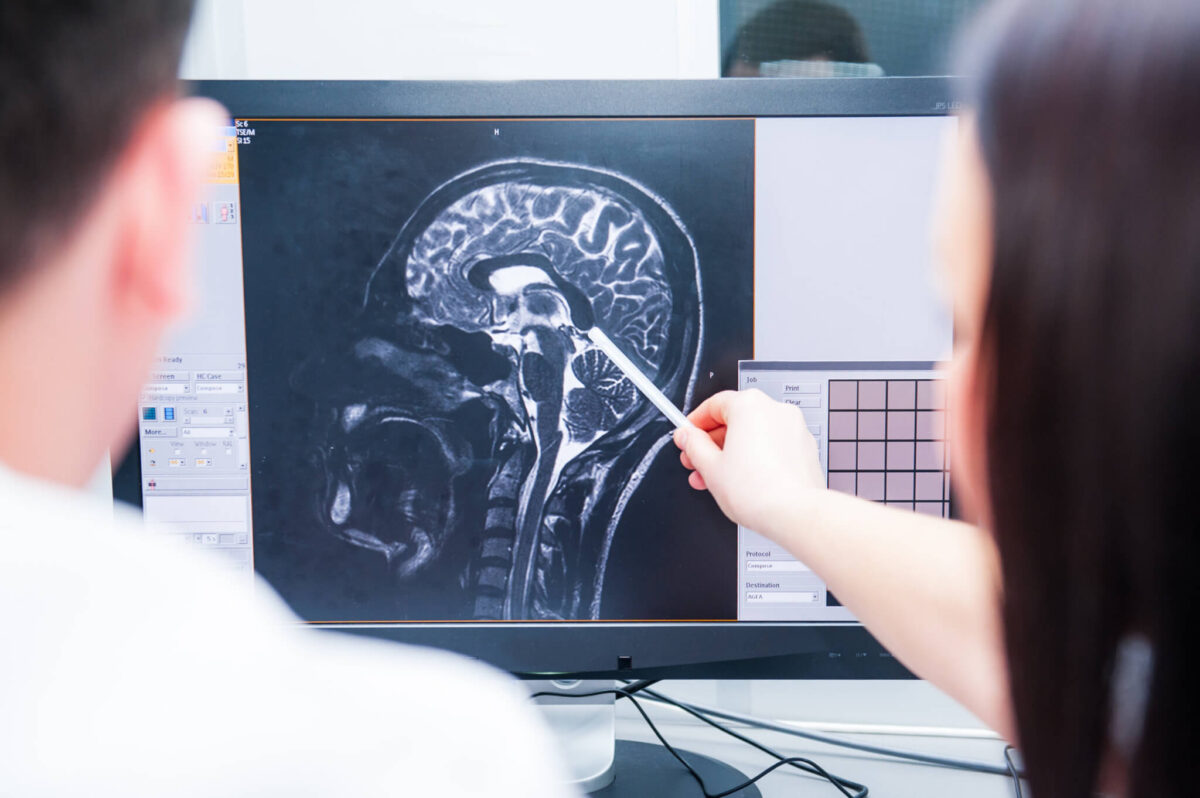
Medical imaging AI works well for weather prediction because both involve identifying complex patterns in multidimensional data – whether distinguishing healthy tissue from tumors or recognizing atmospheric conditions that indicate incoming storms.
Revolutionary Cascade Prediction Method Reduces Forecast Errors
Rather than relying on traditional methods that either predict all future time steps at once or build predictions step-by-step (which can accumulate errors), the researchers developed a “cascade prediction” approach. This breaks the five-day forecast into smaller chunks, with separate AI models trained to predict each segment while incorporating information from previous predictions.
The team also introduced learnable Gaussian noise, a technique that allows the AI to learn how much randomness to add to different geographic locations during training. Conventional methods that add fixed amounts of random variation actually made predictions worse, but this learnable approach improved accuracy.
The team tested their method using weather data from 2007 to 2016 across East Asia, including 70 different weather variables from temperature and humidity to wind patterns and precipitation, measured every six hours.
AI Weather Models Outperform Traditional Systems by 20%
Results from The East China Regional AI Medium Range Weather Forecasting Competition demonstrated clear advantages. When comparing different model types, the medical imaging models consistently outperformed established weather prediction AI systems. The highest-performing traditional weather AI model (FourCastNet) achieved a score of 0.2897, while the best medical imaging model (MISSFormer) reached 0.3147.
The cascade prediction method showed even more dramatic gains. The new approach achieved a score of 0.4048, surpassing standard prediction methods by wide margins. When combining all elements, the final system reached a score of 0.4313, representing nearly a 20% improvement over baseline methods.
Faster, Cheaper Weather Forecasting Could Transform Access
These advances address the key limitations of current weather forecasting infrastructure. Traditional numerical weather prediction models require high-performance supercomputers and generate forecasts “within hours or days,” while the new AI system produces results in seconds.
The computational efficiency gains could democratize weather forecasting, potentially allowing smaller meteorological services or developing regions to access high-quality predictions without investing in expensive supercomputing infrastructure. Currently, only major weather services and government agencies can afford the computational resources required for detailed weather modeling.
The method has limitations. The study focused specifically on regional forecasting for East Asia using a standardized dataset. The method’s performance in other geographic regions or climate conditions requires further validation.
As extreme weather events become more frequent and costly due to climate change, improvements in prediction accuracy and accessibility could have major societal benefits – potentially making life-saving weather predictions faster and more accessible than ever before.
Disclaimer: This article is based on a peer-reviewed scientific paper. While the findings are promising, the AI system discussed is designed for regional forecasts over East Asia and has not yet been validated globally. Its performance may vary in different geographic or climatic conditions.
Paper Summary
Methodology
Researchers used weather data from 2007-2016 covering atmospheric conditions across East Asia on a detailed grid. The dataset included 70 weather variables measured every six hours. They tested medical imaging AI models including MISSFormer, ConvNeXt, ConResNet, MedNeXt, and PVT-CASCADE, alongside traditional weather prediction models. The team introduced learnable Gaussian noise and a cascade prediction method that divides five-day forecasts into smaller segments predicted by separate sub-models. They used nine years of data for training and one year for validation.
Results
Medical imaging models consistently outperformed traditional weather prediction AI models, with MISSFormer achieving 0.3147 versus 0.2897 for FourCastNet. The cascade prediction method showed marked improvements, reaching 0.4048 compared to 0.3205 for standard methods. The final ensemble of six models achieved a score of 0.4313, representing a 0.1944 improvement over baseline methods and competitive results in The East China Regional AI Medium Range Weather Forecasting Competition.
Limitations
The study focused specifically on regional forecasting for East Asia using standardized competition data, limiting generalizability to other geographic regions or climate conditions. The method’s performance in different atmospheric conditions or seasonal patterns requires further validation. The evaluation was conducted on a specific competition dataset, which may not represent all real-world forecasting scenarios.
Funding and Disclosures
This research was supported by the National Natural Science Foundation of China (grant number 62376217), the Young Elite Scientists Sponsorship Program by CAST (grant number 2023QNRC001), and the Joint Research Project for Meteorological Capacity Improvement (grant number 24NLTSZ003). The paper was published as an open access article under the CC BY license.
Publication Information
Cao, C., Sun, Z., Hu, L., Pan, L., & Zhang, Y. “A novel deep learning-based framework for five-day regional weather forecasting,” published online in Atmospheric and Oceanic Science Letters on May 26, 2025. DOI: 10.1016/j.aosl.2025.100653


