A glacier in Juneau, Alaska (Photo by Maddox Furlong on Unsplash)
Does resurgence of bubbling springs mean the ‘sleeping giant’ will soon awaken again?
LOGAN, Utah — Will another big earthquake strike the Denali fault in Alaska? In 2002, a powerful earthquake along this fault, which runs 1,200 miles across Alaska and Canada, caused significant damage to remote villages and infrastructure in central Alaska. Recently, a team of researchers from Utah State University embarked on a mission to uncover the secrets of this sleeping giant.
“It’s a big, sweeping fault and the source of a magnitude 7.9 earthquake in 2002, that ruptured more than 200 miles of the Denali Fault, along with the Totschunda Fault to the east, causing significant damage to remote villages and central Alaska’s infrastructure,” explains Dennis Newell, a geochemist at Utah State University studying the fault, in a media release.
In a quest to better understand what drives the Denali’s powerful seismic cycle, Newell and colleagues have been examining the fault’s deep underground connections to the Earth’s mantle. By analyzing helium and carbon isotopes in springs along a 250-mile segment of the fault line, they’ve gained insights into how earthquakes impact and alter these mantle-to-crust linkages.
“Helium-3, a rare isotope of helium gas, in springs is a good indicator of whether or not an area has a connection to the Earth’s mantle,” Newell says.
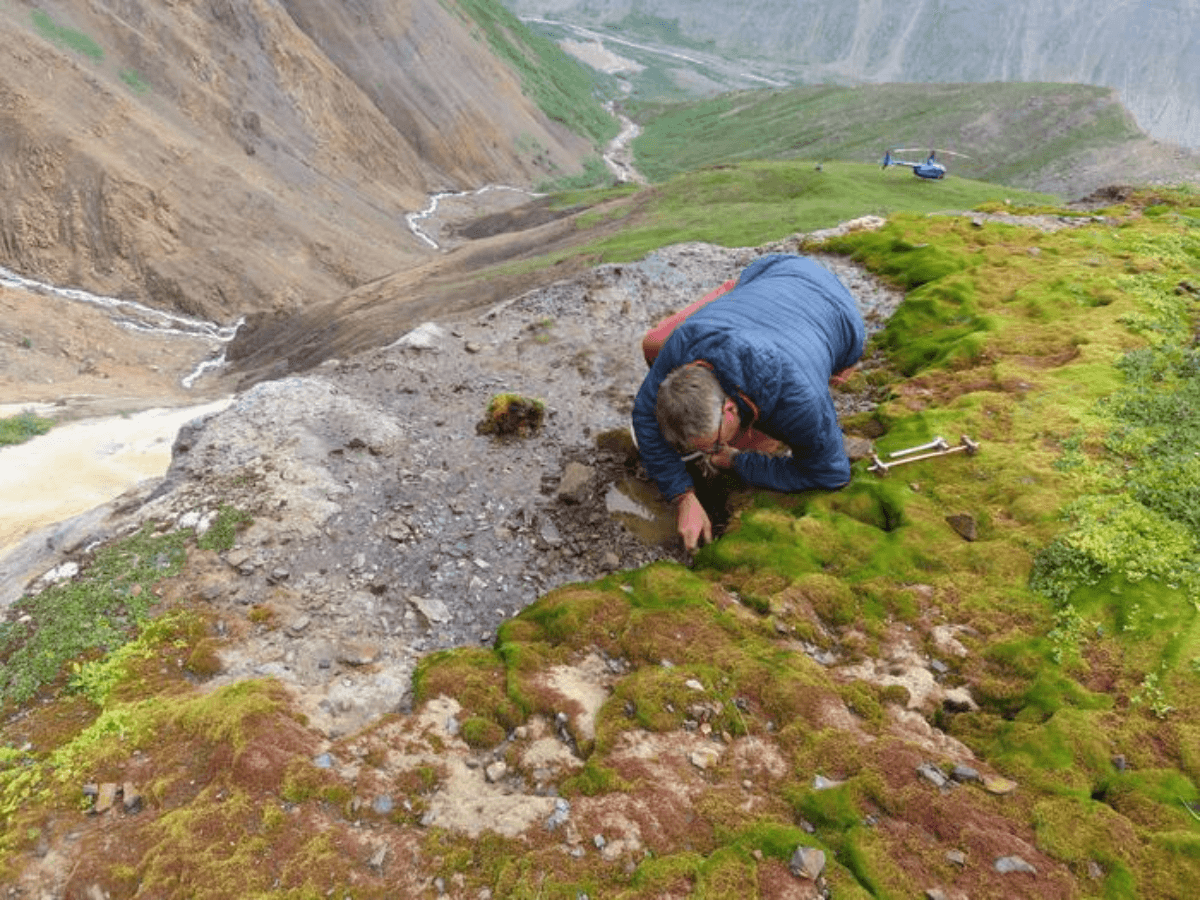
Publishing their work in the journal Geology, his team found that warm, bubbling springs west of the 2002 rupture show a strong helium-3 signature, indicating intact mantle connections. However, along the ruptured fault segment itself, only atmospheric gases were detected — suggesting the quake severed the underground pathways, creating a “roadblock” for mantle helium.
This implies that major quakes can temporarily disrupt the underground fluid channels supplying volatiles like helium from the mantle. Over time, however, these connections appear to re-establish.
“The last major earthquake on the Cantwell segment was 400 years ago, and the helium data suggest those mantle connections have been reestablished,” says Newell.
The resurgence of bubbling springs near Denali National Park may foreshadow future large quakes in the region. Beyond understanding the fault’s plumbing, the researchers also aim to quantify how quickly mantle-derived helium and other fluids migrate up to the surface — the so-called “speed limit” of mantle-to-crust fluid flow. Preliminary findings suggest the flow rates along Denali are comparable to other major strike-slip boundaries like California’s San Andreas and Turkey’s North Anatolian faults, which have hosted devastating quakes.
“Quantifying crust-to-mantle connections along major strike-slip faults is critical for understanding linkages between deep fluid flow, seismicity and fault healing,” Newell states.
By decoding the underground circulation patterns, geologists hope to gain insights into what controls the strength of faults and their seismic hazard potential. While the Denali Fault slumbers for now in its Alaskan lair, this study offers a rare glimpse into the inner workings of one of the world’s most formidable fault lines. With over 600,000 visitors flocking to Denali National Park each summer, maintaining a watchful eye on the fault’s rumblings takes on heightened importance.
StudyFinds Editor Chris Melore contributed to this report.


