
A common Alzheimer’s drug can send the body into a state of “suspended animation” — essentially stopping time inside of critically ill patients! (© wetzkaz - stock.adobe.com)
BOSTON — In the race against time that often defines emergency medicine, scientists have made a breakthrough that sounds like science fiction: they’ve found a way to slow down life itself. Researchers at Harvard University’s Wyss Institute for Biologically Inspired Engineering have discovered that a common Alzheimer’s drug can send the body into a state of “suspended animation” — essentially stopping time inside of critically ill patients!
Specifically, researchers found that donepezil (DNP) can induce a hibernation-like state in animals that don’t naturally hibernate. The finding could potentially transform how we handle medical emergencies, extending the crucial “Golden Hour” during which lifesaving treatment is most effective.
Imagine a world where paramedics could administer a drug that temporarily slows a patient’s metabolism, buying precious time to transport them to a hospital without risking further organ damage. This scenario, once the stuff of medical dramas and sci-fi thrillers, is now one step closer to reality.
Donepezil has been used to treat Alzheimer’s disease since 1996. But in this study, published in the journal ACS Nano, researchers found an entirely new use for it: inducing a state of “biostasis” or torpor – a hibernation-like condition characterized by dramatically slowed bodily functions.
“Cooling a patient’s body down to slow its metabolic processes has long been used in medical settings to reduce injuries and long-term problems from severe conditions, but it can only currently be done in a well-resourced hospital,” says co-author Michael Super, Ph.D., Director of Immuno-Materials at the Wyss Institute, in a media release. “Achieving a similar state of ‘biostasis’ with an easily administered drug like DNP could potentially save millions of lives every year.”
The research team, led by Donald Ingber, M.D., Ph.D., used a combination of sophisticated computer algorithms and laboratory experiments to identify DNP as a promising candidate for inducing torpor. They then tested the drug on tadpoles of the African clawed frog (Xenopus laevis), which don’t naturally hibernate.
When given DNP, the tadpoles entered a torpor-like state, showing reduced movement, slower heart rates, and lower oxygen consumption. However, the researchers encountered a challenge: at higher doses or longer exposure times, the drug became toxic to the tadpoles.
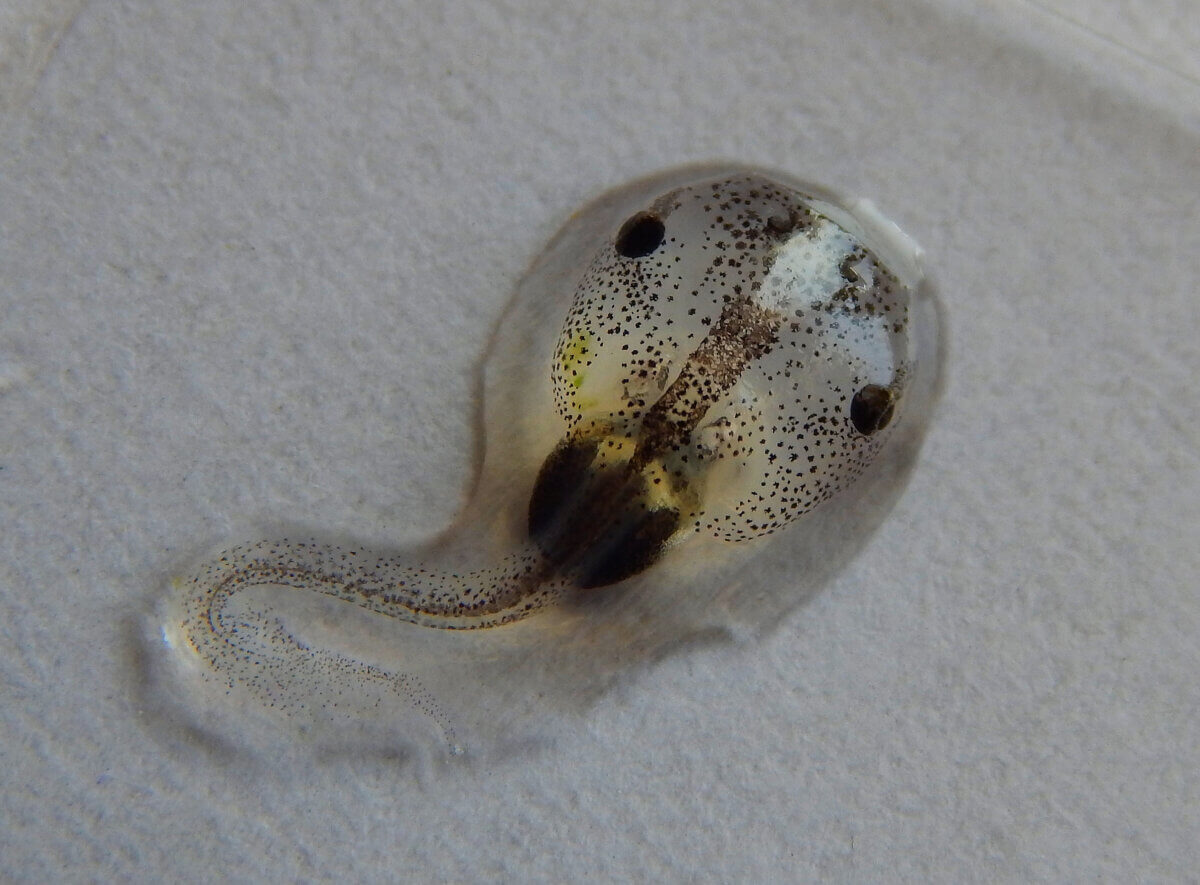
To overcome this hurdle, the team turned to nanotechnology. They encapsulated DNP in tiny lipid nanocarriers – essentially, microscopic bubbles of fat. This innovative delivery method not only reduced the drug’s toxicity but also caused it to accumulate more in the tadpoles’ brain tissue. This is particularly significant because the brain plays a crucial role in regulating metabolism and body temperature.
“Interestingly, clinical overdoses of DNP in patients suffering from Alzheimer’s disease have been associated with drowsiness and a reduced heart rate – symptoms that are torpor-like. However, this is the first study, to our knowledge, that focuses on leveraging those effects as the main clinical response, and not as side effects,” explains the study’s first author, María Plaza Oliver, Ph.D., who was a Postdoctoral Fellow at the Wyss Institute when the work was conducted.
The potential applications of this research are far-reaching. In emergency situations, especially in remote areas or disaster zones, the ability to induce a temporary state of biostasis could be life-saving. It could give medical professionals more time to transport patients to hospitals or to perform complex procedures.
Moreover, this approach could have implications beyond emergency medicine. It might prove useful in organ transplantation, complex surgeries, or even space travel, where slowing down bodily functions could be beneficial.
However, it’s important to note that this research is still in its early stages. While the results in tadpoles are promising, many more studies will be needed to determine if this approach is safe and effective in larger animals and, eventually, in humans.
Despite these challenges, the researchers are optimistic about the potential of their discovery.
“Donepezil has been used worldwide by patients for decades, so its properties and manufacturing methods are well-established. Lipid nanocarriers similar to the ones we used are also now approved for clinical use in other applications. This study demonstrates that an encapsulated version of the drug could potentially be used in the future to buy patients critical time to survive devastating injuries and diseases, and it could be easily formulated and produced at scale on a much shorter time scale than a new drug,” Ingber notes.
Paper Summary
Methodology
The researchers used a multi-step approach in their study. First, they used a computer program called NeMoCad to analyze genetic data and predict which drugs might induce a torpor-like state. This led them to donepezil (DNP). They then tested DNP on tadpoles of the African clawed frog (Xenopus laevis), observing how it affected their movement, heart rate, and oxygen consumption.
To create the lipid nanocarriers, the researchers mixed DNP with soybean oil and other compounds, then used a special technique to form tiny, stable droplets. They thoroughly examined these droplets to ensure they were the right size and contained the drug properly.
The team then compared how tadpoles responded to regular DNP versus the nanocarrier version. They looked at how long the torpor-like state lasted, whether the tadpoles survived, and how much of the drug reached different parts of their bodies, especially the brain.
Key Results
The study found that DNP could indeed induce a torpor-like state in tadpoles, characterized by reduced movement, slower heart rate, and lower oxygen consumption. However, higher doses or longer exposure to the drug alone were toxic to the tadpoles.
The nanocarrier version of DNP solved this problem. It allowed the tadpoles to remain in a torpor-like state for up to 8 hours without harmful effects. When the drug wore off, the tadpoles returned to normal.
Importantly, the nanocarrier delivered more of the drug to the tadpoles’ brains compared to the regular drug. This is crucial because the brain plays a key role in regulating metabolism and body temperature.
Study Limitations
While this study is promising, it has several limitations. The research was conducted only on tadpoles, which, while useful for initial studies, are very different from humans. The results might not translate directly to larger animals or humans.
The study also focused on short-term effects. More research is needed to understand any potential long-term consequences of inducing this torpor-like state.
Additionally, while the nanocarrier reduced toxicity, some tadpoles still didn’t survive long treatments. This indicates that more work is needed to refine the approach and ensure its safety.
Discussion & Takeaways
This study represents an innovative approach to inducing a hibernation-like state in animals that don’t naturally hibernate. By combining a repurposed drug with nanotechnology, the researchers were able to create a safer, more effective method of slowing down metabolism.
The potential applications of this research are exciting, particularly in emergency medicine. If this approach can be safely translated to humans, it could provide a way to “buy time” for severely injured patients, potentially saving lives in situations where immediate medical care isn’t available.
Moreover, this study demonstrates the power of interdisciplinary research. By combining computer analysis, pharmacology, nanotechnology, and biology, the researchers were able to develop a novel solution to a complex problem.
However, it’s crucial to remember that this is early-stage research. Many more studies will be needed to determine if this approach is safe and effective in larger animals and, eventually, in humans.
Funding & Disclosures
This research was supported as part of the DARPA Biostasis Program, which funds projects that aim to extend the time for lifesaving medical treatment following traumatic injury or acute infection. The Wyss Institute has been a participant in the Biostasis Program since 2018.
The authors declared no competing financial interests, meaning they don’t stand to gain financially from the results of this study.


