
(Credit: AI Image Generator on Shutterstock)
In A Nutshell
- Americans eat through their Halloween candy stash twice on average before trick-or-treaters arrive, with 1 in 4 people restocking three or more times
- More than half make last-minute candy runs despite planning ahead, creating a predictable cycle of buying, sneaking, and emergency restocking
- Halloween enthusiasts spend nearly 5.5 hours creating costumes, with hair and makeup taking the longest, as the holiday becomes a platform for self-expression
- 4 in 10 now hand out allergy-friendly alternatives like fidget toys and friendship bracelets instead of candy to include all children
The Halloween candy bowl meant for neighborhood kids has become an adult temptation Americans can’t resist. New survey data reveals a pattern of candy consumption and guilt that plays out in homes across the country each October: adults eat through their entire Halloween stash twice on average before the first trick-or-treater arrives.
Research involving 2,000 American adults, commissioned by CVS Pharmacy through Talker Research, exposes what many suspected but few admit openly. One in four people restocked their candy supply three or more times before October 31st. The reason is straightforward: adults keep sneaking pieces from the bowl until the bags are empty, then make emergency store runs to replace what vanished.
This pattern affects people regardless of their planning style. About a third of respondents stock up and decorate by October 1st, positioning themselves as prepared hosts. Yet more than half still make frantic last-minute candy purchases. The cycle becomes predictable: buy candy weeks early, eat it steadily while promising to stop, face an empty bowl days before Halloween, rush back to the store.
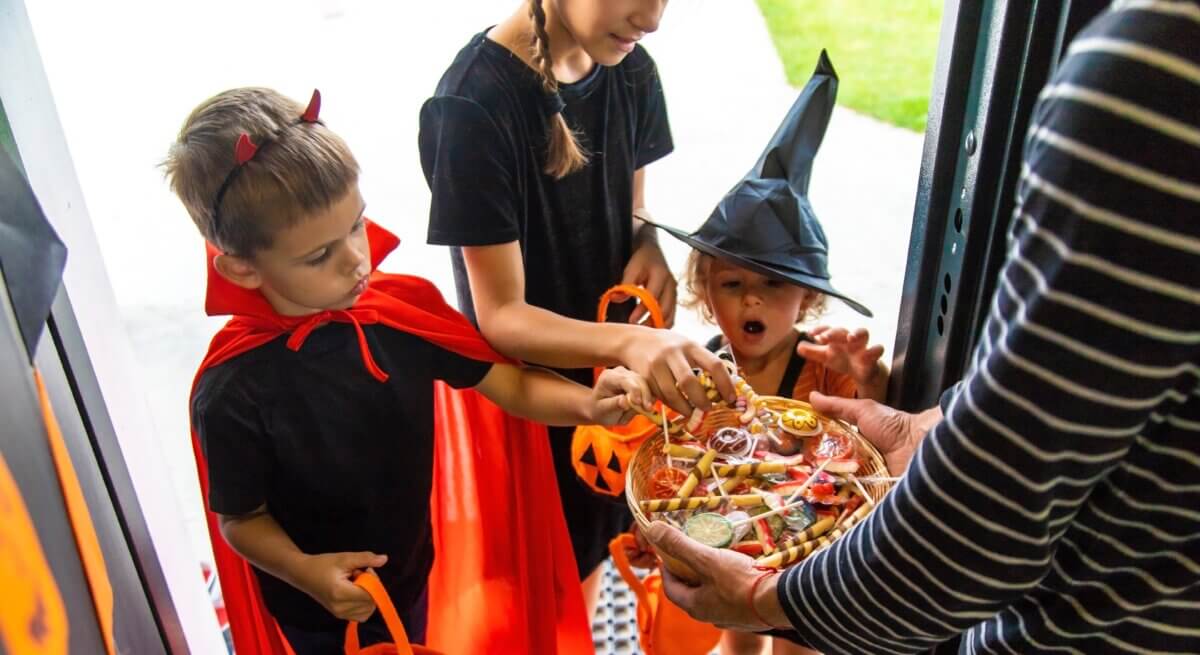
Candy isn’t the only item driving last-minute shopping trips. Among people who dress up, 43% need finishing touches or makeup as the holiday approaches. Creating Halloween costumes demands significant time investment, with respondents spending nearly five and a half hours assembling their looks. Hair and makeup consume most of that time, showing how Halloween has shifted from simple costumes to elaborate creative displays.
Roughly 62% of Americans call themselves “Halloween people,” with Gen Z and millennials most enthusiastic. These fans share certain traits: they prefer sweet snacks over salty ones by more than two to one, lean toward introversion, and were often born under Leo, Cancer, or Taurus.
When asked what makes Halloween worthwhile, 42% pointed to candy as the top reason. Costumes came in second at 27%, followed by fall atmosphere at 23% and spooky vibes at 21%. Parents highlighted their children’s excitement as one of the best parts, with 23% naming it specifically.
Decorating has become competitive. Half of people who put up Halloween decorations believe they have the best-looking house on their block. Basic math suggests most neighborhoods have multiple households claiming this distinction, each convinced their display outshines the rest.
One meaningful change involves accommodating children with food allergies. Four in ten people plan to hand out non-food items like fidget toys, friendship bracelets, or small stuffed animals. Among those choosing alternatives to candy, fidget toys lead at 23%, friendship bracelets follow at 21%, and small stuffed animals tie at 21%.
Restocking Halloween candy multiple times might seem like a minor quirk, but it reveals something about how Americans handle preparation and self-control. People want to be ready for trick-or-treaters. They want full bowls and happy kids. They just can’t walk past their own candy supply without taking a piece. Or five. The consequence is a ritual familiar to millions: the slightly embarrassed late-October return to the store for replacement candy, hoping not to run into neighbors who might wonder why someone needs a third bag of mini Snickers in two weeks.
Methodology
Talker Research surveyed 2,000 general population Americans on behalf of CVS Pharmacy. The survey was administered and conducted online between September 11 and September 15, 2025. Researchers sourced respondents from non-probability frames using traditional online access panels, where respondents opt in to take part in online market research for an incentive, and programmatic methods, where online respondents are given the option to take a survey for a virtual incentive. The survey was conducted in English, and respondents were awarded points with small cash-equivalent monetary value for completing it. Interviews were excluded from final analysis if they failed quality-checking measures, including speeders who completed the survey too quickly, inappropriate open-ended responses, bots identified through Captcha, and duplicate responses. Cells are only reported for analysis if they have a minimum of 80 respondents, with statistical significance calculated at the 95% level. Data is not weighted, but quotas and parameters were implemented to reach the desired sample.


