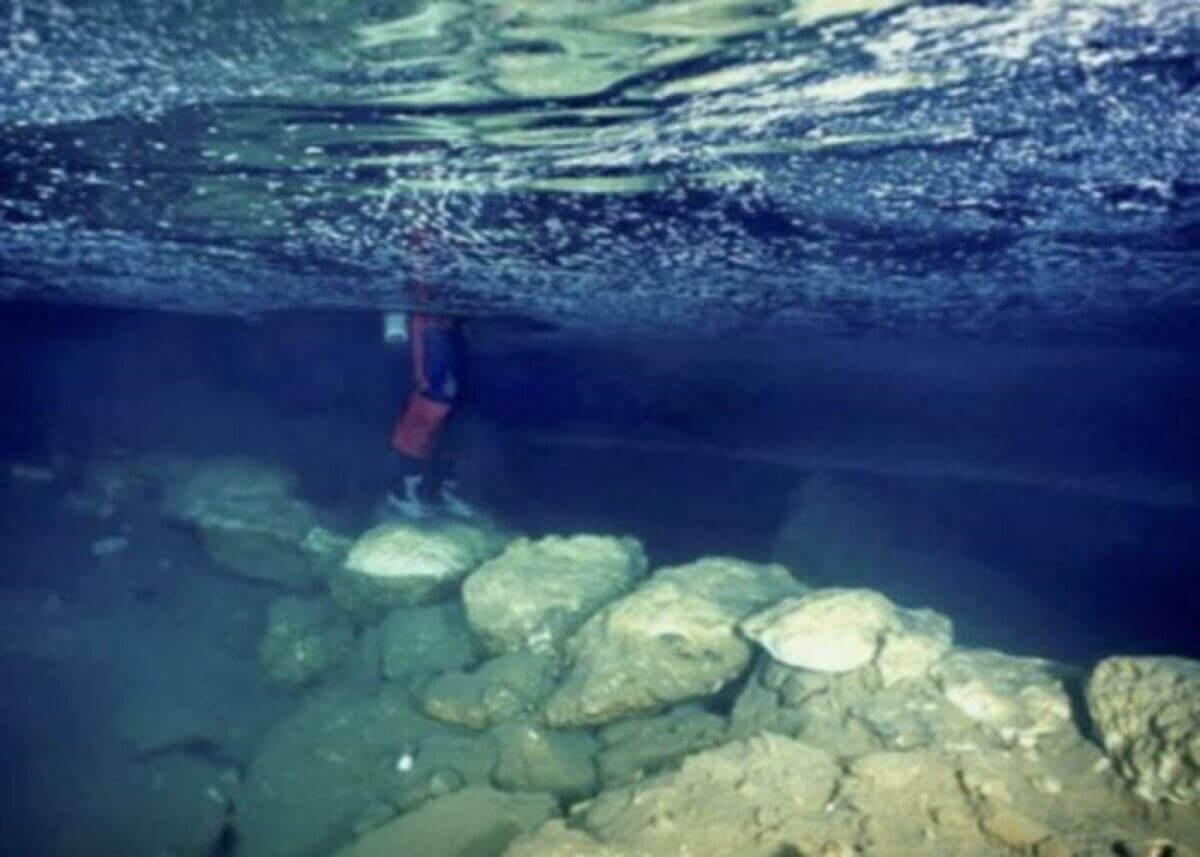
View of the submerged stone bridge from Genovesa Cave, Mallorca, Spain. (Credit: R. Landreth)
TAMPA — The discovery of a 25-foot ancient bridge submerged in a Spanish cave has rearranged the timeline of when humans first arrived in the Mediterranean. These new findings now suggest that humans settled there at least 5,600 years ago — much earlier than researchers previously estimated.
The study, published in the journal Communications Earth & Environment, analyzed the submerged stone bridge to settle a long archeological controversy about when humans crossed the western Mediterranean islands. Creating a historical timeline of when humans inhabited the Mediterranean islands has been difficult because of insufficient archaeological evidence.
However, the 25-foot bridge inside Genovesa Cave, found on the Spanish island of Mallorca, paints a new perspective of early human history.
“The presence of this submerged bridge and other artifacts indicates a sophisticated level of activity, implying that early settlers recognized the cave’s water resources and strategically built infrastructure to navigate it,” explains study lead author Bogdan Onac, a professor of geology at the University of South Florida, in a media release.
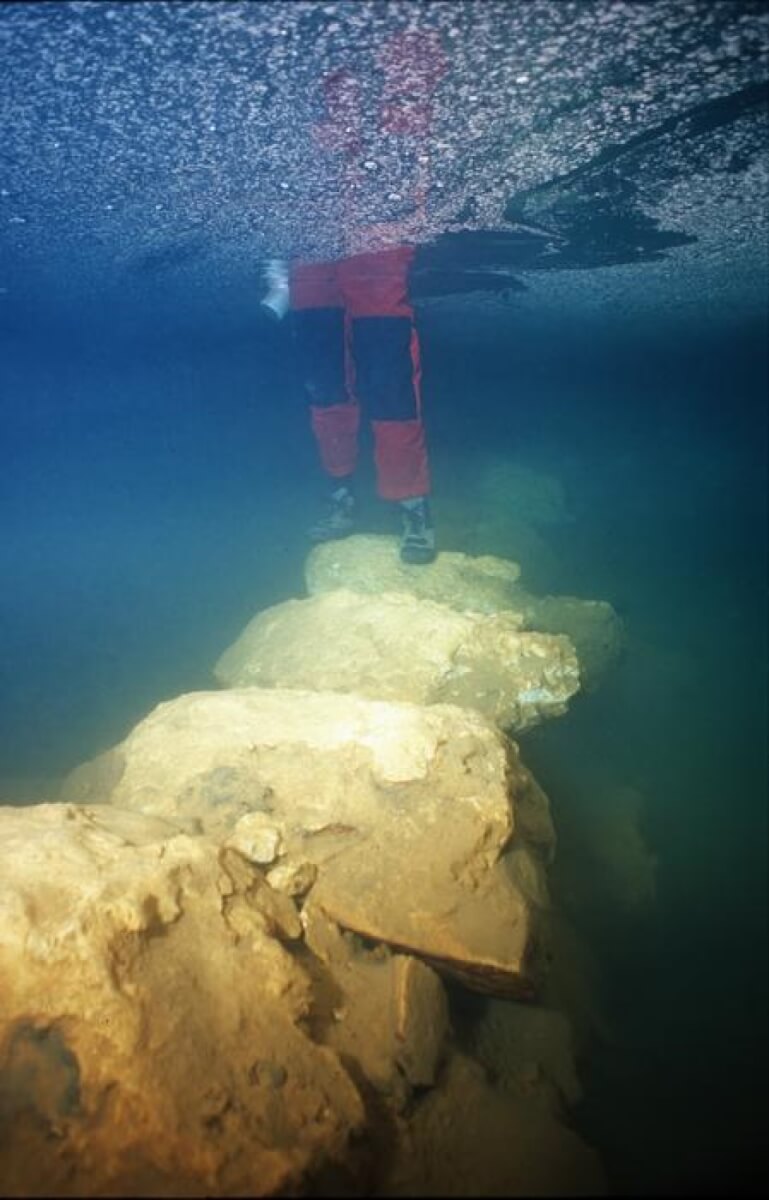
The Spanish cave preserved the bridge after rising sea levels flooded the passageways. When there’s high tide, these caves create calcite encrustations, which form a light-colored band on the submerged bridge. This allowed archaeologists to trace historical sea-level changes and when the bridge was first made. Researchers specifically looked at the overgrowths of minerals attached to the bridge and measured the coloration band on the bridge.
The new findings show the bridge was created close to 6,000 years ago. The latest conclusion is 2,000 years earlier than previous estimates, shortening the timeline between when humans settled in the eastern and western Mediterranean.
Mallorca is the sixth largest island in the Mediterranean and the last colonized territory. Previous evidence estimated humans landed on the island about 9,000 years ago. However, this date has always been contested because artifacts, such as bones and pottery, used for radiocarbon dating were not in the best conditions.
Other research studying the timeline of human settlement estimated that humans arrived in the Mediterranean around 4,400 years ago after analyzing the island’s charcoal, ash, and bones. An earlier timeline of human activity would align with significant environmental changes, such as the extinction of the goat-antelope genus Myotragus balearicus.
The researchers believe this recent discovery settles a long-standing debate among archaeologists and creates a more accurate timeline of when ancient human nomads traveled worldwide.
“This research underscores the importance of interdisciplinary collaboration in uncovering historical truths and advancing our understanding of human history,” Onac concludes.
The authors are continuing to investigate cave systems, especially those with mineral deposits dating back millions of years, to measure sea levels before human activity in the area. These measurements will help paint another important picture: how greenhouse warming has affected sea levels over time.
Paper Summary
Methodology
The researchers used a variety of techniques to study the submerged bridge in Genovesa Cave in Mallorca, Spain. They mapped the location and depth of the bridge and a distinct coloration band near its top using underwater surveying equipment like compasses, laser distance measurers, and a total station.
They also collected samples of phreatic overgrowths on speleothems (POS) – mineral deposits that form on cave walls and ceilings when the water table is stable for a period of time. They used uranium-series dating to determine the ages of these POS samples, which provided insights into past sea levels in the region.
Key Results
The uranium-series dating revealed three distinct periods of sea level stability in Mallorca over the last 6,000 years. The most relevant period for the bridge was between around 5,964 and 5,359 years ago, when the sea level remained relatively constant at about 1.1 meters below the current shoreline.
This period coincided with the formation of a distinct coloration band near the top of the submerged bridge, indicating the bridge was already in place at that time. The researchers concluded the bridge was likely constructed sometime between 6,000 and 5,600 years ago, before rising seas eventually submerged it.
Study Limitations
The study acknowledges some limitations, such as the lack of written records or a clear stratigraphic context to definitively date the bridge construction. The researchers had to rely on indirect evidence from the sea level curve and the POS samples to constrain the bridge’s age. Additionally, the exact reasons behind the construction of the bridge and associated structures in Genovesa Cave remain unclear.
Discussion & Takeaways
The key findings of this study are that the submerged bridge in Genovesa Cave was likely constructed between around 6,000 and 5,600 years ago, much earlier than previous estimates based on archaeological artifacts found in the cave. This provides strong evidence for an early human presence on the island of Mallorca, potentially dating back to 6,000 years ago or more.
The study highlights the value of integrating different proxies, such as submerged archeological structures and speleothem records, to reconstruct past environmental and human activity. The researchers suggest this approach could be applied to uncover more details about the timing and nature of the earliest human colonization of other Mediterranean islands.
Funding & Disclosures
This research was supported by several National Science Foundation awards to the co-authors. The authors declare no competing interests.


