
AI-generated conceptual portrait of Emperor Caligula wearing a golden laurel wreath and red toga in front of an ancient mural. (© Anna - stock.adobe.com)
In A Nutshell
- New research suggests Emperor Caligula may have had genuine pharmacological knowledge, not just a reputation for poisoning.
- A Roman senator’s trip to Antikyra, an ancient “Mayo Clinic” for hellebore treatments, reveals how elite Romans sought cutting-edge medicine.
- Historical accounts by Suetonius and Cassius Dio may have twisted Caligula’s medical knowledge into horror stories.
- This study highlights how ancient medical practices and politics shaped the “mad emperor” legend.
NEW HAVEN, Conn. — Most people know Caligula as one of history’s most deranged rulers: a bloodthirsty Roman emperor who supposedly made his horse a consul and murdered people for entertainment. But new research suggests the notorious ruler likely possessed surprisingly detailed medical knowledge for his time, expertise that ancient historians may have twisted into tales of mass poisoning.
Ancient Medical Tourism and Imperial Cruelty
A study published in the Proceedings of the European Academy of Sciences & Arts centers on a brief but telling story from the Roman historian Suetonius. An ex-praetor (a high-ranking Roman official) had traveled to the Greek port town of Antikyra for specialized treatment with hellebore, a powerful plant remedy used in the ancient world for conditions like mental illness, epilepsy, and melancholy.
When the senator repeatedly requested extensions for his medical leave, Caligula ordered him executed with the chilling quip: “a bloodletting was necessary for one whom hellebore had not benefited in all that time.”
Trevor S. Luke of Florida State University and Andrew J. Koh of Yale University argue that Caligula’s remark mirrors language found in medical texts of his day — evidence that he likely understood treatment timelines and pharmacological alternatives rather than acting out of sheer cruelty.

“Our work suggests that Antikyra functioned as a kind of Mayo Clinic of the Roman world — a place where affluent and influential Romans visited for medical treatments not widely available elsewhere,” said Koh, principal investigator of the Yale Ancient Pharmacology Program (YAPP) and a research scientist at the Yale Peabody Museum, in a statement. “It also provides evidence that Caligula, while a tyrant, was more knowledgeable about medicine than has been previously understood.”
“It is remarkable that Antikyra is mentioned in the historical record since it was never an important cultural or economic destination,” Luke said. “It was known for hellebore treatments and little else. It’s an example of ancient medical tourism.”
Antikyra’s renown came not just from raw hellebore but from how local healers prepared it. Ancient physicians mixed the plant with another ingredient called sesamoides to make its harsh purgative effects safer. The town’s reputation was so well established that the phrase “To Antikyra, with you!” became a popular insult for calling someone mad.
Marcus Livius Drusus, Caligula’s great-great-grandfather, had successfully traveled to Antikyra in 91 BCE for epilepsy treatment. He was eventually cured of his condition there, establishing a family connection to these medical practices that may have influenced Caligula’s pharmaceutical knowledge.
Family Tragedy Fueled Caligula’s Medical Expertise
The researchers note that Caligula’s interest in medicine could have stemmed from family trauma. His father, Germanicus, died under suspicious circumstances the family believed involved poisoning, creating a paranoid atmosphere that motivated relatives to study plants, poisons, and antidotes for survival. The authors describe him as likely possessing “a nerd’s knowledge of medicinal plants.”
They further argue that Caligula likely suffered from medical conditions that Antikyran potions were believed to treat. Ancient sources suggest he had childhood epilepsy and, as an adult, severe insomnia — reportedly sleeping only a few hours each night while plagued by nightmares — all ailments for which hellebore was commonly prescribed.
Rewriting the Mad Emperor Caligula Narrative
Ancient historians like Suetonius and Cassius Dio portrayed Caligula as a ruler who used poisons to eliminate rivals and heirs. These are stories that the study suggests may have exaggerated or distorted his real pharmacological knowledge. While the researchers do not dispute Caligula’s reputation as a cruel ruler, they argue he was probably more learned than the monstrous caricature that history has passed down.
The study cites the philosopher Philo of Alexandria’s portrayal of Caligula as an emperor endowed with impressive stores of practical knowledge, including a strong understanding of trade routes and seamanship. Philo also comments on how Caligula distorted Apollo’s art of medicine for malicious purposes.
Caligula’s quip about bloodletting, the researchers say, reflects advice from the Roman medical writer Celsus, whose treatise De Medicina prescribed bloodletting as an alternative when hellebore failed, especially for epilepsy. “It’s possible that Suetonius is wrong, and that Caligula wasn’t ordering the man’s execution but simply prescribing an alternative treatment that he had read about or knew from his own experience,” Luke said. “We’re presenting a more complete and well-rounded version of Caligula as a ruler who was in tune with the medical wisdom of his day. He’s dismissed as a madman, perhaps rightly so, but we show he very likely knew something about hellebore and pharmacology in general.”
The study discusses how the ex-praetor’s extended stay in Antikyra might have helped him avoid the burdens of costly public entertainments and other obligations that could ruin Roman officials; though even distance did not guarantee safety from the emperor’s reach.
Ancient Medicine Meets Modern Understanding
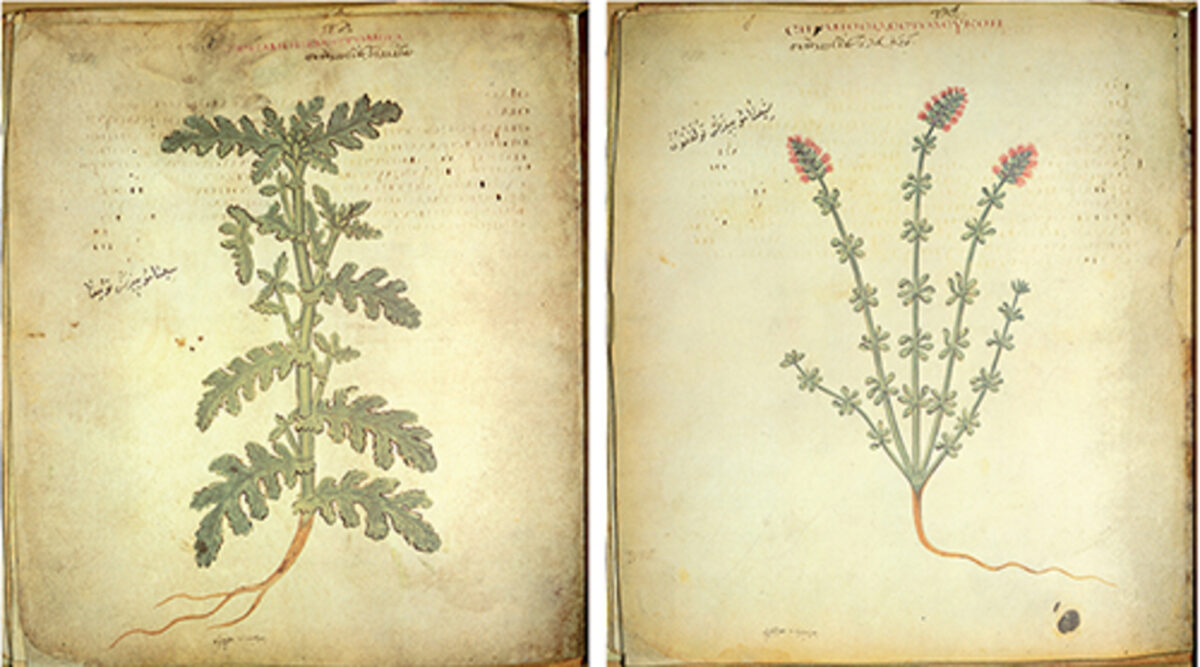
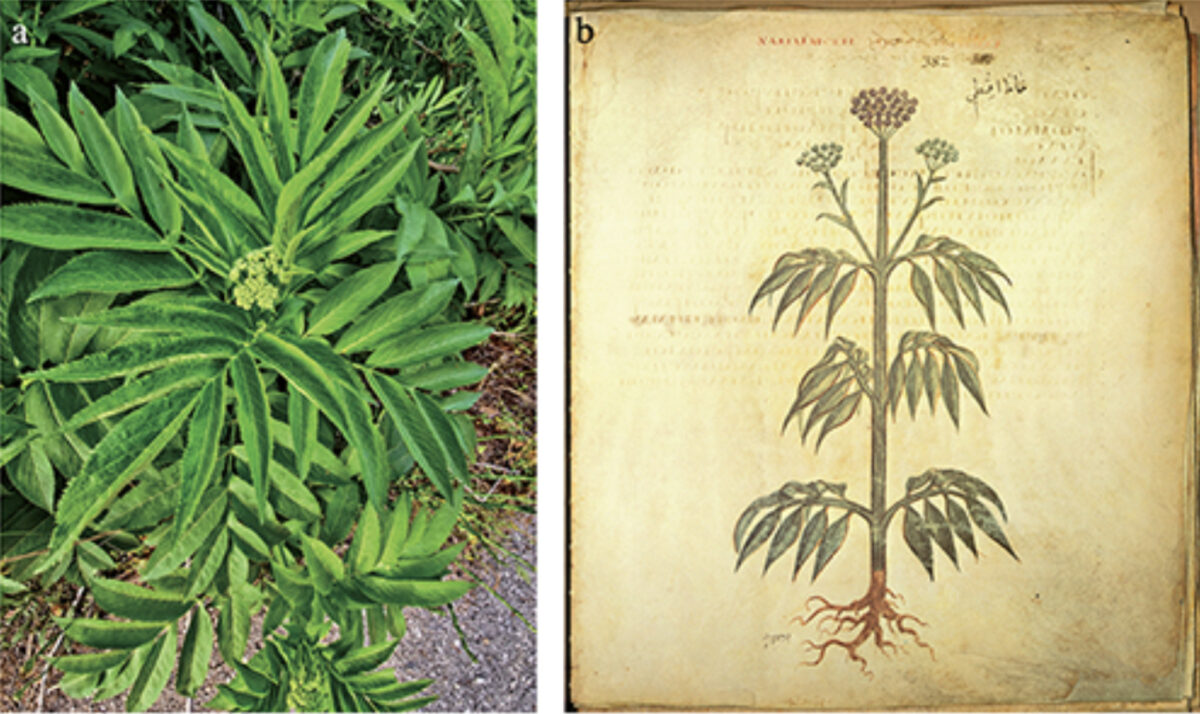
The research team combined ethnobotanical fieldwork in modern Antikyra with a close study of ancient texts like the Vienna Dioscorides manuscript. One challenge they describe is that “hellebore” was never a single plant but a shifting label for various botanical species over centuries. Local herbalists in Greece today sometimes identify “elleboro” as dwarf elderberry, an entirely different plant.
The Yale team found it unlikely that enough raw hellebore grew near ancient Antikyra to sustain large-scale production. Instead, the town’s fame probably came from its unique preparation techniques — mixing hellebore with sesamoides — which made its potions particularly renowned for treating madness, epilepsy, and melancholy. Today, the closest large stands of hellebore grow more than 1,000 meters (about 3,280 feet) above sea level on the slopes of Mount Helicon.

The researchers now plan to analyze phytochemicals from wild specimens to better understand how these ancient remedies worked. “Closely collaborating with Trevor, a top historian of ancient Rome, provides a strong humanistic foundation for our science team to build its work upon,” Koh said in the Yale team’s statement. “In turn, YAPP’s scientific research offers historians a unique opportunity to understand long-studied ancient texts in fresh new ways.”
Rather than being remembered only as a mad tyrant who poisoned for sport, Caligula emerges — at least partly — as a ruler whose knowledge of medicinal plants reflected the scientific thinking of his time, later twisted by politics and legend into tales of monstrous cruelty.
Paper Summary
Methodology
The researchers conducted a multidisciplinary study combining historical analysis, ethnobotanical fieldwork, and examination of ancient medical texts. They analyzed the Suetonius anecdote about Caligula and the ex-praetor in the context of broader ancient sources about Roman medicine, pharmacology, and imperial politics. The team conducted fieldwork around modern Antikyra, Greece, and studied the Vienna Dioscorides manuscript (an ancient medical text) held at Yale Medical Historical Library. They also examined archaeological and epigraphic evidence related to ancient Antikyra and its medical reputation.
Results
The study found that Caligula possessed sophisticated knowledge of ancient pharmacology, including understanding of hellebore treatments, their proper dosing, and expected treatment timelines. The research revealed that Antikyra functioned as a specialized medical center in the ancient world, attracting wealthy Romans seeking advanced hellebore treatments for mental illness, epilepsy, and other conditions. Evidence indicates Caligula’s pharmaceutical knowledge was driven by family trauma (his father’s suspected poisoning) and personal medical conditions rather than purely homicidal intent.
Limitations
The study relies heavily on ancient historical sources that may contain bias or inaccuracies. The researchers acknowledge that some ancient accounts about Caligula’s poisoning activities may be exaggerated or fabricated, making it difficult to separate fact from historiographical invention. Additionally, the research depends on interpretation of limited textual evidence and cannot definitively prove the extent of Caligula’s actual medical knowledge.
Funding and Disclosures
The Yale Ancient Pharmacology Program received generous support from E. Jhong, Robert and MeiLi Hefner Foundation, Athanatos Foundation, and B. Muraresku. Fieldwork travel was supported by Florida State University’s College of Arts and Sciences Dean’s Faculty Travel Award, and publication was supported by Yale University. The authors declared no competing interests.
Publication Information
Luke, Trevor S., and Andrew J. Koh. “Antikyran hellebore in the time of Caligula.” Proceedings of the European Academy of Sciences & Arts May 26, 2025; 4:56. DOI: 10.4081/peasa.2025.56. Published under Creative Commons Attribution-NonCommercial International License (CC BY-NC 4.0).


