
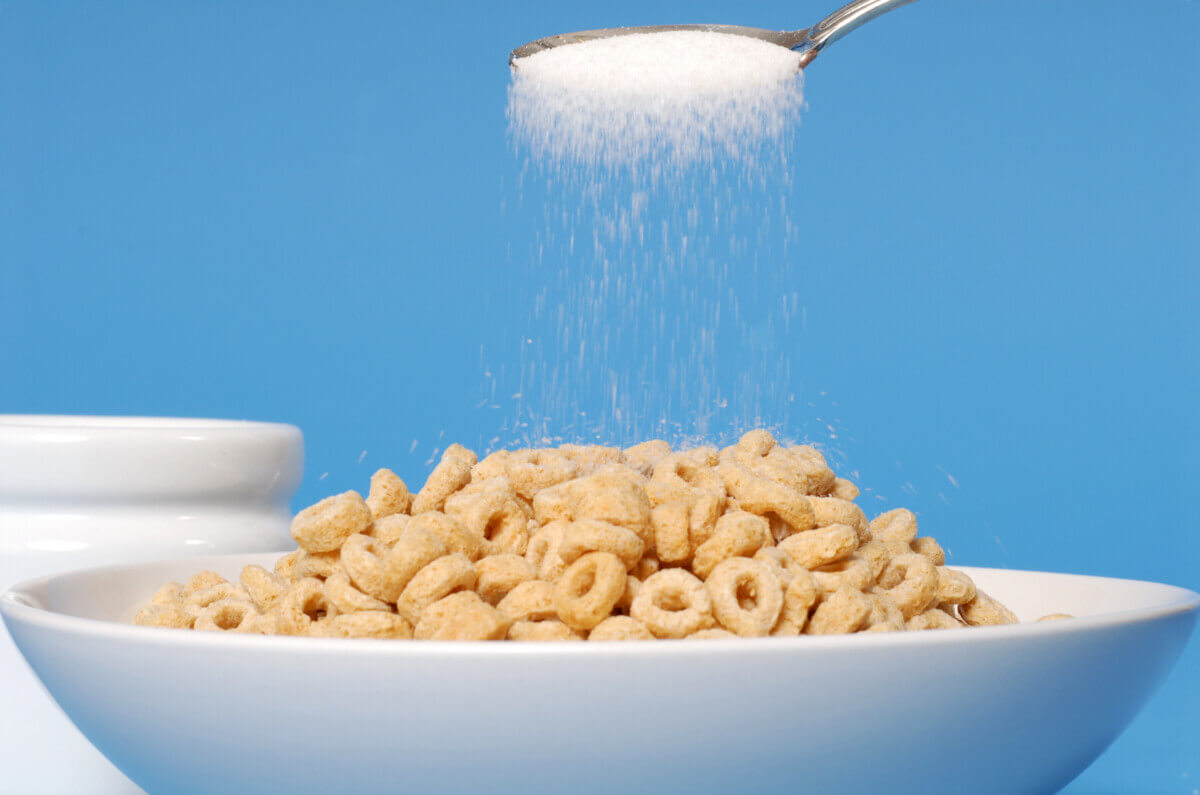
Some breakfast cereals contain artificial food dyes. (Szasz-Fabian Ilka Erika/Shutterstock)
In a nutshell
- Nearly 1 in 5 packaged foods and drinks from major U.S. brands contain synthetic dyes, with products aimed at children—like candy, cereals, and sports drinks—using them at nearly three times the rate of other foods.
- Foods with artificial dyes had 141% more sugar on average than those without, suggesting these dyes are often used to market sweet, less nutritious products.
- Regulatory momentum is growing: California has banned Red 3 in foods, and the FDA plans a nationwide ban by 2027, while some companies have already phased out dyes from their products entirely.
CHAPEL HILL, N.C. — The junk food aisle at the grocery store is full of bright colors both in the packaging and what’s inside. That electric blue frosting, those neon-green gummies, and even some of your favorite carbonated drinks are getting their eye-catching hues from synthetic food dyes. A new study reveals just how widespread these artificial colorings have become in our food supply.
Nearly one in five packaged foods and beverages from America’s top food manufacturers contain synthetic dyes, according to research published in the Journal of the Academy of Nutrition and Dietetics. Even worse, products aimed at children are drowning in these artificial colors at nearly three times the rate of other foods.
Researchers from the University of North Carolina and other universities analyzed almost 40,000 products from the 25 biggest food companies in the U.S. They found that 28% of foods in categories typically marketed to kids, such as breakfast cereals, candy, sugary drinks, and snack bars, contain synthetic dyes. Compare that to just 11% of products in other categories, and it becomes concerning what’s filling up lunch boxes and pantries across America.
Researchers also discovered that dye-containing products pack significantly more sugar than their uncolored counterparts, revealing that these colorful foods deliver a double nutritional punch that parents might not expect.
The Rainbow in Your Food

Synthetic food dyes aren’t new; they’ve been coloring our food for decades. Seven varieties approved by the FDA go by technical names like Red No. 40, Yellow No. 5, and Blue No. 1, but you’ve probably seen them listed more simply as “Red 40” or “artificial colors” on ingredient labels.
Red 40 dominated the landscape, showing up in 14% of all products analyzed. Yellow 5 and Blue 1 each appeared in 11% of products. To put this in perspective, these dyes generated about $47 billion in sales in 2020 alone.
Sports drinks topped the list with 79% containing synthetic dyes, followed by beverage concentrates at 71% and candy at 54%. Even seemingly innocent categories weren’t immune; 16% of ice cream products and 20% of breakfast cereals contained artificial colors.
Growing research suggests that synthetic dyes might affect children’s behavior and attention. A 2021 review by California’s Office of Environmental Health Hazard Assessment concluded that synthetic food dyes can cause or worsen neurobehavioral problems in some children.
Multiple studies over the past four decades have linked artificial food dyes to hyperactivity and attention problems in certain children. The evidence has become compelling enough that the European Union requires warning labels on foods containing certain synthetic dyes, stating that they may negatively impact children’s activity and attention.
America has been slower to act, but change is coming. California banned Red 3 from all foods in 2023 and prohibited six synthetic dyes in school foods in 2024. Just this past January, the FDA announced that Red 3 will be banned nationwide by 2027 after concluding decades ago that the dye causes cancer in laboratory rats.
Sweet, Colorful, and Loaded With Sugar
Products with synthetic dyes contained 141% more sugar on average than those without, at 33.3 grams per 100 grams compared to 13.8 grams per 100 grams. That’s not a coincidence.
Companies appear to be using synthetic food dyes strategically to market sweet foods and beverages. Why? Bright colors catch the eye, especially children’s eyes, making sugary products more appealing on crowded store shelves.
Study authors analyzed ingredient data from Label Insight, a company that tracks more than 400,000 barcoded foods and beverages representing over 80% of the U.S. market. They focused specifically on products from the 25 top-selling food manufacturers, creating a snapshot of what Americans are actually buying and eating.
Researchers combed through ingredient lists looking for any of the seven FDA-approved synthetic dyes, tracking not just whether products contained them, but how many different dyes appeared in each item. Some products contained as many as seven different synthetic dyes.
Company by Company Breakdown
Results revealed dramatic differences between manufacturers. Ferrero, the company behind Nutella and Ferrero Rocher chocolates, had the highest proportion of products containing synthetic dyes at 60%. Mars followed at 52%, which makes sense given their portfolio of colorful candies like M&Ms and Skittles.
On the flip side, Schwan Food Company had zero products with synthetic dyes, while Nestlé had just 1%. Even within the same food categories, companies made vastly different choices. Only 10% of Nestlé’s candy products contained synthetic dyes compared to Ferrero’s 60%.
This suggests that removing or reducing synthetic dyes is entirely feasible from a manufacturing standpoint. If some companies can make colorful, appealing products without artificial dyes, others could follow suit.
Other Nutritional Patterns
While products with synthetic dyes were significantly higher in sugar, researchers found they actually contained lower levels of sodium and saturated fat on average compared to products without dyes. This means synthetic dyes aren’t automatically a marker for all types of poor nutrition.
Breakfast cereals with synthetic dyes contain significantly more sugar than their uncolored counterparts. Manufacturers seem to be primarily using these colorants to enhance the appeal of sweet products.
Understanding this research doesn’t require becoming a food scientist or memorizing chemical names. If you’re trying to limit synthetic dyes in your family’s diet, pay attention to the most brightly colored products, especially those marketed to children.
It is possible to create appealing products without relying heavily on synthetic dyes. Companies like Nestlé manage to keep artificial colors out of 99% of their products, while others load up multiple dyes per item.
With nearly $47 billion in synthetic dye-containing products sold annually, these are mainstream products filling everyday shopping carts, often without consumers fully realizing what they’re buying. Food coloring regulations are poised for change, but until then, the responsibility falls on consumers to navigate food labels and resist being drawn to bright colors.
Paper Summary
Methodology
Researchers analyzed ingredient data for 39,763 packaged food and beverage products from the top 25 U.S. food manufacturers using data from Label Insight (a NielsenIQ company) collected in 2021. They examined products for the presence of seven FDA-approved synthetic food dyes and categorized items into 23 food and beverage categories based on Euromonitor Passport classifications. The study also compared nutritional content (sugar, sodium, and saturated fat) between products with and without synthetic dyes, and specifically analyzed products in categories most commonly marketed to children (confectionery, sugar-sweetened beverages, ready meals, breakfast cereals, and baked goods).
Results
Results showed that 19% of all analyzed products contained synthetic dyes, representing more than $46 billion in consumer purchases in 2020. Red 40 was the most common dye, appearing in 14% of products, followed by Yellow 5 and Blue 1 (each 11%). Products in categories marketed to children contained synthetic dyes at a rate of 28% compared to 11% in other categories. Sports drinks had the highest prevalence (79%), followed by beverage concentrates (71%) and confectionery (54%). Products with synthetic dyes contained 141% more sugar on average than those without (33.3g vs 13.8g per 100g). Ferrero had the highest proportion of dye-containing products (60%) while some companies like Schwan Food Company had none.
Limitations
Research only examined products from the top 25 manufacturers and didn’t include restaurant foods or smaller food companies. Sales data wasn’t available at the product level, limiting analysis to category-level assessments. The research couldn’t be linked to individual dietary intake data, so it doesn’t provide exposure estimates for consumers. Some product categories like butter, cheese, and ice cream are exempt from federal requirements to list color additives on labels, potentially underestimating synthetic dye prevalence. Analysis relied on ingredient label accuracy and may have missed products due to spelling errors or labeling inconsistencies.
Funding and Disclosures
Study authors reported no potential conflicts of interest and disclosed no funding sources for this research.
Publication Information
This research was published by Elizabeth K. Dunford and colleagues under the title “All the Colors of the Rainbow: Synthetic Dyes in US Packaged Foods and Beverages in 2020” in the Journal of the Academy of Nutrition and Dietetics in 2025. The paper was originally submitted on February 28, 2025, accepted for publication on May 9, 2025, and was under embargo until June 25, 2025.


