
(Photo by Monkey Business Images on Shutterstock)
Sorry Grandpa, Grandmas appear to reap more cognitive benefits from time spent with grandkids.
In A Nutshell
- Grandmothers who regularly care for grandchildren show better memory, verbal fluency, and slower cognitive decline compared to non-caregiving grandmothers. But grandfathers don’t get the same protective effect
- The chicken-and-egg question remains: The study can’t prove whether active caregiving protects cognition or whether cognitively sharper grandparents simply engage in more demanding activities
- How often you babysit doesn’t matter for brain health; what you actually do with grandkids makes the difference. Helping with homework and playing together show the strongest cognitive links
- Variety is key: Grandparents who rotate through diverse activities (cooking, homework help, outings, games) show better cognitive function than those who stick to one type of care
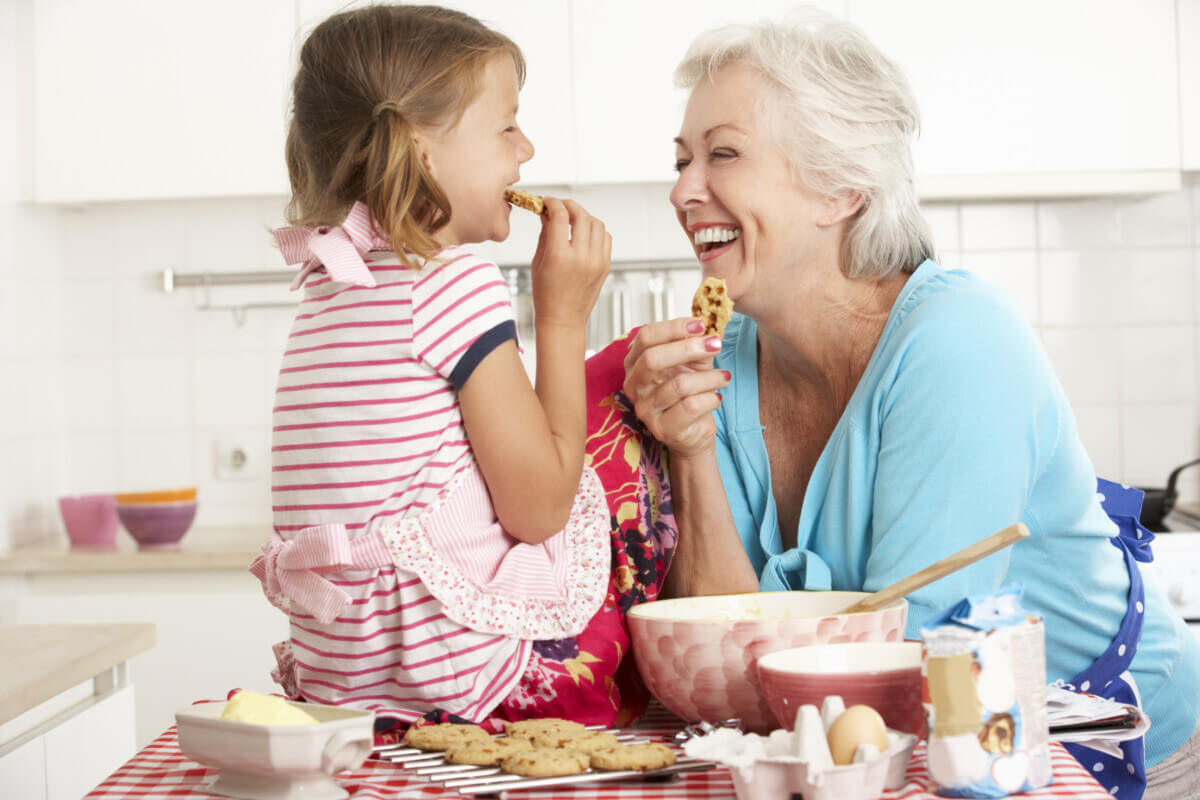
Grandparents who regularly care for their grandchildren show better memory and thinking skills than those who don’t, but there’s a catch. The research reveals that grandmothers enjoy most of the brain-boosting benefits, while grandfathers might be missing out.
A study tracking nearly 2,900 English grandparents over five years found that caregiving grandmothers not only scored higher on memory and verbal fluency tests but also experienced slower cognitive decline over time. Grandfathers who cared for grandkids showed better cognitive performance than their non-caregiving peers, but their mental sharpness declined at the same rate as grandfathers who didn’t babysit at all.
The gender difference appeared consistently throughout the study period. The findings appear in Psychology and Aging.
Why Grandmothers Benefit More
The research team suspects traditional gender roles play a part. Grandmothers typically take on more hands-on caregiving (planning activities, preparing meals, managing schedules). Grandfathers, meanwhile, tend to provide care alongside their spouses, occupying what researchers call a “peripheral and supportive role.”
There’s another possibility: grandfathers may feel more obligated to help out, while grandmothers more often choose to be involved. When caregiving stems from duty rather than desire, it might not deliver the same mental benefits. Activities you enjoy tend to engage your brain more than tasks you’re checking off a list.
Grandmothers also performed all caregiving activities more frequently than grandfathers in the study, with the biggest difference showing up in meal preparation.
More Hours Don’t Mean More Benefits
Notably, among grandparents who provided care, how often they babysat made zero difference to their brain health. A grandmother watching her grandkids once a week showed the same cognitive performance as one caring for them several days a week.
This contradicts what one might expect. Earlier studies suggested more caregiving meant better cognition, but those studies lumped together grandparents who never provided care with those who did. When researchers looked only at caregiving grandparents, the frequency effect vanished.
What probably matters more than hours logged is how that caregiving time is spent. Some grandparents might provide frequent but routine care: supervising while kids play independently. Others engage in less frequent but mentally demanding activities like helping with complex school projects or planning museum trips.
What You Do Matters More Than How Often
The study examined seven caregiving activities, and two stood out: helping with homework and playing or doing leisure activities with grandchildren. Only these two activities were linked to better performance on both memory and verbal fluency tests.
Helping with homework requires explaining concepts in different ways, adapting to how a child learns, and problem-solving on the fly. Playing games or performing activities together demands creativity, planning, and constant social interaction. Both are mentally active rather than passive.
Other activities showed weaker links. Preparing meals, picking up grandkids from school, and being available when needed related only to verbal fluency, not memory. Having grandchildren sleep over or caring for them when sick showed no cognitive associations at all.
It’s worth noting variety mattered. Grandparents who rotated through many different types of activities (homework help one day, cooking together another, outings on weekends) showed better cognitive functioning overall.
The Chicken-and-Egg Problem
Still, study authors were left with a classic conundrum: which comes first, a sharp mind or active grandparenting?
Grandparents who started the study with better cognitive function engaged in more varied activities and helped with homework more often. But over the five years, these activities didn’t slow their cognitive decline. This raises the possibility that grandparents with sharper minds feel more confident taking on demanding tasks like algebra homework or planning elaborate outings.
Adult children might ask cognitively sharper grandparents to help with homework because they trust their abilities. Meanwhile, grandparents struggling with early memory problems might stick to simpler activities. Just being present while grandkids play, for instance.
The study was also limited by its timeframe. Five years may not be long enough to detect whether varied activities protect against decline. Research on leisure activities generally requires longer observation periods to show effects.
Grandparents, FTW!
For grandparents wondering whether babysitting is worth the exhaustion, the research offers encouraging news, especially for grandmothers. Regular engagement with grandchildren appears linked to maintaining cognitive health, though the relationship is more nuanced than “more babysitting equals better brain.”
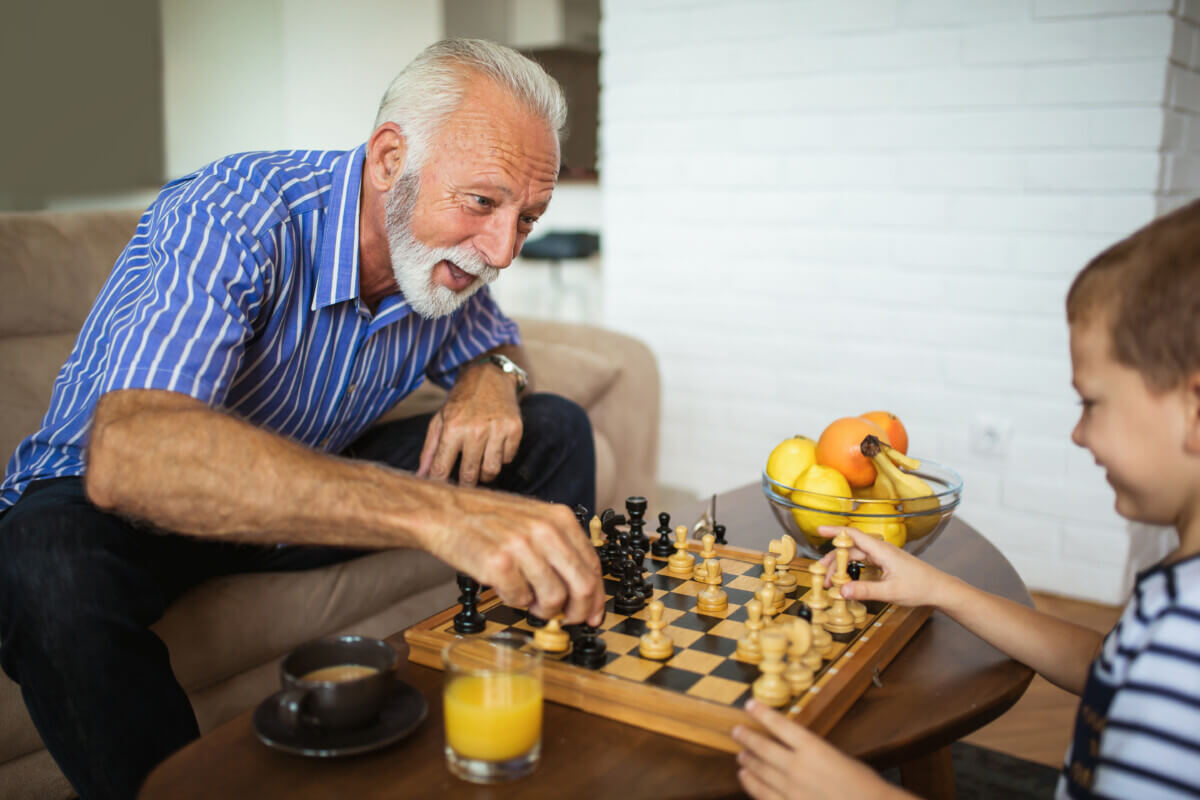
Quality appears to trump quantity. An afternoon genuinely engaged in a board game or working through fractions probably delivers more cognitive benefit than three afternoons of passive supervision.
The findings also suggest grandparents shouldn’t feel pressured to provide more care than feels right. If once a week is a grandparent’s sweet spot, there’s no evidence that doubling or tripling that frequency helps cognition. What matters is staying mentally active during that time.
Researchers suggest grandparents rotate activities. Instead of always defaulting to screen time or simple play, mix in homework help, cooking together, trips to museums or nature centers, building projects, or teaching skills. The variety keeps different parts of the brain engaged.
The study can’t tell us whether caregiving that feels burdensome or obligatory confers the same benefits as caregiving that feels chosen and fulfilling. Still, subjective experience (do you look forward to the time or dread it?) probably matters more than any objective measure.
The study also reminds us that grandparenting isn’t the only path to cognitive health. Social engagement of any kind, physical activity, learning new skills, and challenging hobbies all contribute to staying mentally sharp. Grandparenting is one avenue among many for remaining actively engaged with life.
For the 96% White British sample studied, these patterns held consistent. Whether they apply equally across different cultural groups, where grandparenting practices and family structures vary widely, remains to be seen.
The COVID-19 pandemic complicated this research too. It struck between the study’s second and third assessments, disrupting normal caregiving patterns when schools closed and families isolated. How much that affected the results is unclear.
Paper Summary
Limitations
The observational design prevents conclusions about whether grandchild care directly causes better cognitive outcomes or whether pre-existing differences account for the associations. The five-year timeframe may be too brief to detect long-term effects of caregiving activities on cognitive decline.
The predominantly White British sample limits how well findings apply to other cultural contexts where grandparenting practices differ. The COVID-19 pandemic disrupted normal caregiving between the second and final assessments in ways the study couldn’t account for.
Researchers lacked information about whether grandparents provided care voluntarily or felt obligated, the emotional quality of relationships, perceived burden or fulfillment, and how demanding activities felt subjectively. They measured frequency but not experience.
Selection bias remains a concern. Grandparents who provide care may differ in unmeasured ways from those who don’t, including lifetime cognitive reserve, personality traits, or family dynamics that independently influence both caregiving and cognition. Participants who stayed in the study showed better health and cognitive functioning than those who dropped out.
Funding and Disclosures
The English Longitudinal Study of Ageing is funded by the National Institute on Aging (grant R01AG017644) and by UK Government Departments coordinated by the National Institute for Health and Care Research. Authors declared no conflicts of interest.
Publication Details
Authors and Affiliations:
- Flavia S. Chereches, Department of Developmental Psychology, Tilburg University, Netherlands
- Gabriel Olaru, Department of Differential Psychology and Psychological Assessment, Charlotte Fresenius Hochschule, Germany
- Nicola Ballhausen, Department of Developmental Psychology, Tilburg University, Netherlands; Centre for the Interdisciplinary Study of Gerontology and Vulnerability, University of Geneva, Switzerland
- Yvonne Brehmer, Department of Developmental Psychology, Tilburg University, Netherlands; Aging Research Center, Karolinska Institutet, Sweden
Journal Citation: Psychology and Aging, 2026, American Psychological Association | DOI: https://doi.org/10.1037/pag0000958 | Correspondence: Flavia S. Chereches, f.s.chereches@tilburguniversity.edu | Manuscript received December 18, 2024; revised September 8, 2025; accepted October 28, 2025.


