(Credit: Microgen/Shutterstock)
ROCHESTER, Minn. — Want to know how well you’re aging? Try standing on one leg. A new study suggests that your ability to balance on a single leg could be the most reliable indicator of age-related decline, outperforming traditional measures like grip strength, walking speed, or two-legged balance tests.
The research, published in PLOS ONE, finds that among healthy adults over 50, the time someone could maintain balance on one leg — particularly their non-dominant leg — showed the fastest rate of decline with age compared to other physical measures. This simple test proved to be equally effective for both men and women, making it a potentially valuable tool for healthcare providers and individuals wanting to monitor their aging process.
Researchers at the Mayo Clinic and several other institutions conducted a comprehensive movement analysis on 40 healthy adults, divided equally between those under and over 65 years-old. The study included various tests measuring participants’ strength, balance, and walking patterns to understand how these abilities change as we age.
Surprisingly, while walking patterns remained relatively stable across age groups, other measures showed significant age-related declines. The ability to stand on one leg decreased most dramatically — about 2.2 seconds per decade for the non-dominant leg and 1.7 seconds for the dominant leg. This was followed by increased body sway during two-legged standing and declining grip and knee strength.
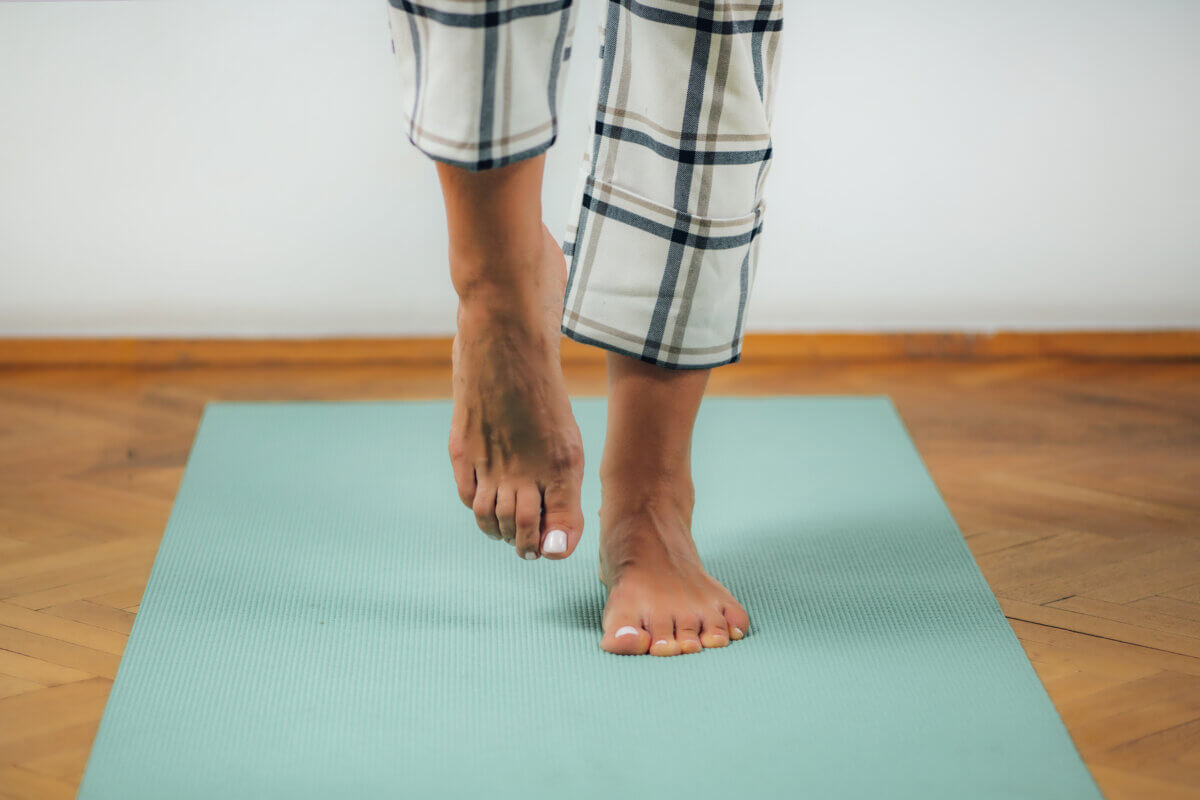
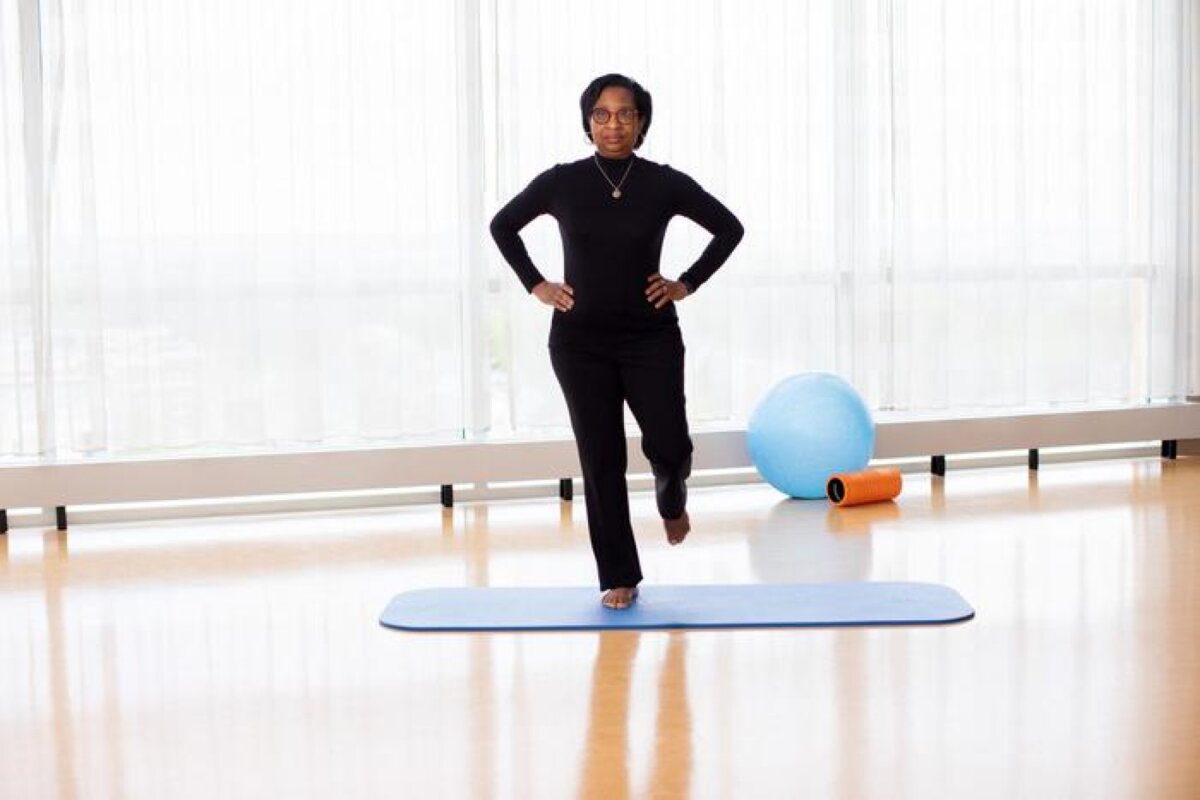
What makes this finding particularly significant is its practical application. Unlike many other aging assessments that require specialized equipment or medical expertise, the one-leg standing test is something anyone can do at home. It’s as simple as timing how long you can balance on one leg while keeping your eyes open.
The study also revealed interesting patterns in how our bodies maintain balance as we age. While all participants could stand normally on two legs for the required 30-second duration, older adults showed more body sway, suggesting they needed to make more frequent adjustments to maintain their balance. This increased sway was even more pronounced when participants closed their eyes, highlighting how vision plays a crucial role in maintaining balance as we age.
One of the study’s notable findings was how aging affects men and women similarly in most measures, despite some baseline differences. While men demonstrated approximately 30% higher grip strength and 27% higher knee strength than women overall, both sexes experienced nearly identical rates of decline with age. Grip strength decreased by about 3.7% per decade and knee strength by 1.4% per decade, regardless of sex.
Perhaps most importantly, there were no significant differences between the sexes in terms of balance abilities or their rates of decline. Both men and women showed similar decreases in single-leg standing time and similar increases in body sway during two-legged standing as they aged. The only notable difference in overall movement patterns was in the “double support” phase of walking (when both feet are on the ground), though this difference wasn’t related to age.
Interestingly, walking patterns, including speed, stride length, and stability, showed no significant changes with age in this healthy adult population. This suggests that basic walking ability remains relatively preserved in healthy aging, while more challenging activities like single-leg standing may reveal early signs of age-related decline.
The research suggests that while men and women may have different absolute strength levels, the aging process affects their balance and coordination in remarkably similar ways.
While this research highlights the importance of the one-leg balance test, you might be wondering how long you should be able to balance on one leg for your age. Interestingly, this study focused on tracking the rate of decline rather than establishing benchmark times for different age groups.
As noted, the researchers found that balance time decreases by roughly 2.2 seconds per decade for the non-dominant leg and 1.7 seconds for the dominant leg, but they didn’t set specific target times for each age group. This might feel frustrating if you’re looking to assess your own balance abilities. However, if you’re concerned about your balance, the National Institute on Aging suggests that any healthy adult should aim to hold a one-leg stance for at least 10 seconds with their eyes open. Significant difficulty meeting this basic threshold might warrant a conversation with your healthcare provider.
Remember, the key finding here isn’t about hitting a specific time goal, but rather monitoring how your personal balance ability changes over time – much like tracking your blood pressure or weight as a health indicator.
Moving forward, this research could change how we approach aging assessment both in clinical settings and at home. The simplicity of the single-leg balance test, combined with its effectiveness, makes it a powerful tool in understanding how we age.
Paper Summary
Methodology
The study evaluated participants through a series of carefully designed tests. Researchers used specialized equipment, including force plates to measure balance, motion capture cameras to analyze walking patterns, and strength-testing devices for grip and knee strength. Participants performed various balance tests, including standing on two legs with eyes open and closed and standing on each leg individually.
They also walked back and forth on an eight-meter walkway while wearing reflective markers that allowed cameras to capture their movement patterns. Strength was tested using specific devices that measured maximum grip force and knee extension strength.
Key Results
The clearest finding was the significant decline in single-leg balance time with age, showing the strongest correlation among all measures tested. Two-legged balance showed increased body sway with age, particularly with eyes closed. Strength measures declined at a slower rate than balance abilities, with grip strength showing a faster decline than knee strength. Walking parameters remained stable across age groups, suggesting they may not be as sensitive to early aging effects in healthy adults.
Study Limitations
The study’s cross-sectional design means it observed different people at different ages rather than following the same individuals over time. The participant pool was limited to Mayo Clinic patients in Rochester, Minnesota, which may not represent the broader population. Additionally, all tests were performed in a single visit, which could have affected performance due to fatigue, though researchers tried to minimize this by providing rest periods between tests.
Discussion & Takeaways
The study’s findings suggest that simple balance tests, particularly single-leg standing, could be valuable tools for monitoring age-related decline. The fact that this measure works equally well for both men and women makes it particularly useful as a universal screening tool.
The research also highlights how different physical abilities decline at different rates with age, with balance showing more sensitive changes than strength or walking ability. This could help healthcare providers better target interventions and maintenance programs for aging adults.
Funding & Disclosures
The research was supported by the W. Hall Wendel, Jr. Musculoskeletal Professorship and the Robert and Arlene Kogod Professorship in Geriatric Medicine. One researcher received funding through grant K25AG068368. The authors declared no competing interests, and the funders had no role in the study’s design, data collection, analysis, or manuscript preparation.


Don’t know how well it shows you’re aging, but does show how closely related you are to a swamp bird.
Finally a non agenda study and on Yahoo of all places. Well done researchers. Ive wondered about that a lot since one of the test for aviation medical is the ability to stand on one leg.
Thank you.
These are all evaluating the functional capacity of the nervous system, locally and globally, and by proxy the health of the spine. Chiropractic is being vindicated more and more every day. I welcome further research on what supports functional longevity and youthful functional capacity. Good work, keep it up!
A graph showing seconds held with leg up relative to biological age would be helpful.
Right on. Give me some statistical examples of the article title.
All of that and there’s not a single line where this stupid article tell us what a normal amount of time is and how to adjust it for normal aging. I’m left without a clue of what a declining time would be.
1- Standing on one leg (most people over 70 can’t hold 10 seconds). 2- Grip strength. 3- Blow into spirometer 3 times (measures lung strength). Do those 3 tests and you can determine person’s health in one minute.
up to 10am (your time),