A Neanderthal skull unrelated to the study. (© Vitezslav Halamka - stock.adobe.com)
HONOLULU — Could another group of ancient humans have lived alongside Homo sapiens? Scientists have identified fossils of a new species of ancient human that once roamed Eastern Asia with an extraordinarily large brain. The fossils, found at the Xujiayao site in northern China, represent a previously unknown group of humans that scientists have dubbed “Juluren” – meaning “large head people” – who lived between 200,000 and 160,000 years ago.
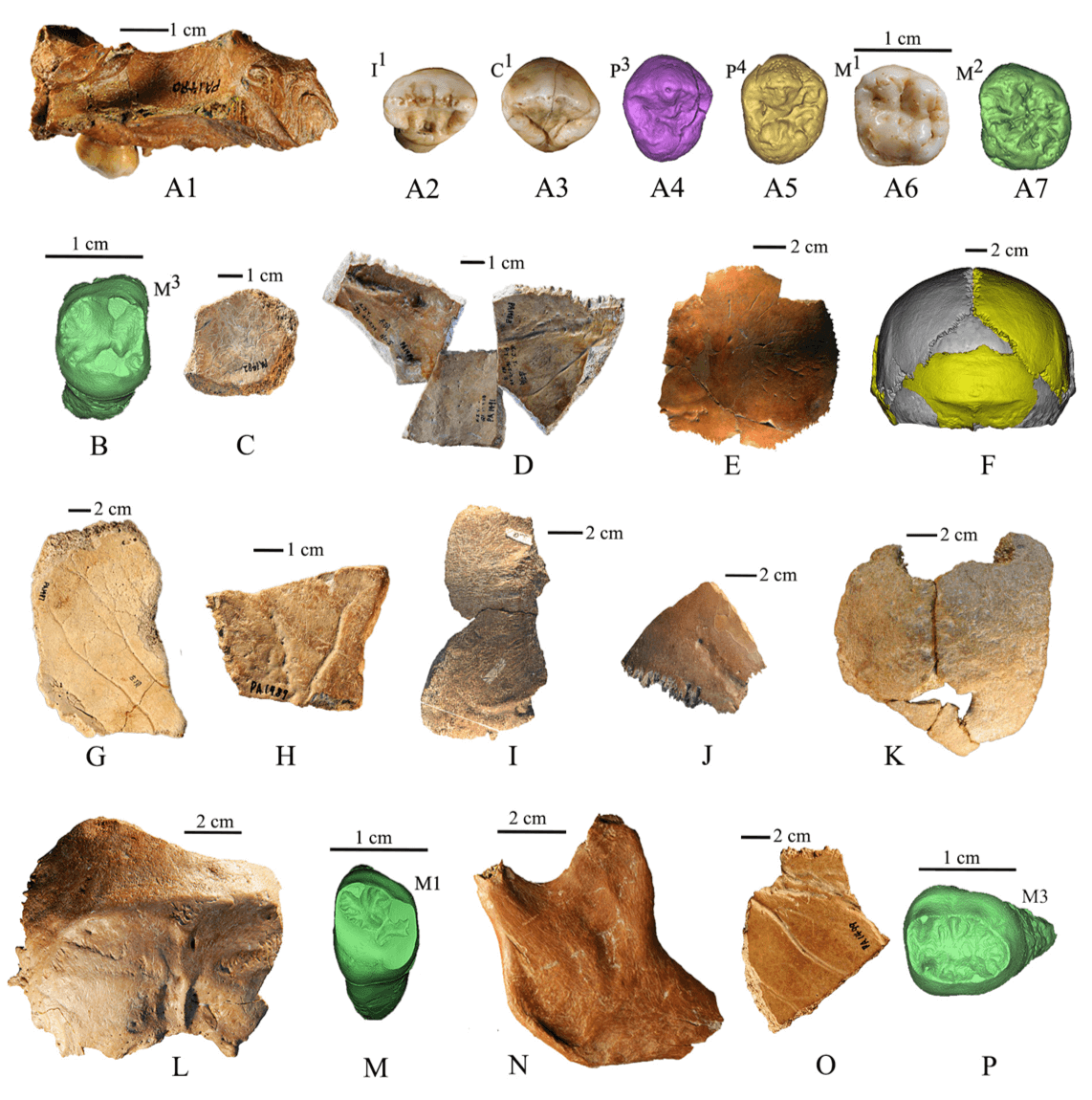
The story begins in the 1970s when researchers unearthed a collection of 21 fossil fragments representing 16 different individuals at the Xujiayao site. But it wasn’t until recent comprehensive analysis that scientists realized just how unique these remains were. The most striking feature? A cranial capacity of approximately 1,700 milliliters – significantly larger than both their predecessors and many modern humans.
To put this in perspective, the average modern human brain size is between 1,090 to 1,880 milliliters, and our famous cousin, the Neanderthals, ranged from 1,120 to 1,740 milliliters. What makes the Xujiayao findings so remarkable is that they possessed such large brains during a period when most other human species had considerably smaller cranial capacities.
The Xujiayao humans were like evolution’s master mixologists, combining features from various human species in unexpected ways. They maintained some primitive characteristics typical of early East Asian humans, such as thick skull bones and distinctively shaped teeth. Yet they also showed more advanced features similar to those found in Neanderthals and modern humans. It’s as if nature decided to experiment with different human traits, creating a unique cocktail of characteristics never seen before or since.
These ancient people lived in what is now northern China during a major glacial period when temperatures were approximately 4°C lower than today. The landscape was covered in forest steppe vegetation, and evidence suggests they were skilled hunters, particularly of horses. Thousands of stone balls found at the site may have served as projectile weapons for hunting, and numerous animal bones bearing cut marks indicate they were proficient at butchering their prey.
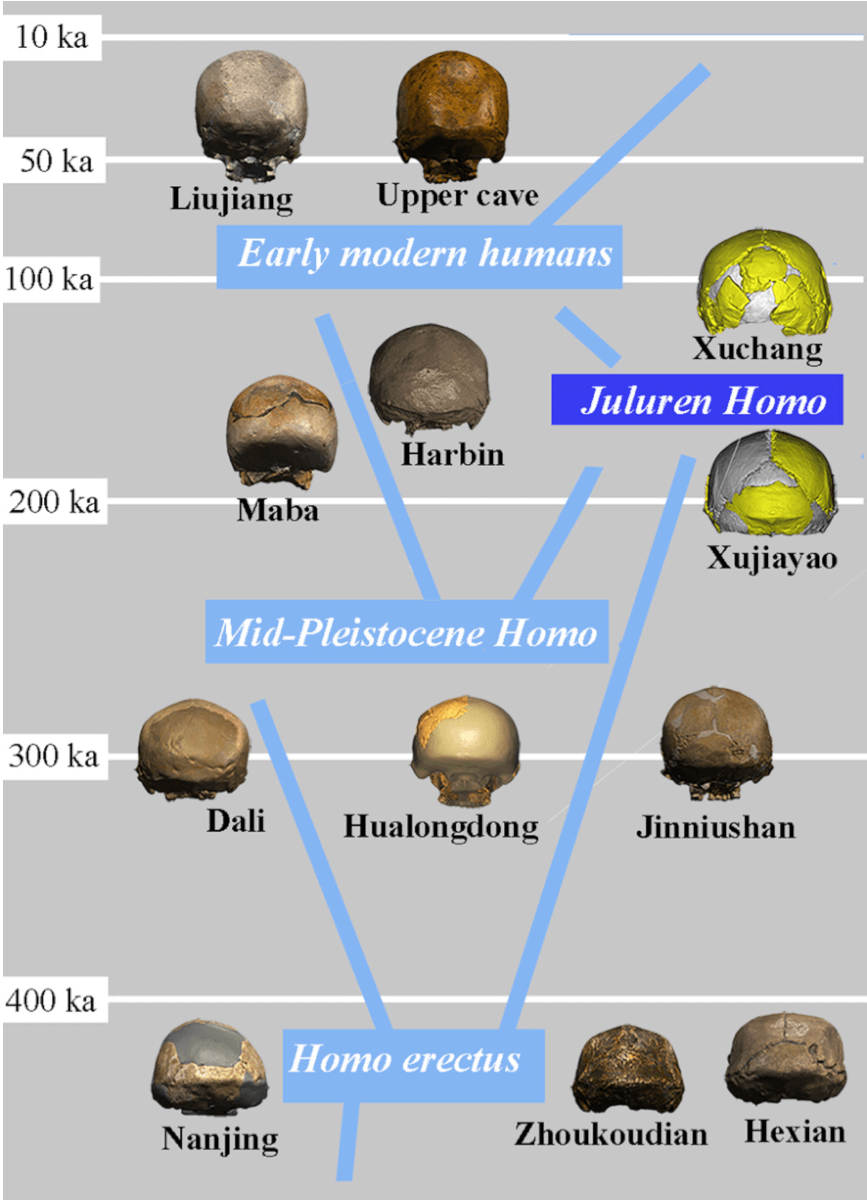
One of the most fascinating aspects of the discovery is what it tells us about human diversity in ancient East Asia. The traditional view of human evolution as a straight line from primitive to modern is being replaced by a much more complex picture. The Xujiayao fossils show that multiple human species coexisted and likely interbred, creating a rich tapestry of human diversity that we’re only now beginning to understand.
The research team, led by scientists from the Institute of Vertebrate Paleontology and Paleoanthropology in Beijing and the University of Hawai’i at Manoa, conducted extensive comparative analyses with other human fossils from the same period. They found that while the Xujiayao humans shared some features with other known species, their unique combination of characteristics set them apart as a distinct group.
The discovery also challenges our understanding of brain evolution. The presence of such large-brained individuals so early in human history suggests that brain size expansion wasn’t a simple linear progression. Instead, different human groups may have developed larger brains independently and for different reasons.
Perhaps most intriguingly, the Xujiayao humans appear to be related to the mysterious Denisovans, known primarily from DNA evidence and a few fossil remains found in Siberia. This connection suggests a widespread population of large-brained humans existed across much of eastern Asia during the late Quaternary period.
“I see the name Juluren not as a replacement for Denisovan, but as a way of referring to a particular group of fossils and their possible place in the network of ancient groups,” writes anthropologist John Hawks, who did not take part in this study. “In my opinion, Bae and collaborators have a good case for distinguishing the Chinese fossil record from the fossils from Africa and western Eurasia across this time.”
Like pieces of an ancient puzzle, each new fossil discovery helps complete our picture of human evolution. The Xujiayao findings, published in the journal PaleoAnthropology, remind us that our family tree has many branches, some of which we’re only now beginning to discover. These ancient “large head people” may have disappeared from Earth, but they’ve left us with big questions about human evolution that are sure to keep scientists’ heads spinning for years to come.
Paper Summary
Methodology
The research team employed a multi-faceted approach to studying the Xujiayao fossils. They used advanced imaging techniques, including x-ray multi-resolution synchrotron phase-contrast microtomography, to examine dental development and internal structures. They also conducted principal components analysis (PCA) to compare the fossils’ measurements with other human species. The team collected data on seven key variables, including cranial width, height, and various bone measurements, comparing these against samples from other human species spanning different time periods.
Key Results
The analysis revealed that the Xujiayao humans possessed a unique combination of features never seen in other human species. Their cranial capacity of 1,700mL placed them at the upper range of both Neanderthals and modern humans. They exhibited a distinctive low and wide cranial shape, unusual dental characteristics, and a slower rate of dental development more similar to modern humans than earlier species. Statistical analysis showed they clustered separately from other known human groups in terms of their physical characteristics.
Study Limitations
The study was limited by the fragmentary nature of some fossils and the inability to conduct DNA analysis due to poor preservation. The sample size, while significant for a paleontological study, was still relatively small. Additionally, dating methods have provided a broad range (200-160 ka) rather than precise dates for the fossils.
Discussion & Takeaways
The study suggests that human evolution in East Asia was more complex than previously thought, with multiple human species coexisting and potentially interbreeding. The findings indicate that the development of large brains occurred independently in different human populations. The research also suggests a possible connection between the Xujiayao humans and the Denisovans, pointing to a widespread population of large-brained humans across eastern Asia.
Funding & Disclosures
The study was supported by the National Natural Science Foundation of China (42372001), with additional funding from the Wenner-Gren Foundation and the Social Science and Humanities Research Council for workshop participation.


Nephilim
There is no missing link. The varied iterations of human species are like a chain mail armor for a valiant knight. Each link is as important as another in the vast scale of time.
There’s evidence of big skulled ancient ‘humans’ across the globe, especially in Peru. Ties in really with the Annunaki theories out there. There’s a whole lot about the ancient world I feel we are about to discover.
The nonsense is going on – proclaiming different human races and extinct monkeys to be human ancestors. .
Take an species of enough unique shape to be easily tracked in the fossil record, and you’ll find it identical in all its specimens. Sapienti sat.
But I thought there was never any such thing as Race with Human Beings? I’m so confused, help me, Liberals!
this story is about a different species, nothing to do with race….. species – canine vs. feline, race – asian vs. african… hope this helps
Can’t help you, you’re too stupid