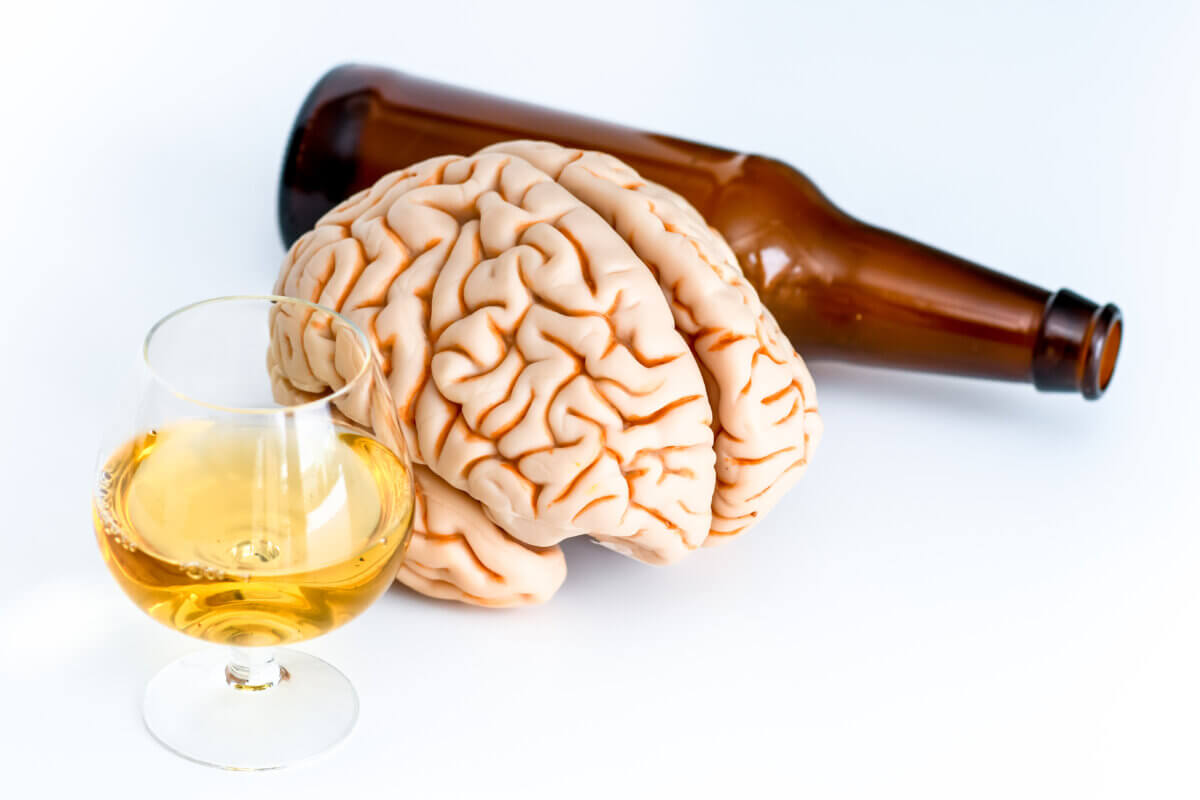
(Credit: rozbeh/Shutterstock)
HERSHEY, Pa. — Studies have shown that drinking alcohol can have an immediate impact on the human brain. Now, a new report finds that this damage can have lasting consequences, even if you quit drinking for years.
Researchers from Penn State have discovered that even a modest amount of binge drinking when you’re a young adult can rewire the brain, making it more vulnerable to cognitive decline during old age. Simply put, too much heavy drinking during your college years can have a lasting and devastating impact on the neurons in your brain, even if you stop drinking after this period of your life.
Conducted on mice, the study found that moderate binge drinking in younger years can leave lasting impacts on brain function, affecting how neurons communicate in the prefrontal cortex (PFC) — the brain area responsible for high-level processes such as decision-making, memory, and self-control. This new insight, published in the journal Neurobiology of Aging, could inform our understanding of how early-life drinking patterns affect brain health in later years.

In the study, mice were exposed to voluntary binge drinking over a period of weeks and then abstained from alcohol for about six months — equivalent to several years in human terms. When the researchers examined the mice’s brains after this long abstinence, they observed persistent changes in the PFC neurons.
Specifically, neurons in this region became more excitable and had higher levels of excitatory signaling, meaning they fired more often and with less input than usual. In healthy brains, a careful balance of excitatory and inhibitory signaling keeps the system stable, but binge drinking seems to disrupt this balance in a way that lingers, potentially creating an environment similar to early-stage Alzheimer’s.
One particularly striking finding was the change in non-pyramidal neurons, a type of cell that typically inhibits overactivity in the brain. After the binge-drinking period, these neurons received a significant increase in excitatory input, almost doubling the amount of stimulatory signals they received. This increase could lead to “hyperexcitability,” where the brain becomes overly active — a hallmark of several neurodegenerative conditions.
While the research was conducted on mice, the implications for human health are worth considering. If similar effects occur in people, it would suggest that even moderate binge drinking in earlier life could create lasting vulnerabilities in the brain’s wiring, potentially increasing the risk of cognitive decline as we age. Importantly, these results underscore the need for further studies in humans to explore how different levels of alcohol consumption interact with brain health and aging.
Paper Summary
Methodology
The researchers used the Drinking-in-the-Dark (DID) model to simulate binge drinking. In this model, mice were given access to 20% alcohol for a few hours over several days, which reliably produced blood alcohol levels similar to binge drinking in humans. Following this four-week drinking period, the mice then abstained from alcohol for about six months. At the end of this abstinence period, the researchers examined the prefrontal cortex, focusing on neuron excitability and signaling. They measured how easily neurons fired signals, looking for shifts in baseline activity and communication patterns within the brain.
Key Results
The study found that after the abstinence period, PFC neurons in previously binge-drinking mice were still hyper-excitable, requiring less stimulus to fire signals. Furthermore, non-pyramidal neurons—cells that typically play a calming role in the brain—were receiving more excitatory input than normal, suggesting a disruption in the brain’s balance between excitement and inhibition. In simple terms, the PFC neurons in these mice had become “trigger-happy,” and non-pyramidal neurons had lost some of their usual calming influence.
Study Limitations
The research was conducted on mice, and while mouse brains share similarities with human brains, they aren’t identical. Moreover, the DID model forces the mice to drink as their only available reward, unlike humans who have other choices and social factors involved. Finally, single housing for the mice, while necessary for the study, may introduce social stress, which could amplify the effects of alcohol on the brain.
Discussion & Takeaways
The findings suggest that binge drinking could have long-lasting impacts on brain health, even after years of abstinence. The study reveals how binge drinking could alter brain wiring in ways that resemble early Alzheimer’s, potentially increasing cognitive decline risk in later life. While further research is needed to verify these effects in humans, the study highlights alcohol as a risk factor to consider in brain health, particularly as we age.
Funding & Disclosures
The study was supported by funding from the National Institutes of Health, including grants specifically focused on alcohol research and neurodegeneration. The authors have no conflicts of interest to declare, ensuring that the study’s findings are presented without bias.


