
(© sudok1 - stock.adobe.com)
In A Nutshell
- Scientists can now measure microscopic blood vessel pulsations in the brain that reveal why some people’s brains age faster than others, even at the same chronological age
- Older adults with high blood pressure showed dramatically elevated pulsations in deep white matter—the brain region most vulnerable to age-related damage—compared to those with normal blood pressure
- The variation between individuals was striking: some 60-year-olds had pulsation patterns matching people in their twenties, while others showed severe elevations, and these patterns stayed consistent over months
- Unlike regular brain scans that only show damage after it happens, this method captures what’s going on in your blood vessels with every heartbeat, potentially offering earlier warning signs before permanent harm occurs
LOS ANGELES — Two people celebrating their 60th birthdays might look the same age on the outside, but their brains could be aging at completely different speeds. Scientists have discovered a way to measure tiny ripples of movement in blood vessels deep inside the brain, and these hidden pulsations may help explain why some older adults stay mentally sharp while others struggle, even when they’re the same age. Researchers summarize these beat-to-beat changes with a microvascular volumetric pulsatility index (mvPI), a normalized measure of volume change over one heartbeat.
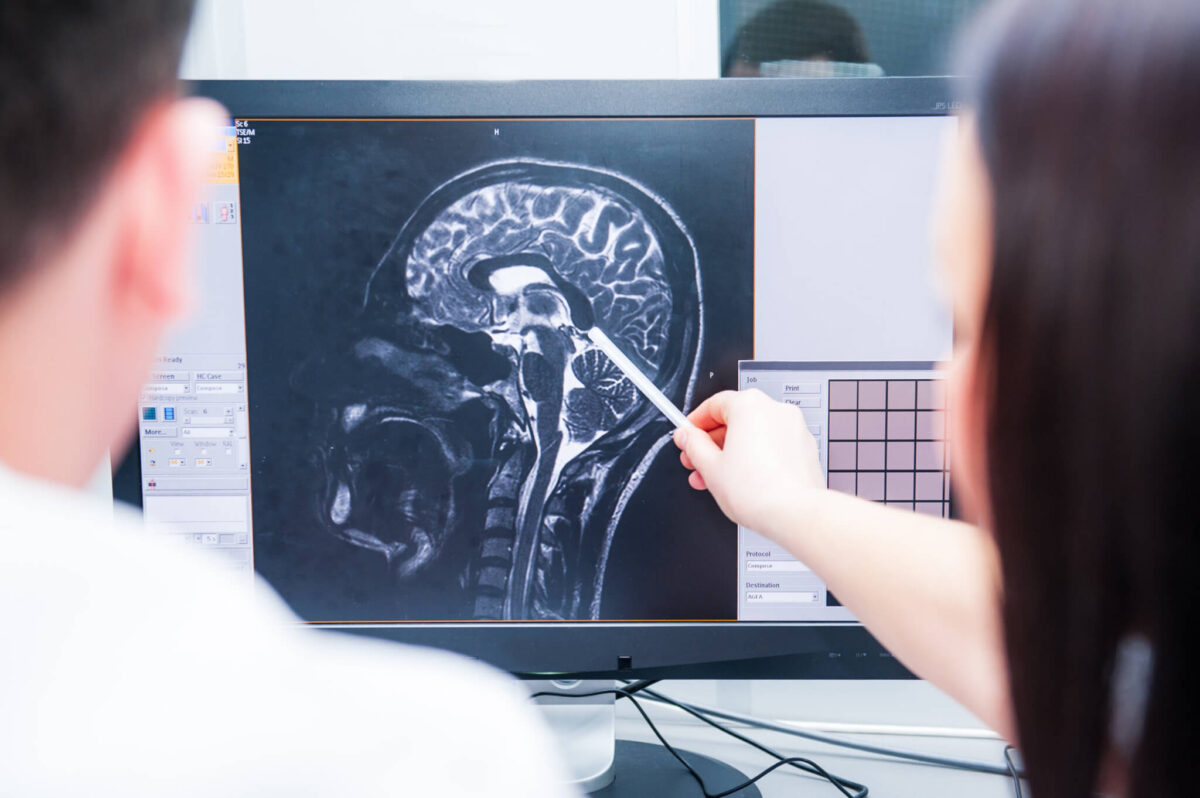
Researchers at USC’s Stevens Neuroimaging and Informatics Institute used an ultra-powerful MRI scanner to peek inside the brains of younger and older adults. Their study, published in Nature Cardiovascular Research, found that the deep interior white matter of older brains showed much stronger blood vessel pulsations than younger brains. Interestingly, not all older adults looked the same. Some 60-year-olds had pulsation patterns that looked just like those of people in their twenties. Others showed dramatically elevated levels, especially if they had high blood pressure.
The team, led by Dr. Danny JJ Wang, developed a new way to watch these microscopic movements in living people. Unlike traditional brain scans that only show damage after it’s already happened, this approach captures beat-to-beat vascular mechanics during the scan. It turns a still into a heartbeat-by-heartbeat clip.

Your Brain’s Heartbeat
Every time your heart beats, your brain’s arteries expand and contract slightly. These rhythmic pulsations serve important purposes. They help pump cerebrospinal fluid through waste-clearing pathways and adjust blood flow to whichever parts of your brain are working hardest at the moment.
In a young, healthy brain, these pulsations follow a predictable pattern. They’re strongest at the brain’s surface, where blood vessels first enter from the skull, then gradually quiet down as you go deeper. It’s a bit like ripples spreading across a pond, strong at first, then fading as they move outward.
The research team recruited 11 young adults (average age 28) and 12 older adults (average age 60) for brain scans. They used a 7 Tesla MRI machine, about twice as powerful as the scanners you’d find in most hospitals. While participants lay still, a sensor on their finger tracked their pulse. At the same time, the scanner captured detailed images showing how blood volume changed throughout each heartbeat, creating essentially a 4D movie of the brain’s hidden rhythm.
What emerged was fascinating. The researchers mapped the brain in layers, from the outermost surface down through six levels of the wrinkled gray matter and into the white matter below (white matter is the brain’s wiring, the long fiber tracts that carry signals between regions). Each layer showed different pulsation patterns. And older adults looked different from younger ones in very specific ways.
In young adults, pulsations started strong at the surface and steadily decreased going deeper, reaching their quietest levels in the deep white matter. Older participants showed a different story. Their surface and outer layers looked similar to young adults. But in the deep white matter, pulsations were substantially higher. And the range between individual older adults was enormous, much more varied than among younger people.
The Blood Pressure Connection
Among the 12 older participants, half had been diagnosed with high blood pressure and half had normal blood pressure. When the researchers looked at these groups separately, a clear pattern appeared.
Young adults had the lowest white matter pulsations. Older adults with normal blood pressure fell in the middle, a bit higher than the young group. But older adults with high blood pressure showed higher levels compared to everyone else.
This suggests your brain ages on two tracks at once. There’s a gradual aging process that happens to everyone over time. But if you have risk factors like high blood pressure, there’s an accelerated aging process happening too. The combination determines how your individual brain ages.
Traditional signs of brain aging, like brain shrinkage, bright spots of damage on MRI scans, and reduced blood flow, take years to develop. By the time doctors can see them on a scan, significant harm has already occurred.
Blood vessel pulsations work differently. They reflect what is happening in your brain beat by beat during the scan. And six young participants who came back for repeat scans three to eight months later showed something important: while people’s patterns differed dramatically from each other, each person’s own pattern stayed remarkably consistent over time.
Your pulsation signature is stable. It’s a characteristic of your individual brain, not random noise.
Two 60-year-olds might have brain scans that look identical in terms of structure. But the mechanical environment their brain cells are living in could be profoundly different.
Why Brain Pulsations Matter
The small arteries in your brain act like shock absorbers. Their muscular walls expand and contract to control blood flow while also cushioning the pulsing energy from each heartbeat. This progressive dampening protects the delicate tissue and tiny blood vessels downstream from too much mechanical stress.
As people age, these arteries undergo changes. Their walls get stiffer with collagen buildup. There are fewer blood vessels overall. The branching network becomes less complex. The muscle cells in vessel walls lose elasticity. All these changes reduce the arteries’ ability to absorb pulse pressure.
Instead of being dampened, those pressure waves penetrate deeper into the brain, reaching the terminal arteries of the white matter, exactly where this study found elevated pulsations in older adults.
“Arterial pulsation is like the brain’s natural pump, helping to move fluids and clear waste,” said Wang, a professor of neurology and radiology at the Keck School of Medicine, in a statement. “Our new method allows us to see, for the first time in people, how the volumes of those tiny blood vessels change with aging and vascular risk factors. This opens new avenues for studying brain health, dementia, and small vessel disease.”
The researchers also used a different type of MRI to measure pulsations in the large arteries visible with conventional scans. The new microscopic measurements correlated with those larger-vessel patterns, confirming that what’s happening in tiny vessels reflects broader changes throughout the entire arterial system.
The amount of change varied by brain region. Older adults showed minimal increase in their outer gray matter compared to young adults. But the white matter differences were dramatic. This helps explain why white matter damage is such a hallmark of brain aging.
White matter contains the long nerve fibers connecting different brain regions, wrapped in fatty insulation that speeds up signal transmission. When white matter gets damaged, communication between brain areas breaks down. This contributes to slower thinking, problems with planning and decision-making, and eventually dementia.
The team created maps showing where high pulsations occurred most often. These hotspots appeared in specific territories and patterns. Previous research has linked this type of white matter damage to cognitive decline, stroke risk, and diseases like Alzheimer’s.
The spatial patterns suggest that elevated pulsations might directly contribute to tissue damage rather than just occurring alongside other aging changes. Studies in mice support this idea: when researchers gave mice high blood pressure, the animals showed elevated arterial pulsations along with disrupted fluid flow and impaired waste removal from brain tissue.
Your brain cells constantly produce metabolic waste, including proteins like beta-amyloid that pile up in Alzheimer’s disease. Scientists believe the brain has a waste-clearing system that relies on synchronized arterial pulsations to pump cerebrospinal fluid through channels around blood vessels, flushing out debris. When pulsations become too strong or lose their normal rhythm, this clearance system might falter, though this particular study didn’t measure waste clearance directly.
The elevated white matter pulsations seen in older humans, especially those with high blood pressure, could accelerate brain aging through multiple routes: direct mechanical damage to tissue and vessels, and possibly impaired waste removal. Both would make the brain more vulnerable to cognitive decline and neurodegeneration.
Stable Within A Person, Different Between People
Perhaps the most striking finding was how different older adults were from each other. When researchers compared individual brain maps, older adults showed far more variation than young adults. Some older people’s patterns were barely different from those of twenty-somethings. Others showed dramatic elevations.
This variability is both concerning and hopeful. It means some brains show much more pronounced aging changes than others, even at the same chronological age. But it also means accelerated aging isn’t inevitable. If we can figure out what protects some people while others decline faster, we might be able to intervene.
The blood pressure comparison offers one clear example. Managing blood pressure is already a cornerstone of staying healthy. This research suggests it might also protect your brain by affecting how your blood vessels pulse, though we’d need studies that follow people over time and test interventions to know for sure. Other factors likely play a role too in determining each person’s aging trajectory.
The fact that pulsation patterns stayed stable over months in the same person but differed dramatically between people suggests these measurements capture something fundamental about how your vascular system has aged. They likely reflect the combined effects of your genetics, lifestyle, medical history, and environment.
Brain Scans Today vs. Future Tools
The scanning method required about 30 minutes for the pulsation measurements plus 12 minutes to measure blood flow. It needs a 7 Tesla scanner, which only a handful of hospitals have. But since deep white matter pulsations turned out to be a key distinguishing feature, future research might find ways to focus on just that region, potentially cutting scan times or adapting the method for the more common 3 Tesla scanners.
Right now, doctors assess brain health mainly through structural scans showing damage that’s already occurred. If you’re 65 and your scan looks normal, you might feel reassured. But that snapshot doesn’t reveal whether harmful forces are actively accelerating aging in your brain. On the flip side, someone with early signs of white matter damage might have relatively normal vascular patterns, suggesting their condition might progress more slowly.
Being able to measure these vascular dynamics could potentially catch accelerated aging earlier, before permanent damage piles up. And unlike your genes or your birthday, vascular patterns might be something you can actually do something about, through blood pressure control, exercise, and lifestyle changes. We’d need intervention studies to test whether those approaches really work, though.
This work maps how blood vessel pulsations change with age and vary dramatically between individuals. The elevated white matter pulsations in older adults, especially those with high blood pressure, show that vascular patterns differ based on age and risk factors. Your chronological age doesn’t determine how your brain ages, people follow different trajectories that can now be measured and potentially monitored with this specialized imaging.
Paper Summary
Methodology
Researchers recruited 11 young volunteers (average age 28.4 years) and 12 older volunteers (average age 60.2 years), all healthy without neurological disorders. Participants underwent 7 Tesla MRI scanning using a specialized pulse sequence called vascular space occupancy (VASO) that measures blood volume changes. During the approximately 30-minute VASO scan, finger sensors recorded cardiac pulse timing. Images were retrospectively sorted into 10 cardiac phases based on pulse timing. The brain was segmented into layers including pial surface, six cortical depths, and superficial and deep white matter. Cerebral blood flow was measured using arterial spin labeling MRI to estimate baseline blood volume needed for calculating pulsatility. Nine young and 12 older participants also underwent 4D-flow phase-contrast MRI to measure pulsations in large arteries. Six young participants returned for repeat scans 3-8 months later to assess reliability.
Results
Microvascular volumetric pulsatility peaked at the pial surface (0.18 ± 0.04) and progressively decreased toward deeper brain regions in young adults. Older participants showed significantly higher pulsatility in deep white matter compared to young participants (P = 0.006). This difference was most pronounced in older adults with hypertension. Pulsatility patterns varied across vascular territories, with the middle cerebral artery territory showing higher values than anterior or posterior cerebral territories in middle and superficial gray matter. Test-retest scans demonstrated high reproducibility. Non-parametric reliability testing confirmed that measured pulsations significantly exceeded chance levels in most brain regions. Microvascular pulsatility in deep white matter correlated with velocity-based pulsatility measurements from 4D-flow MRI in large arteries (r = 0.56, P = 0.01 for middle cerebral artery).
Limitations
The study used an assumed baseline blood volume value (5.5% in gray matter) derived from literature rather than individual measurements, though sensitivity analyses suggested this didn’t substantially affect conclusions. The method’s reliability was lower in deep white matter of young adults where pulsations were weak. Scan duration of approximately 30 minutes may limit clinical applicability, though focusing on white matter alone could reduce this. The sample size was relatively small, particularly for subgroup analyses of hypertensive versus normotensive older adults. The study was cross-sectional, so causality cannot be established. Results apply to the specific 7 Tesla MRI system used; optimization would be needed for other field strengths.
Funding and Disclosures
This work was supported by National Institutes of Health grants UF1-NS100614, S10-OD025312, R01-NS114382, R01-EB032169, RF1AG084072, R01-EB028297, R01-NS134712, and R01-NS121040. One author (Ning Jin) is an employee of Siemens Healthineers and supported the 4D-flow MRI component. Other authors declared no competing interests.
Publication Details
Guo, F., Zhao, C., Shou, Q., Jin, N., Jann, K., Shao, X., & Wang, D.J.J. (2025). Assessing cerebral microvascular volumetric with high-resolution 4D cerebral blood volume MRI at 7 T. Nature Cardiovascular Research, 4, 1424-1438. DOI: 10.1038/s44161-025-00722-1


