
Long before iron and empires, the Bronze Age shaped how early civilizations farmed, fought, and built the first towns. (© Casimiro - stock.adobe.com)
Around 1500 BCE, communities in Central Europe abandoned fortified towns, changed their diets, and became more equal. A new study shows how one humble grain (and a changing world) transformed the way people lived.
In a nutshell
- Diet revolution: Bronze Age communities rapidly adopted drought-resistant millet as a staple crop between 1540-1480 BCE, marking one of Europe’s earliest examples of this agricultural shift.
- Social equality: Gender-based differences in protein consumption disappeared, suggesting a move toward more egalitarian food distribution and reduced social inequality.
- Settlement transformation: People abandoned centuries-old fortified cities in favor of smaller, temporary communities, reflecting broader political and social restructuring.
BUDAPEST — About 3,500 years ago, communities in Central Europe went through one of the most dramatic transformations in prehistoric history. New research reveals that this period saw major changes in what people ate, how they moved, and how fairly resources were shared. The study offers the clearest picture yet of how outside pressures—possibly including environmental stress—can reshape entire societies.
Scientists studying ancient teeth and bones from Hungary found that around 1500 BCE, during the shift from the Middle to the Late Bronze Age, people in the Carpathian Basin (modern-day Hungary) began living differently in nearly every aspect of life.
Broomcorn Millet: The Grain That Changed Everything
To explore this ancient upheaval, an international team of researchers examined 130 bone and tooth samples from five archaeological sites in Hungary’s Tisza River basin.
One of their most revealing discoveries centers on broomcorn millet, a tough, fast-growing grain that suddenly became a key part of the diet during this time. “According to our results, the strong investment in broomcorn millet as key-cereal in the Carpathian Basin’s community started at some point between 1540 and 1480 BCE, which is considered one of the earliest phases in Europe,” the researchers wrote in their paper, published in Scientific Reports.
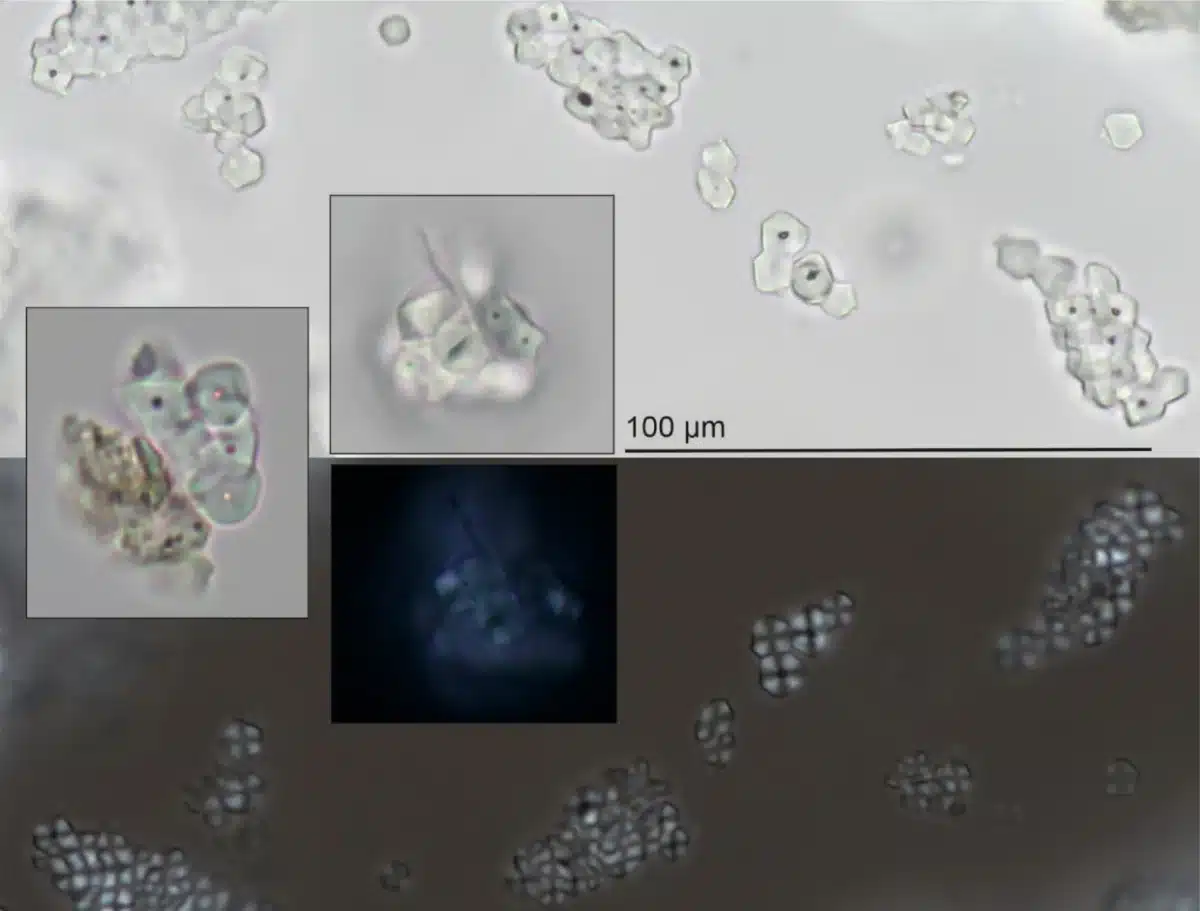
Before this shift, people mainly ate wheat and barley. But millet thrives in dry, unpredictable weather, and the researchers believe it may have offered a reliable food source during difficult times. Traces of this grain were found in the dental plaque of many Late Bronze Age individuals, confirming that it became a staple almost overnight.

A Shift Toward Equality
The way food was shared also changed dramatically. In earlier times, men ate noticeably more meat than women, an indicator of social inequality. But in the Late Bronze Age, that gap disappeared. Both men and women had roughly equal access to animal protein.
This suggests a major cultural shift. The researchers believe society became more equal, with fewer differences in how food and resources were distributed. In fact, overall diets became more uniform, hinting that the strict social hierarchies of earlier times had started to loosen.
Bronze Age Migration Patterns
The study also looked at how much people were moving from one place to another. By analyzing the chemical signatures in tooth enamel, scientists can tell where someone likely grew up.
It turns out that most people were born and raised locally, with only a few coming from farther away. But where people were coming from did change. In the earlier period, newcomers mostly came from mountainous areas to the north. Later on, migrants tended to come from the west and south, regions like the Middle Danube and the Transdanubian hills.
“35 of the Tiszafüred-Majoroshalom are compatible with 0–20 km range and are, therefore, potentially indigenous or from the immediate hinterland,” the authors noted. In other words, sweeping cultural change didn’t require mass migration; just a few new ideas introduced into existing communities.
Perhaps the most visible shift happened in how people lived. For centuries, they built their homes in massive, fortified “tell settlements” — mound-like towns made of layers of buildings constructed over generations.
Then, around 1500 BCE, people abruptly deserted these settlements. “In the beginning of this period, the long-used tell-settlements were abandoned, furthermore new pottery styles and metal types appeared,” the study reports.
They moved instead into smaller, more spread-out villages. This physical shift mirrored a broader collapse of the old political order. The new settlements lacked rigid power structures and seemed to reflect the more flexible, less hierarchical society.
Researchers also looked at soil layers for ancient crop remnants. Notably, broomcorn millet was missing from older soil layers, confirming that it wasn’t widely used until after 1540 BCE, a finding that matched what they saw in the bone and tooth data.
Lessons From the Past
“Our dataset confirms that the change of material culture, settlement patterns, and burial customs that occurred in the Carpathian Basin in concomitance with the appearance of the TC (1500 BCE) also coincided with a substantial modification of other fundamental aspects of culture, namely subsistence practices, primary economy, dietary habits, and presumably, cuisine,” the researchers wrote.
This transformation wasn’t sparked by conquest or invasion. It likely came from communities adapting to outside pressures such as drought, population growth, or trade disruptions.
One key factor in their survival may have been millet. “This may be due to its high degree of resistance, high potential of productivity and short maturation period. Its cultivation could contribute substantially to increase the carrying capacity of LBA village communities and support demographic pressure in times of growing demand of food resources,” the authors noted.
In short, these Bronze Age citizens didn’t just endure change, they found new ways to thrive. And in doing so, they laid the foundation for the Central European cultures that followed.
Paper Summary
Methodology
Researchers analyzed isotope compositions from teeth and bones of 46 humans and 10 animals from five Bronze Age archaeological sites in Hungary’s Tisza River basin. They used strontium isotopes to track mobility patterns, carbon and nitrogen isotopes to reconstruct diet, and microscopic analysis of dental calculus to identify specific plant remains. The study incorporated radiocarbon dating to establish precise chronologies and compared findings across Middle Bronze Age (2000-1500 BCE) and Late Bronze Age (1500-1300 BCE) periods.
Results
The research revealed three major changes around 1500 BCE: systematic adoption of broomcorn millet cultivation between 1540-1480 BCE, significant reduction in dietary inequality (particularly the elimination of gender-based differences in protein access), and shifts in migration patterns from northern/mountainous regions to western/southern areas. Additionally, the study found evidence for the abandonment of long-established fortified settlements in favor of smaller, more temporary communities.
Limitations
The study was geographically limited to the Tisza River basin in Hungary, and the strontium isotope analysis was constrained by the relatively uniform geology of the Great Hungarian Plain, which may have obscured some migration patterns. The dental calculus analysis was predominantly from adult males, limiting statistical inferences about age or gender-based dietary differences. Additionally, macro-botanical remains from Late Bronze Age contexts were not available due to site abandonment and modern agricultural disturbance.
Funding and Disclosures
The research was supported by multiple Hungarian Research, Development and Innovation Office grants, the Hungarian Academy of Sciences through Distinguished Guest Scientist Fellowship and Bolyai Scholarship programs, and European Union funding through the “MALTHUS” project. The authors declared no competing interests and obtained all necessary permits from relevant Hungarian museums and institutions.
Publication Information
“Isotope and archaeobotanical analysis reveal radical changes in mobility, diet and inequalities around 1500 BCE at the core of Europe” by Claudio Cavazzuti et al., published in Scientific Reports (2025), volume 15, article number 17494. DOI: https://doi.org/10.1038/s41598-025-01113-z


