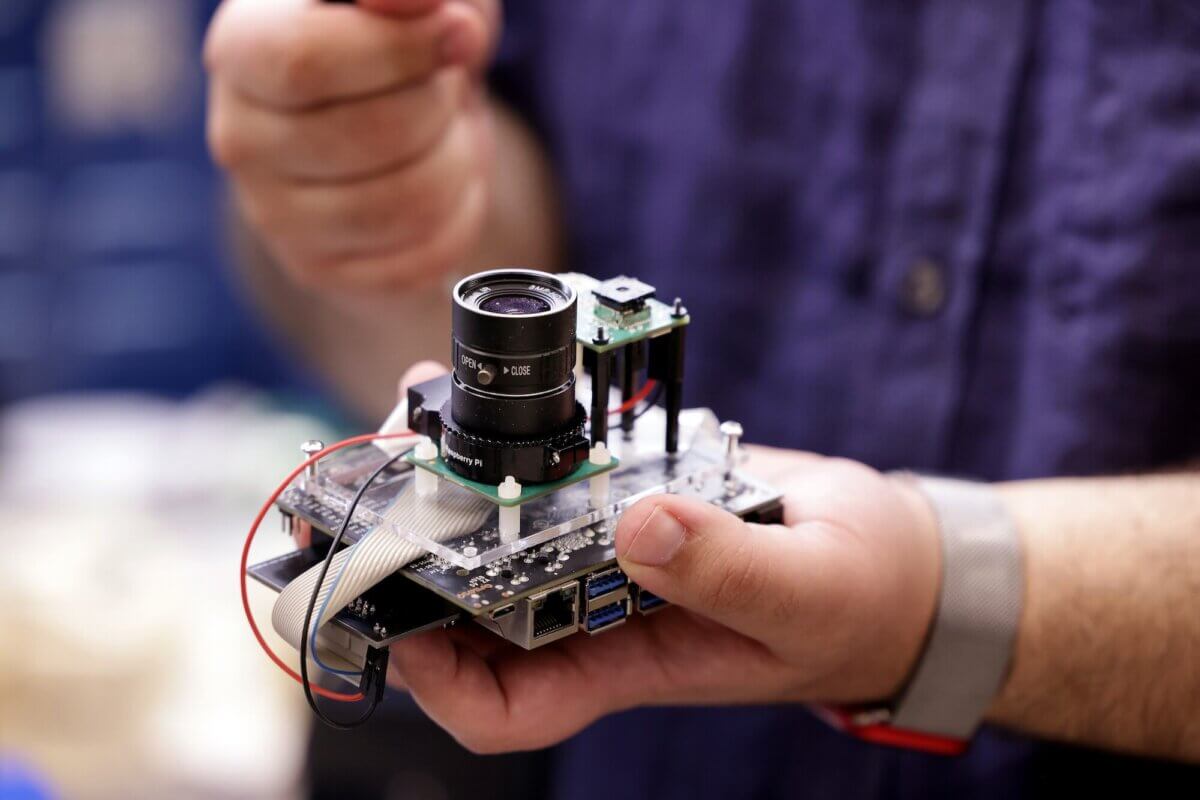
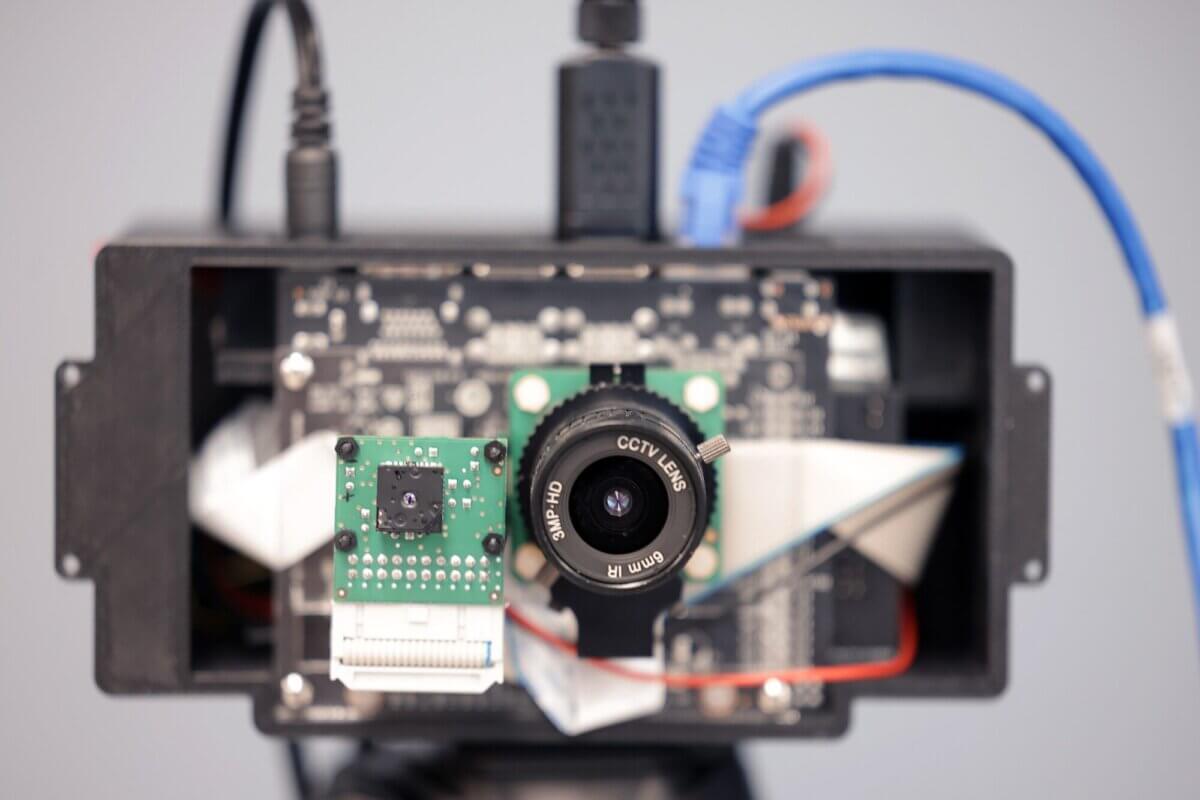
The round lens of PrivacyLens captures standard digital video while the square lens senses heat. The heat sensor improves the camera’s ability to spot and remove people from videos. Image credit: Brenda Ahearn, Michigan Engineering.
ANN ARBOR, Mich. — We live in the golden age of technology. Our phones can give us information in seconds, connect us to people worldwide, and help us pay for items with no need to take out our wallets. While technology has its perks, it often comes at the cost of privacy. It’s easier than ever for devices like your laptop or doorbell camera to watch and listen to what you’re doing. Even more terrifying is the idea of these devices accidentally sharing photos and videos of you without your knowledge or consent.
Think of the woman who went viral online in 2020 for having their photo taken while sitting on a toilet. The person was not aware that their robotic vacuum had wandered into the bathroom, that the screenshots had been sent to a start-up company’s cloud server, or that they had been later shared on social media.
Now, University of Michigan engineers have created a camera designed to hide people in identifiable media, increasing privacy in a world where everything seems to be recorded and uploaded on the Internet in seconds. An animated stick figure would help capture photos and videos while keeping people anonymous from companies collecting user information.
“Most consumers do not think about what happens to the data collected by their favorite smart home devices. In most cases, raw audio, images and videos are being streamed off these devices to the manufacturers’ cloud-based servers, regardless of whether or not the data is actually needed for the end application,” says Alanson Sample, a University of Michigan associate professor of computer science and engineering, in a media release.
The unveiling of the camera called PrivacyLens occurred at the Privacy Enhancing Technologies Symposium in the United Kingdom.
How The Camera Works
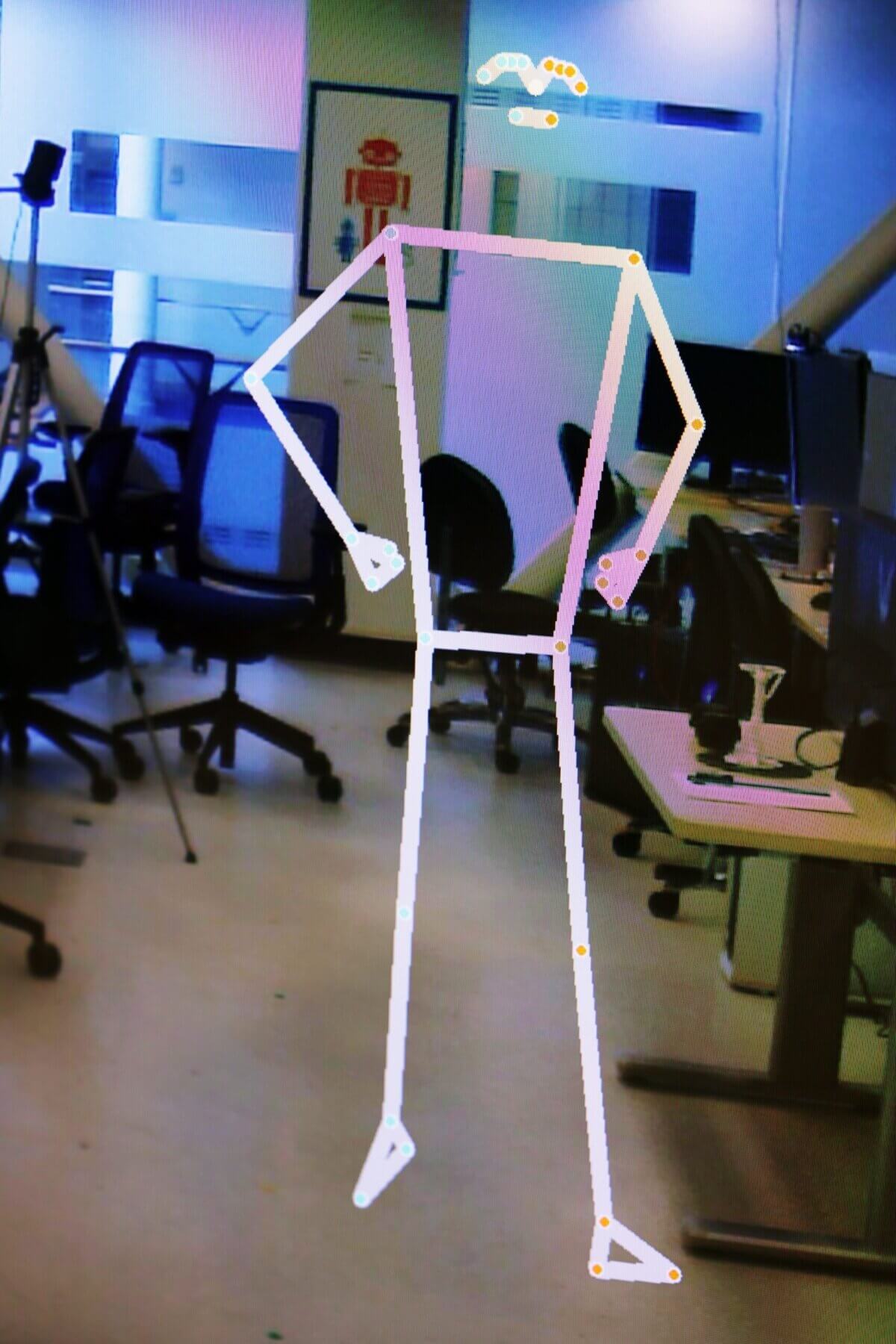
PrivacyLens is a video recorder and heat-sensing camera that spots people in images from their body temperature. Once identified, the camera replaces the person’s appearance with a generic stick figure that moves like the person it is recording. The raw photos are never stored on the device or in the cloud, allowing an extra layer of security from someone accessing the unprocessed images.
“A smart device that removes personally identifiable information before sensitive data is sent to private servers will be a far safer product than what we currently have,” Sample adds.
The Camera Monitors People’s Health Safely
The engineering team’s goal is to make people more comfortable being recorded when tracking their fitness or chronic health conditions.
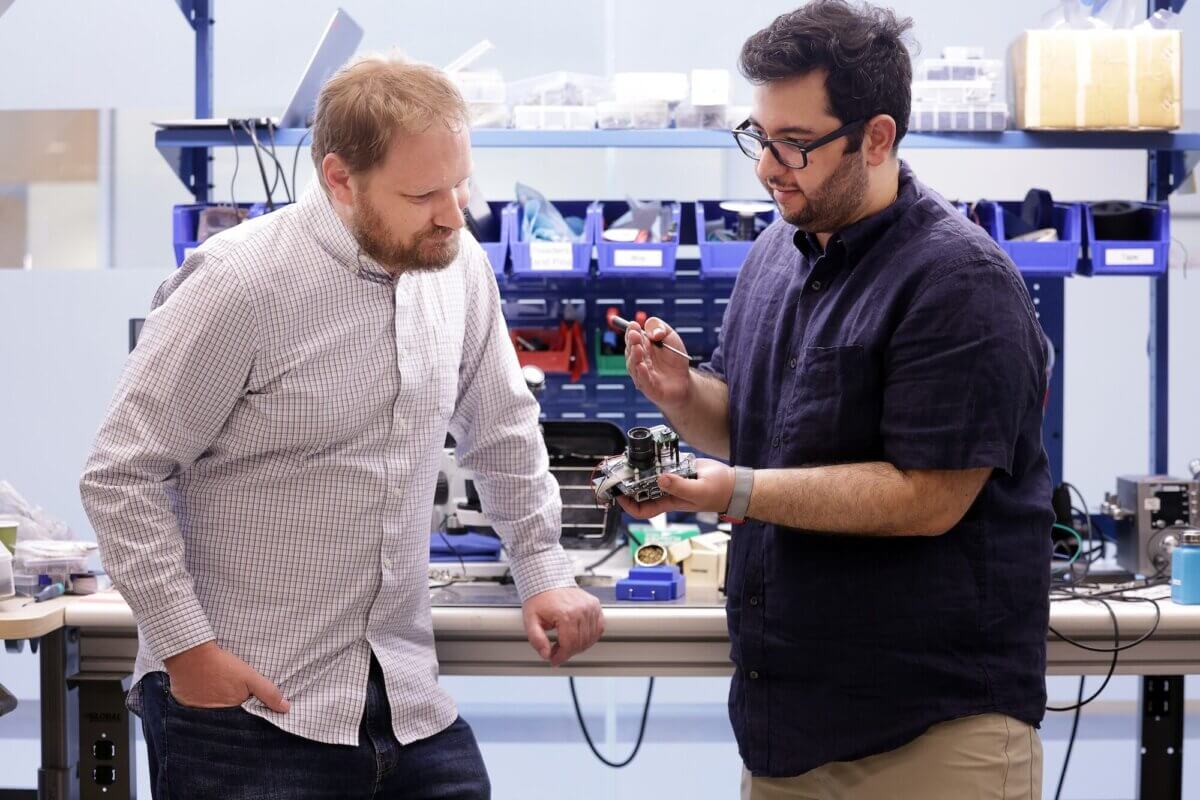
“Cameras provide rich information to monitor health. It could help track exercise habits and other activities of daily living, or call for help when an elderly person falls,” says Yasha Iravantchi, a doctoral student in computer science and engineering.
“But this presents an ethical dilemma for people who would benefit from this technology,” adds Iravantchi. “Without privacy mitigations, we present a situation where they must weigh giving up their privacy in exchange for good chronic care. This device could allow us to get valuable medical data while preserving patient privacy.”
People may also feel less reluctant to have their information monitored and recorded when companies use PrivacyLens. A survey of 15 people found the device made them feel comfortable having a camera in their home as it replaced their presence with generic stick figures.
“Our survey suggested that people might feel comfortable only blurring their face when in the kitchen, but in other parts of the home they may want their whole body removed from the image,” Sample concludes. “We want to give people control over their private information and who has access to it.”
The camera could also help protect the privacy of others in more public situations. Vehicle manufacturers could use PrivacyLens to prevent their cars from acting as surveillance drones. Companies that often use cameras outdoors may also find the device helps them to better comply with privacy laws.


