Cancer Treatment with Red Pills, Injections and Syringe. (© tashatuvango - stock.adobe.com)
BERLIN — In the world of cancer treatment, timing might be the next big breakthrough. A new study reveals that the effectiveness of cancer drugs can vary dramatically depending on the time of day they’re administered. This discovery could lead to more effective treatments with fewer side-effects, potentially transforming the lives of millions of cancer patients worldwide.
At the heart of this research is the circadian rhythm, often called the body’s internal clock. This natural, roughly 24-hour cycle regulates various biological processes, from sleep patterns to hormone production. Now, scientists have found that it also plays a crucial role in how cancer cells respond to treatment.
The study, led by Dr. Adrián Enrique Granada and his team at the Charité Comprehensive Cancer Center in Germany, and published in Nature Communications, introduces a new approach to understanding and leveraging these time-of-day effects. By combining advanced imaging techniques with sophisticated data analysis, the team developed a method to predict the optimal timing for drug administration in different types of cancer.
To understand the significance of this research, imagine your body as a bustling city. Just as a city has rush hours and quiet periods, your body has times when certain processes are more active. The researchers found that cancer treatments can be up to 30% more effective when given at the right time of day, much like how traffic flows more smoothly outside of rush hour.
“We cultured cells from patients with triple-negative breast cancer to observe how they respond at different times of day to the medications administered,” explains Carolin Ector, a research associate in Granada’s group, in a statement. Triple-negative breast cancer is a particularly aggressive form of the disease, with limited treatment options.
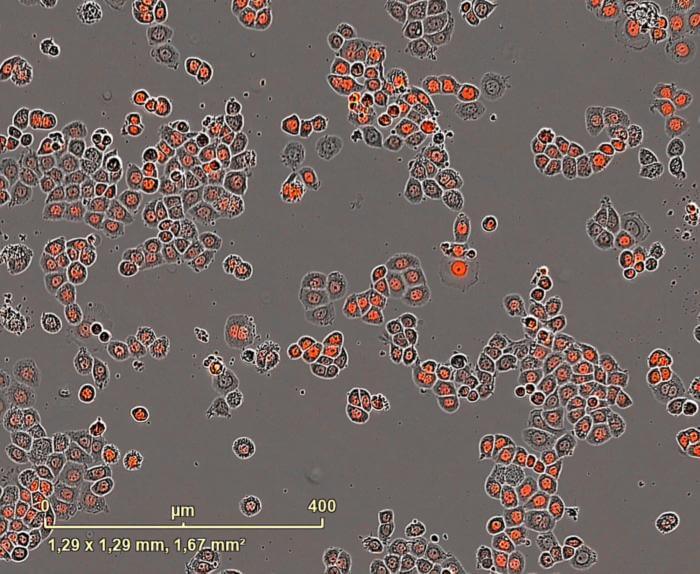
The team’s approach is remarkably comprehensive. They started by examining the circadian rhythms of various cancer cell lines, including breast cancer and neuroblastoma. Using bioluminescent markers – think of these as cellular fireflies – they tracked the activity of key clock genes over several days. This allowed them to create a detailed map of each cell line’s internal clock.
Next, they looked at how these cells grew and responded to different cancer drugs over time. By combining this information with the circadian data, they could identify patterns in drug sensitivity throughout the day. For instance, they found that some breast cancer cells were much more vulnerable to certain drugs in the evening than in the morning.
Similarly, they found that the chemotherapy drug 5-fluorouracil (5-FU) was most effective against a certain cancer cell line between eight and ten in the morning. This timing could make the difference between a treatment that works and one that fails.
The researchers didn’t stop there. They also examined how these time-of-day effects differed between cancer cells and healthy cells. This is crucial because an ideal treatment would maximize damage to cancer cells while minimizing harm to healthy tissue. In some cases, they found opposing patterns – times when cancer cells were most vulnerable coincided with when healthy cells were most resistant.
Currently, most cancer treatments are administered based on convenience or hospital schedules, not biological timing. This study suggests that simply changing when a drug is given could significantly improve its effectiveness without increasing the dose or changing the drug itself.
Moreover, this approach could help reduce side-effects. Many cancer patients suffer from severe side-effects because treatments that kill cancer cells also harm healthy ones. By timing treatments to when healthy cells are naturally more resistant, doctors might be able to reduce these side effects while maintaining or even improving the treatment’s effectiveness against cancer.
The study also sheds light on why some patients respond better to treatment than others. The researchers found that the strength of a cell’s circadian rhythm correlated with its sensitivity to time-of-day effects. This suggests that patients with stronger body clocks might benefit more from precisely timed treatments.
While the research is still in its early stages, it opens up exciting possibilities for personalized medicine. In the future, doctors might be able to tailor treatment schedules to individual patients based on their unique circadian profiles, maximizing effectiveness and minimizing side-effects.
Looking ahead, Granada and his team are planning to validate their findings in larger patient groups and explore the molecular mechanisms behind these circadian influences on drug sensitivity. Their goal is to develop personalized treatment plans based on individual circadian rhythms, potentially revolutionizing cancer care. If successful, this could lead to a new era of “chronotherapy” in cancer treatment, where timing is as important as the choice of drug.
Paper Summary
Methodology
The researchers used a multi-step approach to study time-of-day effects on cancer treatments. First, they created cancer cell lines that glowed when certain circadian clock genes were active. By monitoring this glow over several days, they could map out each cell line’s internal clock. Next, they used live-cell imaging to track how these cells grew and responded to different cancer drugs over time. They tested multiple drugs at various concentrations and at different times of the day.
To analyze this massive amount of data, they used advanced computational methods, including machine learning techniques. They also compared the responses of cancer cells to those of non-cancerous cells to identify times when treatments might be most effective against cancer while causing minimal harm to healthy tissue.
Key Results
The study yielded several key findings. First, they discovered that different cancer cell lines had varying strengths of circadian rhythms, with some showing strong daily patterns and others showing weaker ones. Second, they found that the effectiveness of cancer drugs could vary by up to 30% depending on the time of day they were administered. This effect was different for each combination of drug and cell type.
Third, they identified cases where the best time to treat cancer cells was different from the time when healthy cells were most vulnerable, suggesting potential windows for more effective treatment. Finally, they developed a method to predict which cell types and drugs would show the strongest time-of-day effects, potentially allowing doctors to prioritize timing-based approaches for the most responsive cases.
Study Limitations
While promising, this study has several limitations. Most of the work was done on cell cultures in a laboratory, which doesn’t fully replicate the complexity of a human body. The researchers only tested a limited number of cancer types and drugs, so the findings may not apply to all forms of cancer or treatments.
Additionally, translating these findings to actual patient care will require extensive clinical trials to ensure safety and efficacy. The study also doesn’t account for individual variations in circadian rhythms or how factors like age, diet, or sleep patterns might affect these time-of-day responses.
Discussion & Takeaways
This research opens up new possibilities for improving cancer treatment without developing new drugs. By optimizing the timing of existing treatments, doctors might be able to enhance their effectiveness and reduce side effects. The study also highlights the importance of considering circadian rhythms in medical treatment more broadly. It suggests that personalized medicine should consider not just what treatment to give but when to give it.
The researchers propose a “chronotherapeutic index” to help identify which treatments and cancer types might benefit most from this timing-based approach. Looking forward, this work could lead to new clinical trials testing time-optimized treatment schedules and potentially change how cancer care is delivered.
Funding & Disclosures
This study was funded by several organizations, including the German Federal Ministry of Education and Research and the Deutsche Forschungsgemeinschaft (German Research Foundation). The researchers declared no competing interests related to the study.


I discovered I feel better when I practice interval fasting beginning at 5pm and taking my Ibrance and antihormones at 10pm.