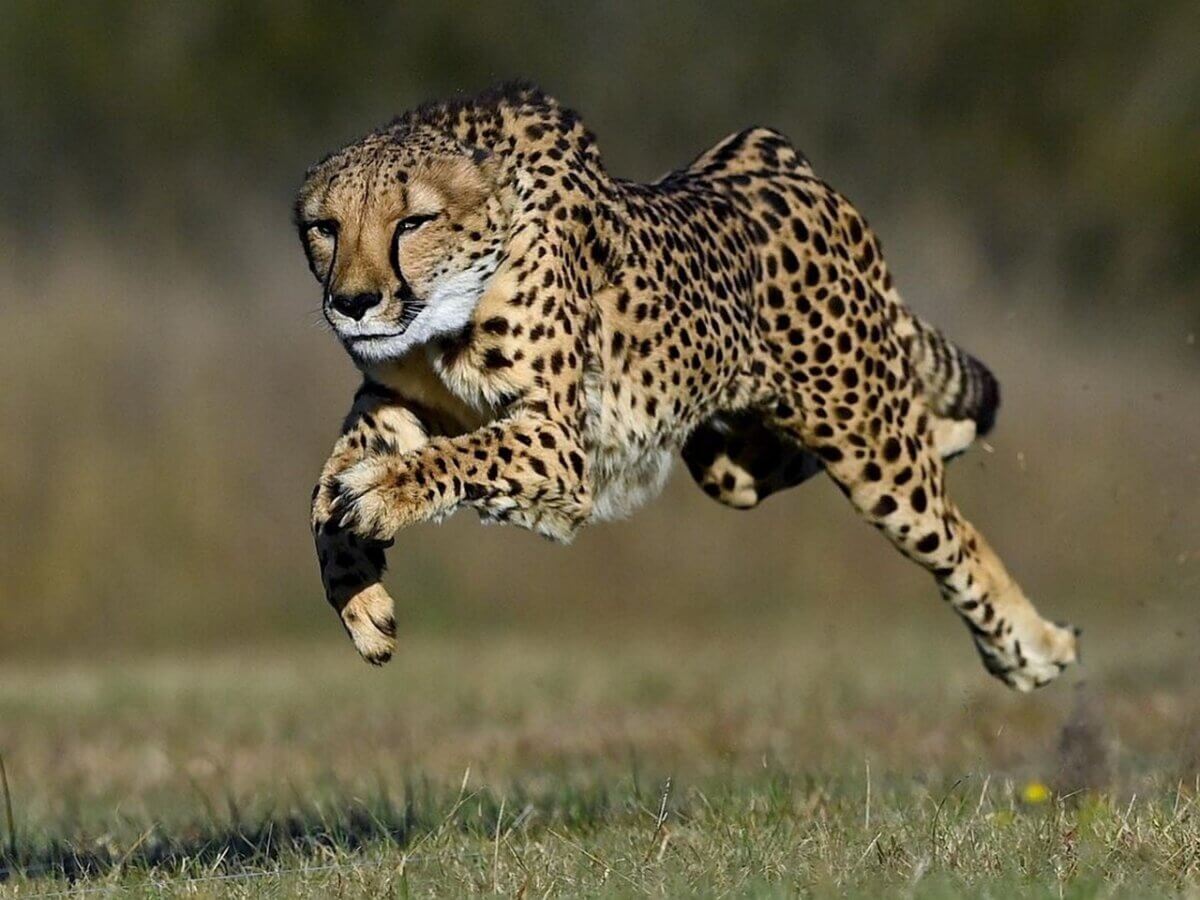
Photo by MrTazim from Pixabay
LONDON — It’s no secret that the cheetah reigns supreme as the fastest land animal, capable of reaching astonishing speeds up to 70 mph. But have you ever wondered why elephants, despite their massive size, aren’t the slowest? A new study dives into the fascinating physics that governs how quickly animals can move, shedding light on the complex interplay between body size, muscle capacity, and the forces of nature.
The research, led by David Labonte from Imperial College London and published in Nature Communications, analyzed speed data from hundreds of animals across 11 orders of magnitude in body mass, from tiny mites to massive elephants. The team uncovered that the maximum running speed of animals follows an intriguing pattern — it increases with body size up to a certain point and then declines for the biggest creatures.
This non-linear relationship defies the typical power law scaling seen in most biological traits, where attributes change monotonically with size. So, what’s behind this unusual trend in animal speediness? The scientists propose it arises from a tug-of-war between two key constraints: the work and kinetic energy capacities of muscles.
Through dimensional analysis and modeling, they show that in small animals, top speed is limited by the maximum kinetic energy muscles can generate in a single contraction. Larger body size allows for higher speeds, as longer legs and greater muscle volume enhance kinetic energy production.
However, this advantage doesn’t last forever. Beyond a critical body mass of around 50 kg, the work capacity of muscles becomes the limiting factor instead. Although big animals can generate lots of kinetic energy, their muscle just can’t produce enough total work to keep increasing speed. Making matters worse, the researchers found that gravity also starts to take a toll on large animals, siphoning away more and more of the muscle work.
“Animals about the size of a cheetah exist in a physical sweet spot at around 50kg, where these two limits coincide. These animals are consequently the fastest, reaching speeds of up to 65 miles per hour,” says study co-author Professor Christofer Clemente from the University of the Sunshine Coast and The University of Queensland in a media release.
Methodology
To arrive at these conclusions, the team compiled an extensive dataset on maximum running speeds from the literature, spanning mice to elephants and mites to lizards. They then used dimensional analysis to derive mathematical relationships between body mass and key muscle properties like work density, fascicle length, and maximum contraction velocity.
The researchers defined two new dimensionless numbers to capture the competing physical constraints. The “Hill number” represents the kinetic energy limit, while the “Borelli number” embodies the work limit. Calculating the ratio of these two numbers yielded a “physiological similarity index” which determines which factor limits speed for a given size.
Putting it all together into a unified equation, they were able to predict the curvilinear relationship between maximum speed and body mass in line with empirical data. Impressively, this physics-based approach required only a single free parameter to be fit to the data, highlighting the explanatory power of the underlying principles.
Results: Need for Speed Meets Real-World Constraints
While the model performed well overall, it did underestimate absolute speed values. The authors attribute this to the fact that animals don’t reach their top velocity in a single stride but rather accelerate over multiple steps. By incorporating a size-independent restitution factor to account for speed lost between each stride, the theoretical predictions snapped into even better agreement with measured speeds.
The study also noted some interesting deviations from the overall trend that point to important real-world factors. For small animals, the model predicts speed should increase with body size at a steeper rate than what is actually observed. The researchers propose that this discrepancy could be explained by the ability of large animals to “gear up” their muscles for greater leverage, a finding supported by empirical data on leg anatomy.
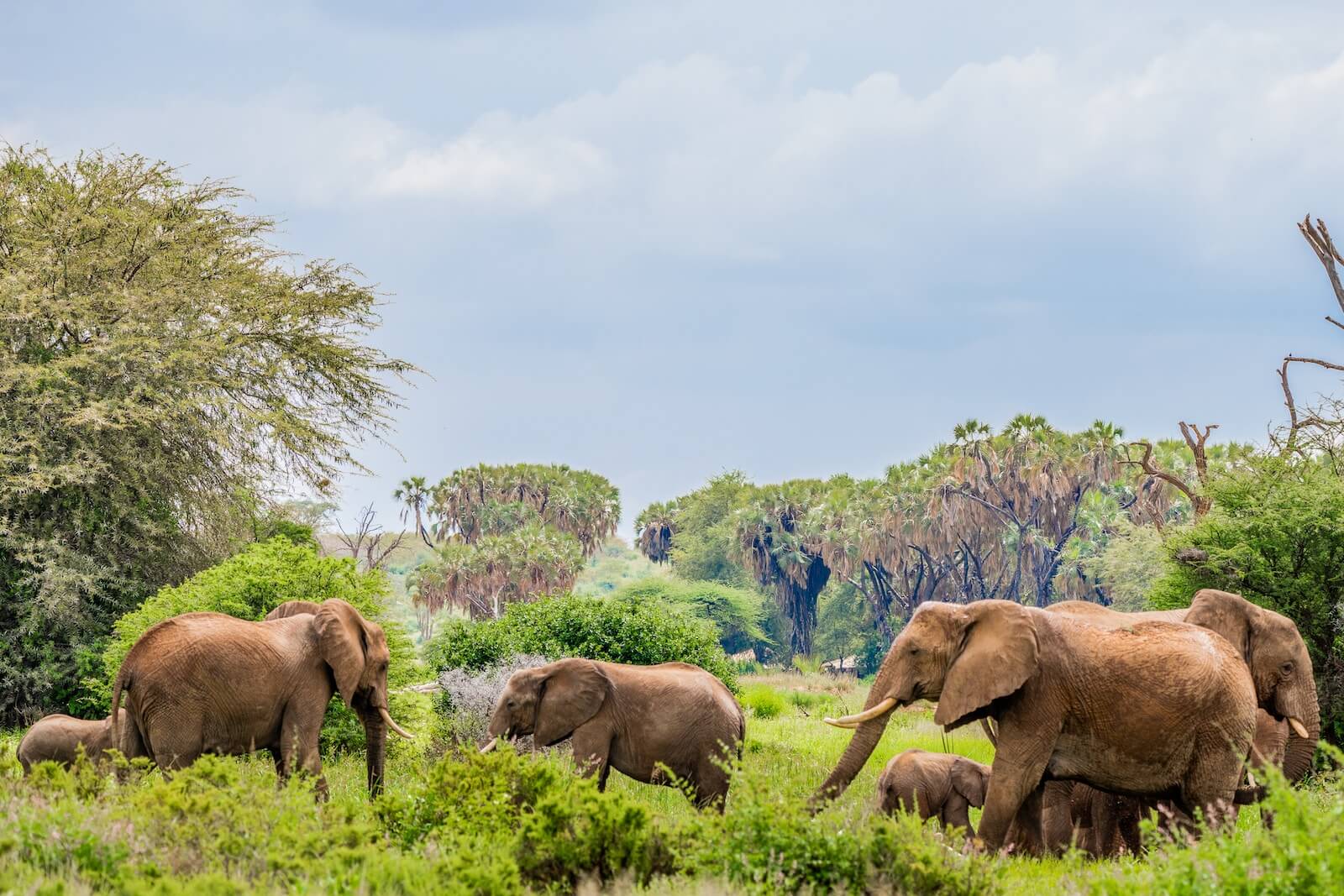
“For large animals like rhinos or elephants, running might feel like lifting an enormous weight, because their muscles are relatively weaker and gravity demands a larger cost. As a result of both, animals eventually have to slow down as they get bigger,” says study co-author Dr. Peter Bishop from Harvard University.
Study Limitations
As with any study, there are limitations to consider. The current work lumped together data across age groups and species without digging into the nuances of how ontogenetic effects or evolutionary specializations shape sprint performance. The model also doesn’t directly account for differences in body plan or number of legs.
Furthermore, the restitution factor used to correct underestimates of absolute speed was derived from a relatively small sample, and more systematic data is needed to validate the assumption that it is truly size-independent. Finally, some key muscle properties had to be estimated from limited literature data, though the researchers were judicious in their approximations.
Discussion & Takeaways: Charting New Directions
Limitations aside, this work makes significant strides in pinpointing the factors that constrain maximum speed at different scales. It explains the historical mystery of why the fastest runners are medium in size rather than super tiny or gigantic. By centering muscle capacities, it challenges long-held assumptions that universal skeletal stress limitations are the primary factor.
The authors draw thought-provoking parallels between their new physiological index and the Reynolds number from fluid dynamics, suggesting it could provide a powerful framework for determining dynamic similarity across species. It may help us compare apples to oranges (or mice to elephants) when it comes to understanding the energetics of movement.
Building on these insights, future studies could explore how animals push the boundaries of this proposed muscle-speed law through evolutionary adaptations and specializations. Integrating this physics foundation with a phylogenetic and ecological lens may yield a more complete picture of the tradeoffs and innovations underlying the need for speed in the natural world.
So, next time you marvel at a cheetah’s blinding speed or giggle at an elephant’s lumbering gait, know that there is an elegant physical reality beneath it all, one that is now a bit less mysterious thanks to science. The groundwork is laid for exciting discoveries ahead that could reshape our understanding of animal athleticism and its limits.
StudyFinds Editor-in-Chief Steve Fink contributed to this report.


