
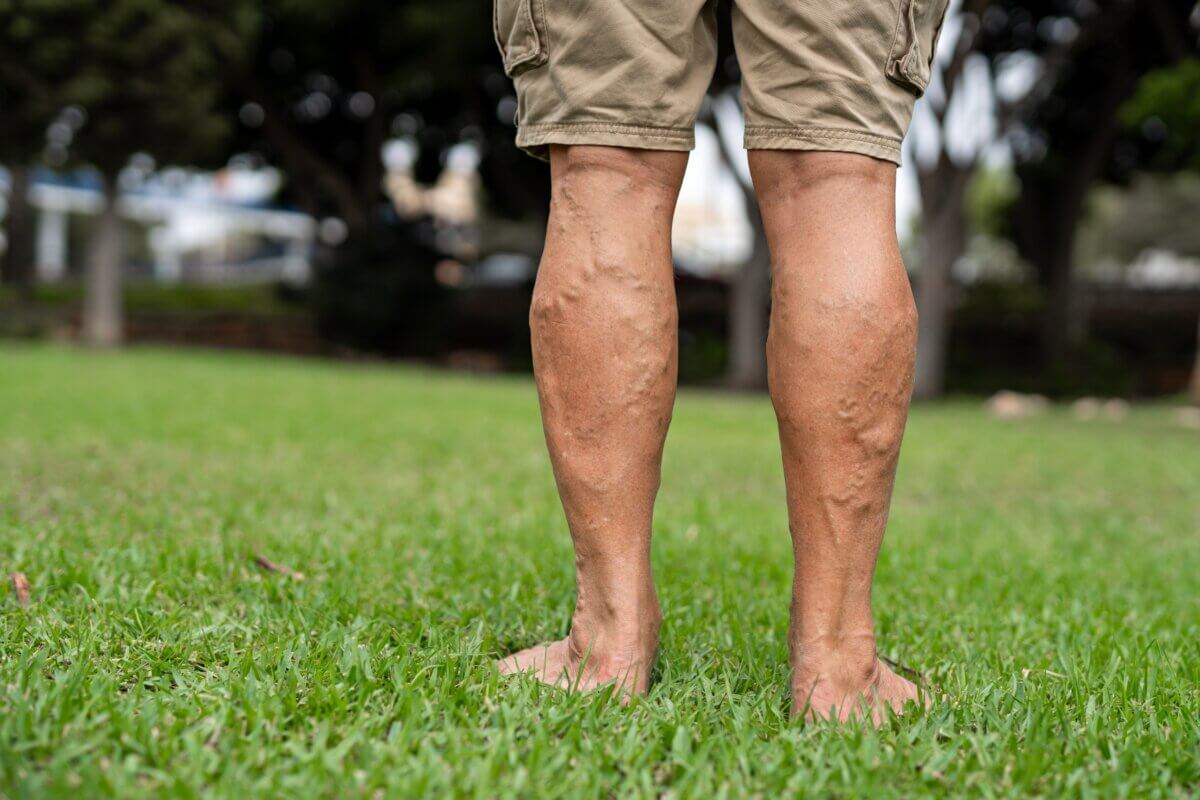
Varicose veins are more than just a cosmetic concern. (New Africa/Shutterstock)
In a nutshell
- Cold sensitivity in your hands and feet, especially when paired with heavy-feeling legs, dramatically increases your risk of developing varicose veins, even before visible signs appear.
- People with both severe cold hypersensitivity and leg heaviness faced more than a 600% higher risk of varicose veins compared to those without these symptoms, according to a study of nearly 9,000 adults.
- Recognizing early warning signs like persistent cold feet and leg heaviness could lead to earlier diagnosis and treatment of varicose veins, potentially preventing serious complications such as blood clots and chronic circulation issues.
TAICHUNG, Taiwan — Getting cold feet? If you frequently experience icy extremities, they actually might be a distress signal from your cardiovascular system. A massive international study has revealed that persistent cold sensitivity in your extremities, especially when paired with leg heaviness, could predict varicose veins years before they become visible.
The research, published in Open Heart, involved nearly 9,000 adults. Varicose veins are those twisted, bulging blood vessels that many people dismiss as merely cosmetic concerns. When people experience both cold extremities and heavy-feeling legs, their risk of having varicose veins increases by more than 600% compared to people without these symptoms.
Currently, many healthcare providers focus on the obvious symptoms including swelling, aching, and those rope-like veins popping out on your legs. But this study reveals that the sensation of cold hands and feet, especially when paired with leg heaviness, might be an early warning system years before varicose veins are visible.
Cold hypersensitivity is a persistent, uncomfortable sensation where you feel cold in your hands and feet even when the room temperature is normal, or you need to put on more clothes than others around you. Most people brush this off as poor circulation or blame their family genetics, but there might be something else happening.
Using data from Taiwan’s massive health database, researchers tracked 8,782 adults between ages 30 and 70 over more than a decade. Participants answered detailed questions about whether they could see twisted blood vessels on their limbs, if they felt cold hypersensitivity in their hands and feet, and whether they experienced heaviness in their lower body.
Among people with no cold sensitivity, only about 6% had varicose veins. But that number jumped to 9% among those with moderate cold sensitivity and 14% among those with severe cold sensitivity. Less than 5% of people without cold sensitivity reported heavy legs, but that figure tripled to 13% among those with severe cold sensitivity.
Why Damaged Veins Make Your Feet Feel Like Ice
Why would varicose veins cause cold feet? Your body is attempting to fix a circulation problem. When varicose veins develop, they create issues with blood flow that trigger your body’s protective response.
When blood gets stuck in damaged veins (which is what occurs with varicose veins), your body tries to help by tightening up the arteries in that area. This arterial squeezing reduces blood flow to the tiny vessels in your hands and feet, leading to that cold sensation. Over time, this process can become stronger, making the cold feeling worse.
Researchers also found that people of East Asian descent may be especially prone to this cold sensation. Asian populations tend to have narrower leg veins compared to people of European descent, which could make them more susceptible to the blood flow problems that cause cold sensitivity.

People with moderate cold hypersensitivity had nearly 50% higher odds of having varicose veins compared to those without cold sensitivity. Those with severe cold sensitivity faced almost 90% higher odds.
Heavy legs alone increased varicose vein risk by more than 300%. However, when heavy legs occurred alongside severe cold hypersensitivity, the risk jumped to over 600% compared to people with neither symptom.
Women showed higher rates of both cold sensitivity and varicose veins, which matches what doctors already know about gender differences in vein disease. Age also mattered, with older participants more likely to develop varicose veins, as did jobs requiring long periods of standing.
More Than Just a Cosmetic Problem
Many people think of varicose veins as primarily ugly but harmless. However, varicose veins can lead to serious complications, including skin sores, blood clots, and chronic circulation problems that significantly impact daily life.
Recent research has also found genetic links between varicose veins and heart failure. People with varicose veins may face double the risk of developing heart failure, dangerous blood clots, and lung problems. Cold sensitivity and heavy leg symptoms identified in this study could serve as early warning signs that encourage people to seek medical attention before more serious issues develop.
Study authors point out that healthcare providers often underestimate how serious varicose veins can be, leading to delayed diagnosis and treatment. Many doctors don’t fully understand the wide range of symptoms that can be connected to vein problems.
A Simple Screening Tool Anyone Can Use
Cold sensitivity and leg heaviness are symptoms people can easily notice and tell their doctors about. Unlike complicated medical tests, recognizing these symptoms doesn’t require special equipment or medical training.
Since the study used patient reports of their own symptoms, people can monitor themselves and potentially catch varicose veins early. This approach has worked well in other large research studies and could be especially helpful in areas where specialized vein testing isn’t easily available.
Future research might explore whether treating varicose veins can reduce cold sensitivity symptoms, and whether tracking these symptoms could help predict who will develop more serious vein complications.
Many people dismiss cold feet and tired legs as minor complaints, but discussing these symptoms with healthcare providers could actually make a difference in your health. Early detection and treatment of varicose veins could prevent more serious health problems down the line that are much more important than simply developing a cosmetic flaw.
Paper Summary
Methodology
Researchers analyzed data from 8,782 adults aged 30-70 from Taiwan’s Biobank database, collected between 2008 and 2020. Participants completed questionnaires about visible varicose veins, cold hypersensitivity in hands and feet, and heavy leg sensations. The study excluded people with mild varicose veins and those with a cancer history. Researchers used statistical analysis to examine relationships between cold sensitivity, heavy legs, and varicose veins while controlling for factors like age, sex, smoking, exercise habits, and medical conditions.
Results
Strong associations emerged between cold hypersensitivity and varicose veins. People with moderate cold sensitivity had 49% higher odds of varicose veins, while those with severe cold sensitivity had 89% higher odds. Heavy legs increased varicose vein risk by 324%. When combined, heavy legs plus severe cold sensitivity increased risk by 614%. Among participants, 5.77% of those without cold sensitivity had varicose veins, compared to 14.13% of those with severe cold sensitivity. The interaction between cold sensitivity and heavy legs was statistically significant.
Limitations
The study relied on self-reported questionnaires rather than clinical ultrasound examinations, which could miss some cases of varicose veins. Cold sensitivity assessment was subjective rather than objectively measured. The study focused primarily on people of East Asian descent, limiting generalizability to other populations. Information about medical treatments for varicose veins was not available in the database.
Funding and Disclosures
Authors declared no specific funding for this research from public, commercial, or non-profit agencies. No competing interests were reported. The study was approved by the Institutional Review Board of the researchers’ medical school.
Publication Information
This research, “Cold hypersensitivity in the lower extremities: an underappreciated symptom in patients with varicose veins,” was published in Open Heart (volume 12, article e002909) in April 2025. The study was conducted by Cheng-Ken Tsai and colleagues from Chung Shan Medical University and I-Shou University in Taiwan. The paper was received August 27, 2024, and accepted December 12, 2024.


