
(Image by Anatomy Image on Shutterstock)
218 Gut Bacteria Subspecies Linked To Disease In Breakthrough Study
In A Nutshell
- Scientists in Geneva found that gut bacteria patterns can spot colorectal cancer with about 84% accuracy from a stool sample.
- The key is looking at “subspecies” of bacteria, which are nearly identical microbes that behave very differently in the body.
- Some subspecies were linked to cancer while their close relatives were harmless, offering new clues about how bacteria affect health.
- Hospitals are preparing trials to see if this stool test can supplement or replace colonoscopies for early cancer screening.
GENEVA — Scientists have uncovered a way to detect colorectal cancer with 84% predictive accuracy using only a stool sample and artificial intelligence. If validated in clinics, this simple test could reshape how doctors screen for the world’s second deadliest cancer.
Colorectal cancer kills close to one million people every year. Early detection can be life-saving, yet colonoscopies are invasive, costly, and often delayed by patients who fear discomfort. A stool-based test that approaches these detection levels could dramatically improve screening uptake.
The new study, published in Cell Host & Microbe, is the first to map human gut bacteria at the subspecies level. This higher resolution shows that even tiny genetic differences within the same bacterial species can make one strain harmless while another helps tumors grow.
A New Way to Read Gut Bacteria
The research team built a massive bacterial catalog by analyzing 225,918 genomes from human gut samples worldwide. They grouped them into 5,361 “operational subspecies units” (OSUs), spread across nearly 1,000 species. Subspecies are groups of bacteria that look almost identical but behave very differently.
Past microbiome studies treated species as if all members behaved alike. This research found that in about one in four species, subspecies could either protect against cancer or help it grow. To sort these out, the team built a computer method that works like a genetic fingerprint scanner, showing which subspecies are present in a stool sample.
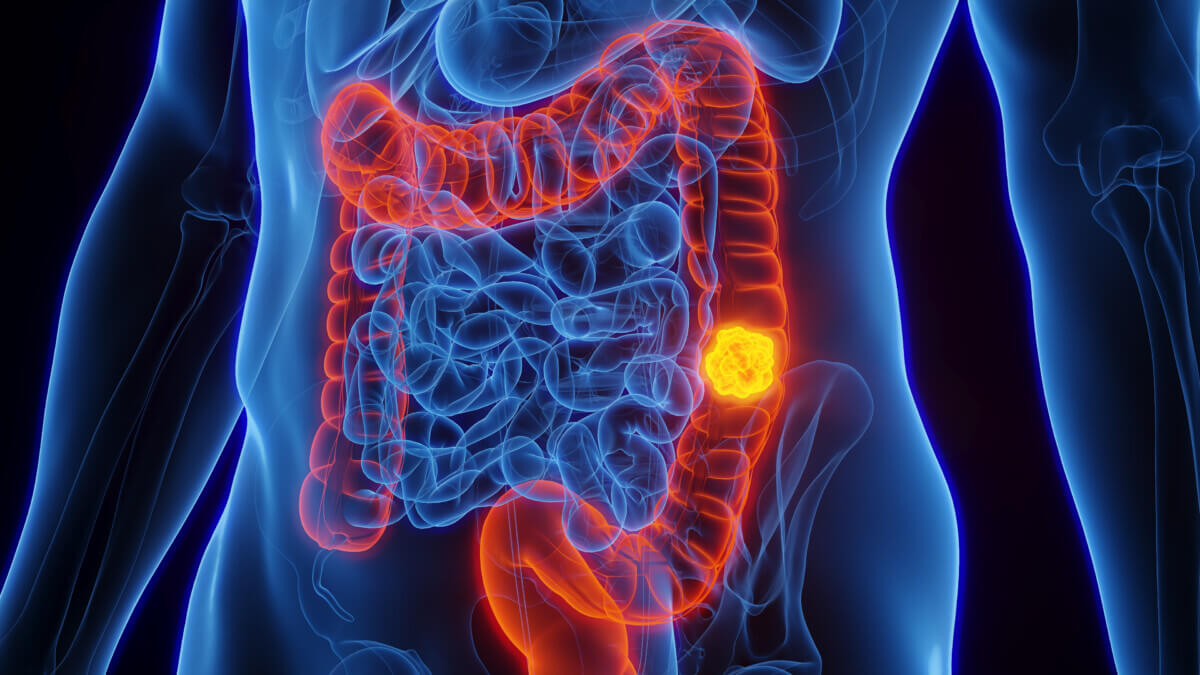
How AI Improves Non-Invasive Colorectal Cancer Screening
The scientists then tested their method on stool samples from more than 1,000 people across seven countries. By training an AI model to recognize patterns, they could tell cancer patients apart from healthy people with around 84% accuracy. In some groups, the model performed even better.
For comparison, previous computer models using traditional bacterial species data achieved only 79%. The subspecies approach represents a major step forward in non-invasive cancer detection.
The analysis revealed 218 subspecies linked to colorectal cancer. In over 100 cases, one subspecies carried a strong cancer association while its sibling subspecies from the same species did not. Another 28 subspecies were linked to cancer even though their parent species showed no signal at all.
One example is a bacterium called Fusobacterium animalis. It has long been linked with colon cancer, but the new study revealed that only one of its two subspecies actually drives tumor growth. Without this level of detail, previous research blurred the picture.
Bacterial ‘Good Twin, Evil Twin’ Explains Cancer Mystery
Looking deeper, the team found that functional genes often explained the differences between cancer-linked and neutral subspecies. These genetic quirks can change how bacteria interact with the body.
For instance, take the subspecies Ruthenibacterium lactatiformans. One version of this bacterium, found more often in cancer patients, could still produce vitamin B12. The others had lost this ability. Interestingly, people with colorectal cancer often have higher levels of vitamin B12 in their blood, and those levels rise with cancer progression. That connection suggests that even small genetic changes in gut bacteria may play a role in how cancer develops.
Clinical Trials in Preparation
When tested head-to-head, subspecies-based models consistently outperformed species-level analysis, both in accuracy and reproducibility across populations. That reliability is essential for real-world screening.
Geneva University Hospitals is now preparing trials to see how well the approach detects early-stage cancers and precancerous polyps. If stool-based subspecies analysis proves reliable in clinics, it could supplement or even replace colonoscopies for routine screening.
Unlike colonoscopies, this test doesn’t require special equipment or uncomfortable preparation. It can run on ordinary lab computers and at a fraction of the cost. That makes it especially promising for countries or regions where access to colonoscopies is limited.
The subspecies-based approach also showed superior reproducibility across different populations compared to species-level analysis. While some bacterial subspecies vary geographically, the core cancer-associated signatures remained consistent across diverse global populations, supporting universal screening applications.
What This Means for Patients
The subspecies catalog opens doors to understanding how gut bacteria influence human health at unprecedented detail. The same analytical framework could potentially detect other cancers, autoimmune diseases, and metabolic disorders through simple stool analysis.
As AI tools improve, the accuracy of this kind of analysis is likely to rise even further. The hope is that in the future, cancer screening could be as simple as mailing in a stool sample, catching disease earlier, saving lives, and reducing the need for invasive procedures. The future of cancer screening may lie in our gut bacteria, waiting to be decoded by artificial intelligence.
Disclaimer: This article is for general information only. It is not medical advice. If you have questions about cancer risk or screening, please consult a qualified healthcare professional.
Paper Summary
Methodology
The researchers analyzed 225,918 high-quality bacterial genomes from the HumGut database, representing the most detailed human gut microbiome dataset available. They used sourmash computational sketching to create genetic fingerprints of bacterial coding sequences, then applied unsupervised machine learning clustering to group genomes into operational subspecies units (OSUs). The team developed a custom “panhashome” method to rapidly quantify subspecies abundance in stool samples by identifying hash values present in more than 20% of a subspecies’ genomes but fewer than 5% of other subspecies.
Results
The study identified 5,361 subspecies across 977 bacterial species, revealing that 28% of species contain functionally distinct subspecies. Analysis of stool samples from 1,085 colorectal cancer patients and healthy controls across seven countries showed 218 subspecies significantly associated with cancer. Machine learning models using subspecies data achieved a median 84% cancer detection accuracy (AUROC = 0.838) compared to 79% for species-level analysis. Some datasets reached nearly 89% accuracy. The subspecies-based approach showed superior performance across all datasets and improved reproducibility between studies.
Limitations
The study relied on computational genome assemblies that may contain assembly errors or contamination. The bacterial catalog was built using existing genome databases, potentially missing novel subspecies not yet sequenced. Geographic analysis was limited by available sample sizes from different regions. The machine learning models require validation through prospective clinical trials to confirm diagnostic performance in real-world medical settings.
Funding and Disclosures
The research was supported by the Clayton Foundation for Biomedical Research and a European Research Council Consolidator Grant (agreement no. 815962) awarded to M. Trajkovski. Three authors have filed a pending patent application related to using subspecies in diagnostics and personalized medicine.
Publication Information
Tričković, M., Kieser, S., Zdobnov, E.M., Trajkovski, M. “Subspecies of the human gut microbiota carry implicit information for in-depth microbiome research.” Cell Host & Microbe, Vol. 33, Pages 1446-1458, August 13, 2025. DOI: 10.1016/j.chom.2025.07.015


