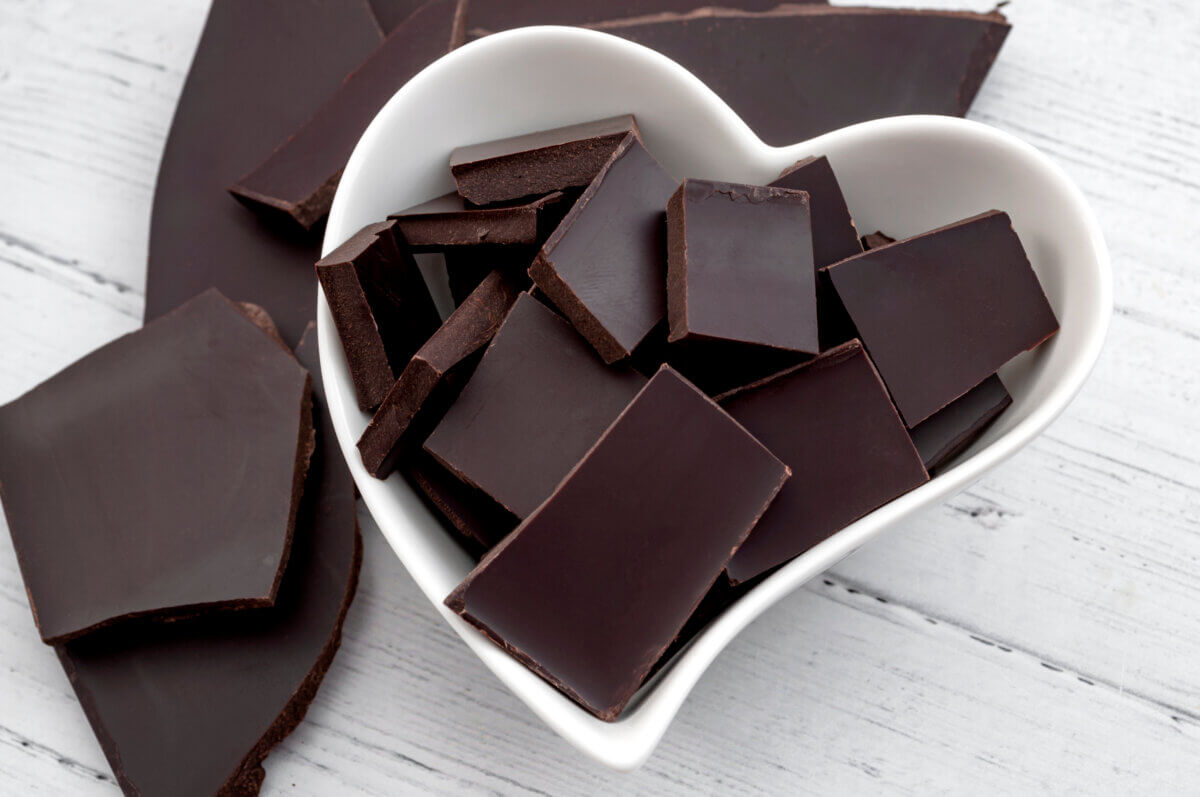
Dark chocolate may provide a notable memory boost. (Photo by Victor Moussa on Shutterstock)
In A Nutshell
- Mouse study showed memory improvement when flavanols (bitter compounds in dark chocolate) were given before a learning task, with effects linked to brain alertness rather than compound absorption
- The mechanism is taste-driven: Astringent flavors appear to trigger sensory nerves that activate the locus coeruleus (brain’s alarm system), releasing noradrenaline to enhance memory consolidation
- Effects happened within an hour in mice, coinciding with the critical window when the hippocampus transfers short-term memories to long-term storage
- Human application unclear: Mice received high doses; whether typical chocolate servings produce similar effects in people remains untested, and daily use might lead to tolerance or stress-related side effects
Eating flavanol-rich foods like dark chocolate or berries may boost memory performance. How? By synchronizing stress hormones with the brain’s natural window for locking in new information, according to research from Japan. In mice, memory improved when flavanols were given before learning, though the timing effects in humans remain unknown.
Scientists at Shibaura Institute of Technology discovered that the bitter, astringent compounds in cocoa trigger a precisely timed release of noradrenaline in the hippocampus (the brain region that converts short-term memories into lasting ones). Mice that consumed flavanols one hour before a memory test showed a 30% improvement in recognizing new objects compared to those given plain water.
The study, published in Current Research in Food Science, offers a potential explanation for why large trials have found memory improvements in older adults who consume these compounds regularly. Rather than protecting brain cells directly, flavanols may work by hijacking the body’s stress response system at just the right moment.
The Critical Window for Memory
Lead researcher Yasuyuki Fujii and his team tested mice in a standard memory experiment. Animals explored two identical objects for 10 minutes, then returned an hour later to find one object replaced with something new. Mice given flavanols before the initial training spent significantly more time investigating the novel item, a sign they remembered the familiar one.
Mice spent more time exploring the new object, raising the discrimination index versus controls. The effect was observed when flavanols were given before the training session.
Brain imaging showed why. Noradrenaline rose quickly in the brain’s alertness network, including the locus coeruleus and nucleus accumbens, and remained elevated for about an hour. This surge coincided with the period neuroscientists call early memory consolidation, when electrical activity in the hippocampus replays recent experiences and transfers them to long-term storage.
Prior studies have shown that blocking noradrenaline receptors during this window can impair memory formation, while activating them enhances it. The flavanols appear to provide that activation naturally, through taste rather than direct drug action.
Your Brain’s Built-In Alarm System
The memory enhancement stems from how flavanols activate the locus coeruleus, a small cluster of neurons in the brainstem that acts as the brain’s alarm system. When triggered, it releases noradrenaline throughout the brain, sharpening attention and prioritizing information for storage.
Mice given flavanols showed clear signs of this activation. Urinary levels of adrenaline and noradrenaline (stress hormones secreted by the adrenal glands) increased significantly at the higher dose over 24 hours. Gene expression of corticotropin-releasing hormone, which regulates the body’s stress response, increased in the hypothalamus 30 minutes after administration.
The animals also moved more in their cages and showed increased grooming and rearing, behaviors associated with alertness. Mass spectrometry imaging revealed noradrenaline accumulation not only in the hippocampus but also in the nucleus accumbens, a region involved in motivation and reward processing.
A Sensation, Not Absorption
Flavanols barely make it into the bloodstream, a fact that has puzzled researchers for years. Studies using radioactive tracers show that only a few percent of the compounds get absorbed intact, with most breaking down in the gut or metabolized by bacteria.
The new research points to an alternative pathway. The authors propose that the astringent, mouth-puckering sensation these compounds produce activates sensory nerves in the digestive tract, which relay signals to the brainstem and then to the locus coeruleus. However, this pathway requires targeted tests to confirm.
Earlier work by the same research group showed that blocking specific sensory receptors or giving antioxidants eliminated the effects of flavanols on blood flow and nervous system activity. The reactive oxygen species that form when flavanols contact saliva or stomach acid may be what actually triggers the response.
This would explain why the effects happen so quickly. Sensory signals travel much faster than absorbed compounds, reaching the brain in seconds rather than the 30 minutes it takes for dietary substances to peak in blood. The researchers suggest the brain may be treating the astringent sensation as a signal to activate its memory-enhancement systems.
What This Means for People
The mice in the study received doses higher than typical single-serving intakes. Whether lower amounts produce the same effects remains unknown.
The experiments also only tested acute effects from a single dose. Repeated exposure to stress triggers often leads to tolerance, where the same stimulus produces a weaker response over time. Another open question involves the potential downsides of chronic stress pathway activation. Short-term stress responses can be beneficial, but prolonged elevation of stress hormones is linked to anxiety, sleep problems, and cardiovascular strain.
The research used adult male mice with small sample sizes for some brain imaging analyses (two to five animals per group), meaning the findings need replication in larger studies and eventually in humans.
However, the one-hour window offers a potential strategy for students or professionals preparing for tasks that require strong recall. Consuming flavanol-rich foods shortly before studying or attending an important meeting might enhance retention of the material.
The research team noted that the findings may help explain why large studies, including a 2023 trial in older adults, found that year-long flavanol supplementation improved hippocampal-dependent memory. If each daily dose provides a small enhancement, the effects could accumulate over time, particularly in people whose diets are otherwise low in these compounds.
The study reframes how scientists think about these compounds. The question shifts from “how do flavanols reach the brain?” to “how does the brain respond to eating them?” The answer may lie not in chemistry but in timing, using the moment of consumption to mark information as worth remembering.
Disclaimer: This report is based on a peer-reviewed study. The findings have not been validated in human trials. Always consult healthcare professionals before using food compounds for cognitive enhancement or other suggested benefits.
Paper Summary
Methodology
Researchers administered flavanol extracts from cacao to adult male mice by oral gavage. The flavanols consisted of monomers like epicatechin and catechin, along with procyanidin oligomers. Mice were tested in open-field arenas to measure spontaneous activity and in novel object recognition tests to assess short-term memory. Urine was collected over 24 hours to measure catecholamine excretion as a marker of sympathetic nervous system activation. Brain tissue was analyzed using mass spectrometry imaging to map the distribution of neurotransmitters like noradrenaline and dopamine. Gene expression of stress hormones and neurotransmitter synthesis enzymes was measured using in situ hybridization. Control groups received distilled water. The study used doses of 25 mg/kg and 50 mg/kg body weight, based on prior research showing stress responses at these levels.
Results
Mice given flavanols showed a significant increase in total distance traveled over 120 minutes compared to controls. They spent more time in the center of the test arena and exhibited more grooming and rearing behavior, all signs of wakefulness. Memory performance improved, with treated mice spending more time exploring a novel object and achieving a higher discrimination index. Urinary excretion of noradrenaline and adrenaline increased in a dose-dependent manner, confirming activation of the sympathetic nervous system. Gene expression of corticotropin-releasing hormone, a key stress hormone, rose in the paraventricular nucleus of the hypothalamus 30 minutes after flavanol administration. Brain imaging showed elevated noradrenaline in the locus coeruleus, hypothalamus, and nucleus accumbens immediately after treatment. Expression of tyrosine hydroxylase and dopamine β-hydroxylase, enzymes involved in noradrenaline synthesis, increased in the locus coeruleus and ventral tegmental area.
Limitations
The study was conducted in mice, and the findings may not directly translate to humans. Sample sizes for some brain imaging and gene expression analyses were small, with two to five animals per group. The experiments focused on acute effects following a single dose, and the study did not examine whether repeated exposure leads to tolerance or sustained benefits. The doses used were relatively high and may not reflect typical dietary intake. The mechanism linking astringent taste to brain activation, while supported by the data, remains indirect and would benefit from experiments using sensory nerve blockers or knockout mice. The study did not assess potential side effects of chronic stress system activation, such as impacts on mood or anxiety.
Funding and Disclosures
The study was supported by a grant from the Japan Society for the Promotion of Science (JSPS KAKENHI Grant Number 23H02166). The authors declared no competing financial interests or personal relationships that could influence the work. The research was conducted with approval from the Animal Experimentation Committee of Shibaura Institute of Technology (approval number AEA 22007) and followed the ARRIVE guidelines for animal research.
Publication Details
Fujii Y, Taira S, Shinoda K, Yamato Y, Sakata K, Muta O, Osada Y, Ono A, Matsushita T, Azumi M, Shikano H, Abe K, Calabrese V, Osakabe N. Astringent flavanol fires the locus-noradrenergic system, regulating neurobehavior and autonomic nerves. Current Research in Food Science,11 (2025) 101195. doi:10.1016/j.crfs.2025.101195


