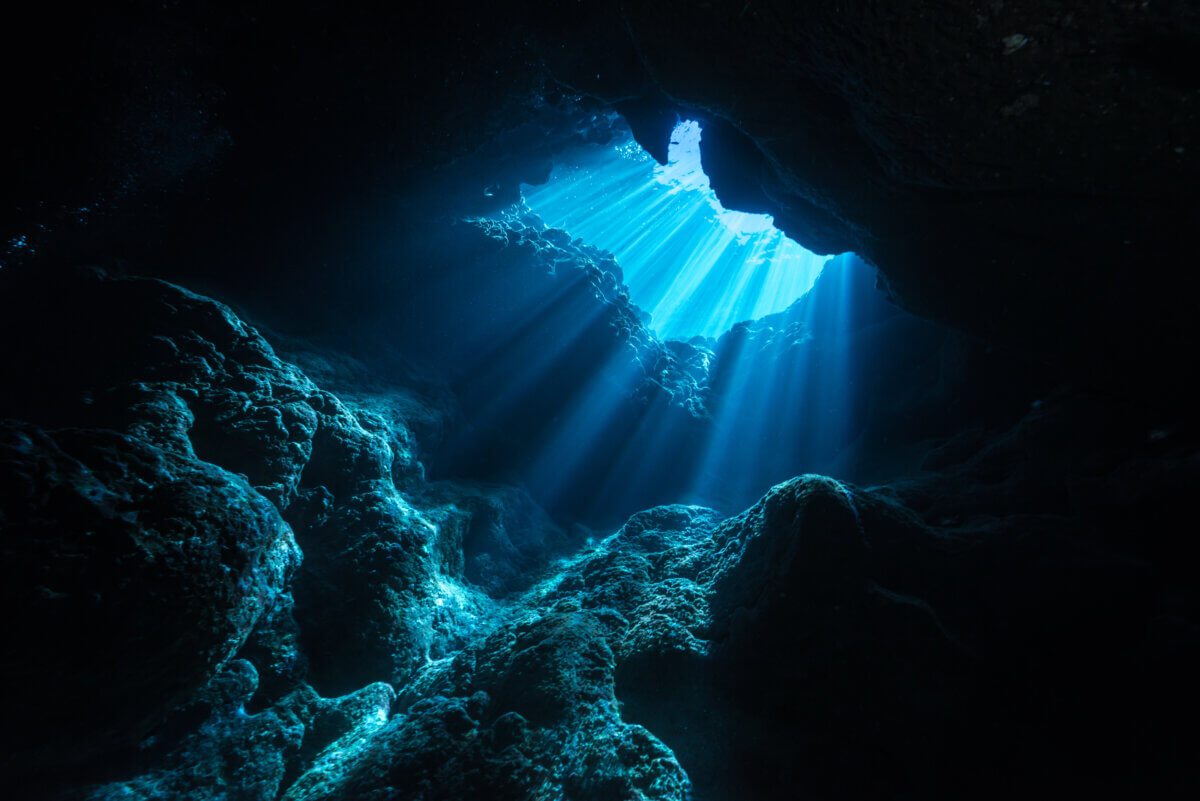
(Credit: divedog/Shutterstock)
OBAN, United Kingdom — In the darkness of the deep ocean, where sunlight can’t reach, scientists have stumbled upon a strange phenomenon — the production of oxygen where none should exist. An international team says the unexpected discovery of what they’re calling “dark oxygen” challenges our understanding of deep-sea ecosystems and could have far-reaching implications for ocean chemistry and climate science.
The team, led by Andrew K. Sweetman from The Scottish Association for Marine Science, conducted experiments nearly four kilometers (roughly 2.5 miles) beneath the surface of the Pacific Ocean. Their study area, known as the Clarion-Clipperton Zone (CCZ), is a vast expanse of seafloor covered in potato-sized lumps called polymetallic nodules. These nodules, rich in valuable metals like manganese, nickel, and copper, have attracted interest from mining companies eager to exploit their potential.
It’s not the promise of mineral wealth that has scientists excited, however, it’s what’s happening around these nodules that’s truly groundbreaking.
Typically, in the deep sea, oxygen is consumed as organisms breathe and decompose organic matter. Scientists can measure this oxygen consumption to understand the health and activity of deep-sea ecosystems. However, when Sweetman and his team placed experimental chambers on the seafloor to measure oxygen levels, they observed something entirely unexpected: oxygen levels were increasing, not decreasing.
Over the course of two days, oxygen concentrations in some chambers more than tripled. This “dark oxygen production,” as the researchers termed it in the journal Nature Geoscience, occurred without any sunlight – the driving force behind oxygen production through photosynthesis in surface waters and on land.
“For aerobic life to begin on the planet, there had to be oxygen, and our understanding has been that Earth’s oxygen supply began with photosynthetic organisms,” says Sweetman, who leads the Seafloor Ecology and Biogeochemistry research group at SAMS, in a media release. “But we now know that there is oxygen produced in the deep sea, where there is no light. I think we, therefore, need to revisit questions like: Where could aerobic life have begun?”
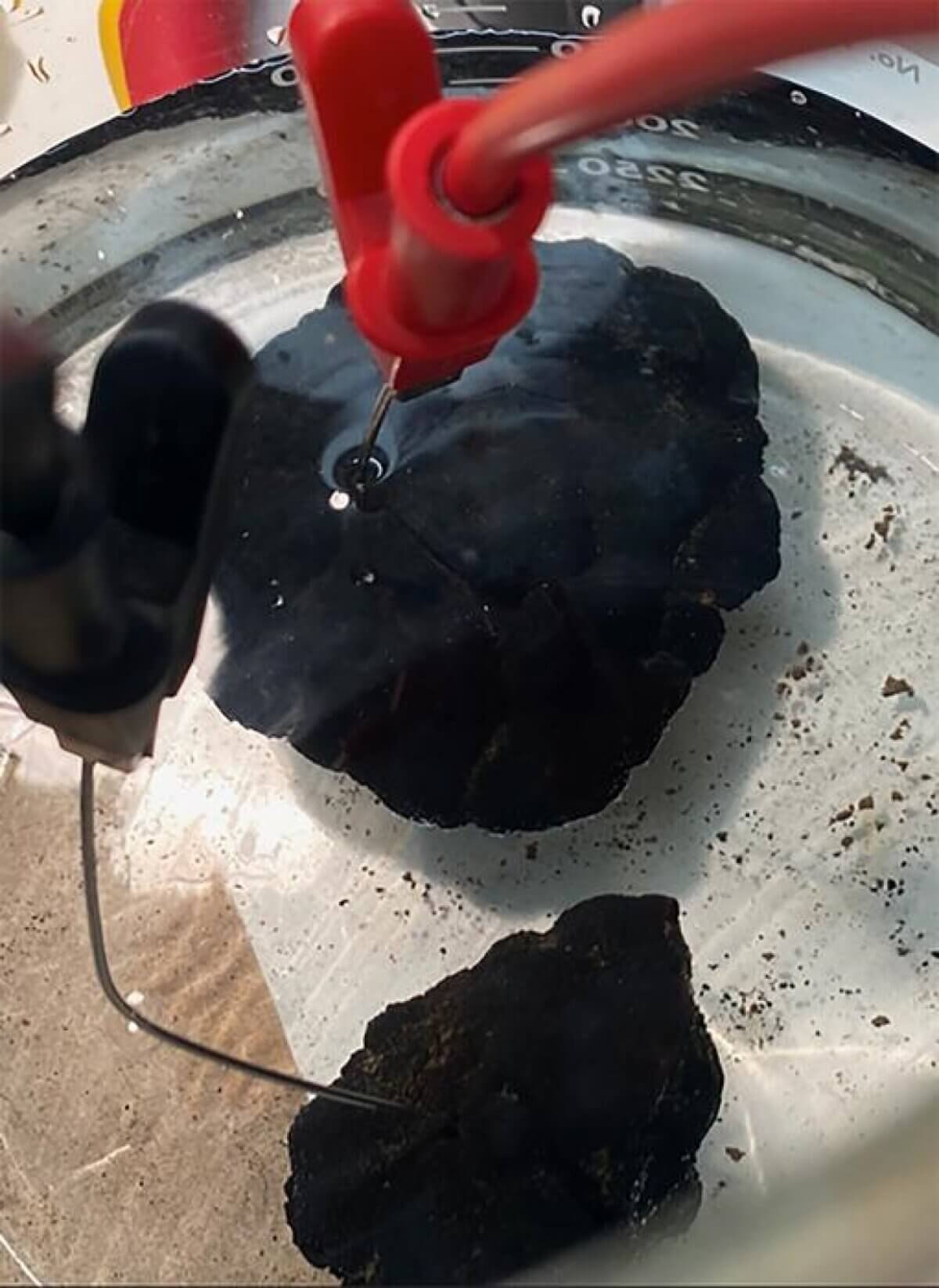
The discovery raises intriguing questions about the source of this mysterious oxygen. After ruling out experimental errors and known biological processes, the team began to suspect the nodules themselves might be involved.
Further investigation revealed that the nodules possess an electrical potential, acting somewhat like natural batteries. The researchers measured voltage differences of up to 0.95 volts between different points on nodule surfaces – approaching the 1.23 volts theoretically required to split water molecules into hydrogen and oxygen.
“It appears that we discovered a natural ‘geobattery,’” says Northwestern’s Franz Geiger, who led the electrochemistry experiments, which potentially explain the finding. “These geobatteries are the basis for a possible explanation of the ocean’s dark oxygen production.”
While the exact mechanism remains unclear, the scientists hypothesize that a form of seawater electrolysis might be occurring on the nodule surfaces. This process could be catalyzed by the unique mineral composition of the nodules, particularly their manganese oxides and other transition metals.
If confirmed, this discovery suggests that the deep seafloor might be a previously unrecognized source of oxygen in the ocean. This could affect our understanding of deep-sea ecosystems, ocean chemistry, and even global oxygen cycles.
Moreover, the finding adds a new layer of complexity to the debate surrounding deep-sea mining. If these nodules play a role in oxygen production, their removal could have unforeseen consequences for deep-sea life and ocean health.
“In 2016 and 2017, marine biologists visited sites that were mined in the 1980s and found not even bacteria had recovered in mined areas,” Geiger concludes. “In unmined regions, however, marine life flourished. Why such ‘dead zones’ persist for decades is still unknown. However, this puts a major asterisk onto strategies for sea-floor mining as ocean-floor faunal diversity in nodule-rich areas is higher than in the most diverse tropical rainforests.”
Paper Summary
Methodology
The researchers used a special underwater device called a benthic chamber lander. This device, about the size of a small car, was lowered to the seafloor, where it placed sealed chambers over small patches of the seabed. These chambers trapped a small amount of water and sediment, allowing the scientists to measure changes in oxygen levels over time. The team also conducted laboratory experiments with nodules and sediment cores to rule out other explanations for the oxygen production.
Key Results
In 25 separate chamber experiments, oxygen levels increased over 47 hours, with some chambers showing more than a threefold increase. The rate of oxygen production ranged from 1.7 to 18 millimoles of oxygen per square meter per day. This production was correlated with the surface area of nodules in the chambers. Laboratory tests confirmed that the nodules themselves were involved in the oxygen production, even when all biological activity was stopped.
Study Limitations
The study was limited to specific areas of the CCZ, and it’s unclear if this phenomenon occurs in other deep-sea environments. The exact mechanism of oxygen production remains hypothetical and requires further investigation. The long-term stability and continuity of this oxygen production are also unknown, making it difficult to estimate its overall impact on ocean chemistry.
Discussion & Takeaways
This discovery challenges our understanding of deep-sea chemistry and biology. It suggests that polymetallic nodules might play a previously unrecognized role in deep-sea ecosystems by producing oxygen. This could have implications for how we understand and manage these environments, especially in the context of potential deep-sea mining activities.
The finding also opens up new avenues for research into novel oxygen-production mechanisms, which could have applications beyond ocean science. Ultimately, this study underscores the importance of continued deep-sea research and the potential for surprising discoveries in Earth’s least explored environments.


