
Your number may not matter as much to your partner as the timeline behind the number. (Photo by Prostock-studio on Shutterstock)
People prefer partners whose sexual activity decreased over time, even if their total number of past partners is high.
In A Nutshell
- Study of 5,331 people in 11 countries found timing of sexual activity matters in dating decisions, especially when partner count is high.
- People preferred partners whose sexual activity decreased over time, viewing it as a signal of maturity or reduced risk.
- Despite cultural differences, sex-based judgment differences were minimal, challenging the idea of universal double standards.
SWANSEA, Wales — That awkward “number” conversation that pops up at some point during dating might be oversimplified. New research shows that when sizing up potential long-term partners, people care not only about how many previous sexual partners someone has had, but also about when those relationships occurred. Someone who experimented early but settled down appears more appealing than someone steadily racking up partners over time, even when the total number is the same.
Scientists studied over 5,000 people across 11 countries and discovered that people instinctively evaluate not just the quantity but the trajectory of a person’s sexual history. The pattern held true from Norway to China, adding nuance to assumptions about sexual double standards and showing how we naturally read between the lines of someone’s romantic past.
How Sexual History Timing Affects Dating Preferences
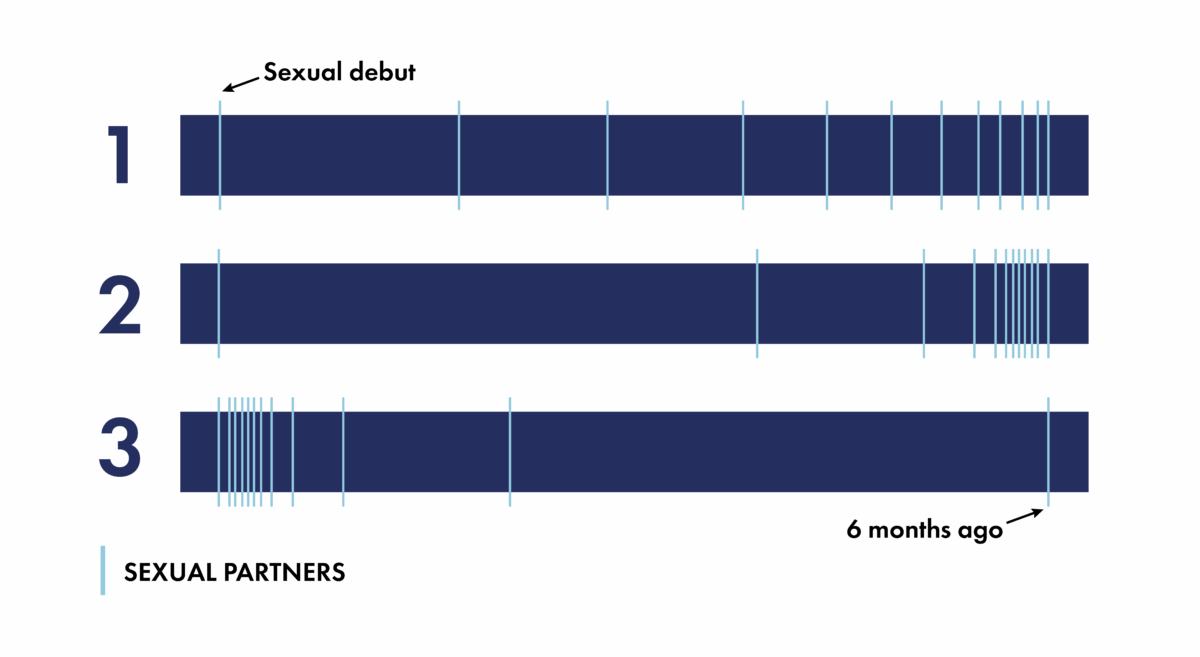
Rather than simply tallying past relationships, people seem to analyze patterns like intuitive relationship sleuths. The research team from Swansea University showed participants visual timelines representing different sexual histories. Some showed early experimentation that tapered off, others displayed a steady or increasing rate of new partners.
Imagine two people, each with 12 past partners. One had most of their relationships early on and gradually settled down. The other started more conservatively but became increasingly active over time. Across all cultures studied, people consistently preferred the first individual for a long-term relationship.
The study described this temporal pattern as “an additional dimension of context not previously considered.” While the number of past partners had the strongest influence overall, the pattern of when those relationships occurred still shaped perceptions, especially at higher partner counts.

Why Evolution Shaped Our Partner Selection
Evolutionary psychology offers a lens to understand these instincts. Throughout human history, choosing the wrong partner could carry serious risks. Such consequences include sexually transmitted diseases, infidelity, or jealous ex-partners.
A decreasing pattern may signal a lower-risk candidate: they’ve moved beyond a phase of experimentation, any health issues would have likely emerged, and fewer recent exes mean less social baggage. In contrast, an increasing pattern could suggest ongoing exploration, potential for future infidelity, or unresolved complications from recent relationships.
These aren’t always conscious decisions. Researchers suggest they may reflect deeply ingrained mental shortcuts stemming from adaptations that helped our ancestors manage mating risks.
Minimal Evidence Found for Sexual Double Standards
Perhaps most surprising, the research found little support for the common belief that men are harsher judges of women’s sexual pasts. Sex differences “tended to be minimal, small-to-medium in size, and inconsistent across countries,” the authors write. One sentence later, they add: “We found no evidence of a sexual double standard.”
When gender differences did appear, they didn’t follow stereotypical patterns. In the Chinese sample, for example, men showed greater willingness than women in the 12- and 36-partner conditions, and at both ends of the frequency distribution, including even when partner numbers decreased over time.
From an evolutionary standpoint, this symmetry is sensible. Both sexes face similar risks in long-term relationships, so both tend to apply comparable standards.
Even participants with more liberal attitudes toward casual hookups, as measured by a trait called sociosexuality, showed the same preference for decreasing activity over time. They were generally more accepting of intimate experience overall, but timing still mattered.
Modern Dating Apps Miss This Key Factor
These insights suggest that sexual history shouldn’t just be boiled down to a number. The context and direction of a person’s relationship history can play a major role in how others perceive their long-term potential.
The study used visual timelines to present this information in a controlled way, different from the real-world settings of casual conversation or dating app profiles. Still, the findings were consistent across a wide range of cultures, suggesting these patterns reflect universal aspects of human psychology.
Modern dating platforms tend to present sexual history, if at all, in numerical terms. But as this research shows, human mate selection is more sophisticated. People instinctively assess patterns, growth, and what those patterns imply about someone’s future behavior.
When it comes to long-term love, the most important question isn’t just how many partners someone’s had—but what their history says about who they are becoming.
Paper Summary
Methodology
Researchers conducted three studies with 5,331 participants across 11 countries on five continents. Participants were shown visual timelines representing sexual histories, varying in total partners (4, 12, or 36) and distribution over time (from increasing to decreasing frequency). Participants rated their willingness to pursue a long-term relationship with each profile on a 1–9 scale.
Results
Both the number of past partners and their timing influenced desirability. Participants consistently preferred histories with decreasing partner frequency over time, especially when total partner counts were higher. While number had a stronger overall effect, timing added meaningful context to partner evaluation. Sex differences were minimal and inconsistent, challenging assumptions about universal sexual double standards.
Limitations
The study used diverse but non-representative samples from each country, which the authors note as both a strength and a limitation. It also relied on stylized visual stimuli, which may differ from how sexual history is typically shared in real-life relationships.
Funding and Disclosures
Data collection in Poland was funded by the IDN Being Human Lab at the University of Wrocław. Other support came from the Foundation for Polish Science, Brazilian federal agencies, institutional funds from several universities, and student research grants. Jiaqing O was supported by internal department funding from both Aberystwyth University and the University of Macau at the time of data collection. Authors reported no competing interests, and ethics approval was obtained from relevant institutional review boards.
Publication Information
Title: Sexual partner number and distribution over time affect long-term partner evaluation: evidence from 11 countries across 5 continents
Authors: Andrew G. Thomas, William Costello, Mons Bendixen, et al.
Journal: Scientific Reports, Volume 15, July 24, 2025
DOI: 10.1038/s41598-025-12607-1


