(Credit: Pixel-Shot/Shutterstock)
It is only possible to store blood for a limited time, so encouraging the routine donation of blood is key. As the World Health Organization (WHO) Trusted Source explains:
“A decision to donate your blood can save a life, or even several if your blood is separated into its components — red cells, platelets, and plasma — which can be used individually for patients with specific conditions.”
The transfusion of a blood product happens every two seconds in the United States, and there are 21 million transfusions every year. These include cases of major trauma, surgery, disorders of bone marrow, chemotherapy, and more.
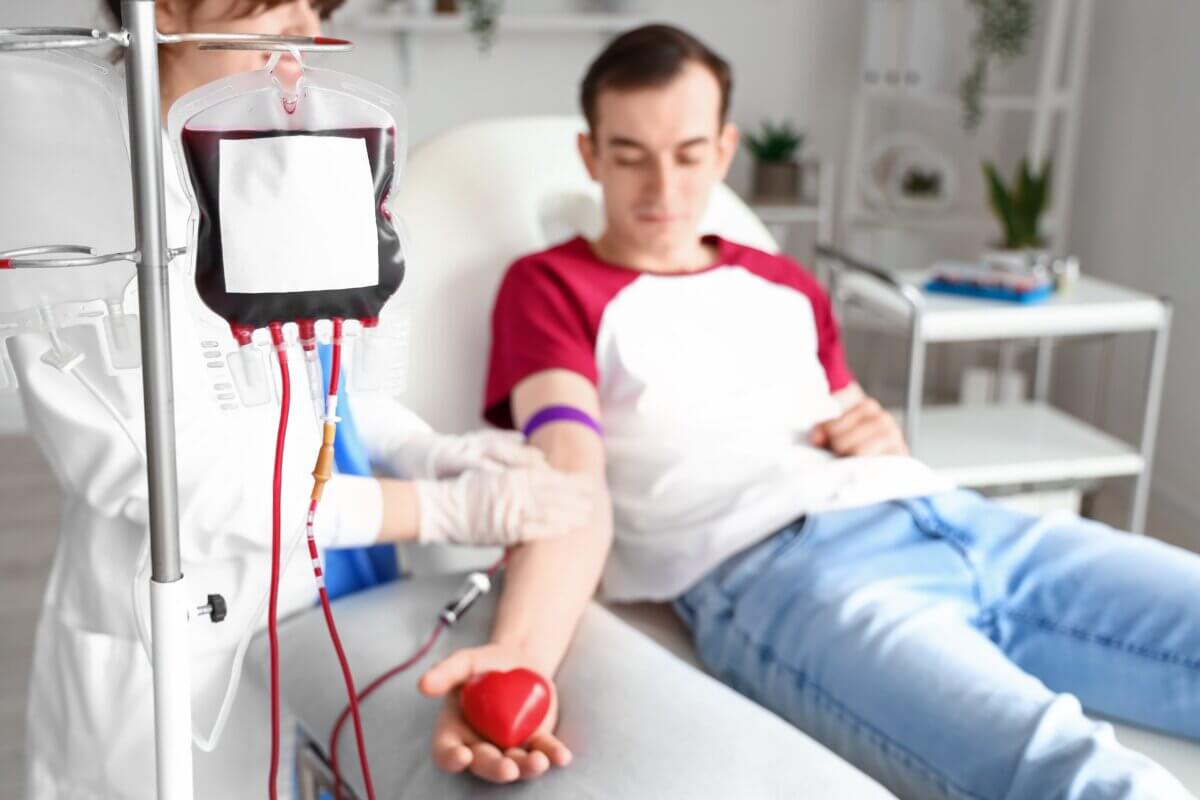
It takes me about 60 to 90 minutes every eight weeks to donate blood. There is a preliminary health screening with lots of questions about your health. Your blood pressure, heart rate, and temperature are also taken during this exam. There’s a finger poke to check your blood count. You’re set up on a reclining chair before your blood is collected, and your arm is bandaged. You’re encouraged to hang around for 10 to 15 minutes to drink your favorite beverage and have some snacks. Once that’s all done, there’s good news: you’ve just saved a life or two.
One reason more people don’t donate blood is that they simply don’t know the facts about donation, but myths are plentiful. Here’s what many people think about donating blood — and the actual truth about the process.
Myth 1: There is an upper age limit to be eligible to donate blood.
The Facts: In the United States, people must be older than 16 years-old to donate blood. There is no upper age limit.
Myth 2: Giving blood is time-consuming.
The Facts: Your blood is actually being collected for 8 to 10 minutes. The Red Cross explains that the complete process takes about an hour and 15 minutes.
Myth 3: You can get an infection if you give blood.
The Facts: There is no chance of catching a bloodborne infection from donating blood. A sterile technique prepares your arm before placing the needle to collect the blood, and infections at the needle site are almost unheard of.
Myth 4: Donating blood is painful.
The Facts: There is the pain of a needle poke, but it only lasts a few seconds. There may be slight pain after the needle is withdrawn or a slight bruise. It’s harmless and disappears in a few days.
Myth 5: People with tattoos cannot donate blood.
The Facts: The American Red Cross says to wait three months after a tattoo if the tattoo was applied in a state that does not regulate tattoos.
Giving blood after a piercing is acceptable if the instruments used were disposable (meaning both the gun and the earring cassette). If a reusable gun or instrument is used, wait three months before donating.
Myth 6: Someone taking medication cannot donate.
The Facts: In most cases, medications do not mean that someone cannot donate blood. Some medications are off-limits, including anticoagulants, antiplatelet medications, and some acne treatments. Speak with your doctor about donating while taking your medication(s). If a doctor has prescribed a medication, do not stop taking it to donate blood.
Myth 7: Donating blood can make you sick.
The Facts: If you’re healthy before you donate blood, you’re just as healthy after donating. Doctors advise people who just donated to avoid vigorous activity on the day of donation and to drink fluids after donating.
Within about 48 hours of donating, an individual’s blood volume returns to normal, mostly replaced by plasma, Lost red blood cells are replaced within four to eight weeks. Donor reactions are extremely rare. If you feel tired or lightheaded after donation, the symptoms usually resolve quickly. Have a beverage and snack after your donation.
Myth 8: If you have high blood pressure, you cannot donate blood.
The Facts: If your systolic blood pressure (the top number) is less than 180 millimeters of mercury (mm Hg), and diastolic (the bottom number) is less than 100 mm Hg, you can donate blood. Drugs for high blood pressure do not disqualify you from donating blood.
Myth 9: There are no shortages in blood supply.
The Facts: Maintaining an adequate blood supply is a constant challenge. Blood has a limited shelf life. Donated red blood cells must be used within 42 days. Donated platelets must be used within five days.
Myth 10: You cannot donate blood if you have high cholesterol.
The Facts: You can donate blood if you have high cholesterol and if you take cholesterol-lowering drugs.
There is always a need for more donors. Call the Red Cross, a large medical center, or search “blood donation” online to find blood centers and blood drives near you. Sponsor a blood drive. Ask your employer to sponsor a half-day or day off to donate. You’ll find lots of ideas!


