
Exposure to polluted air can affect your focus for hours later. (PeopleImages.com - Yuri A/Shutterstock)
It’s Friday morning. Your to-do list is ready, and you settle into your workspace, determined to tackle the day’s tasks so you can start your weekend as soon as possible. But as the hours tick by, your focus slips further away. Emails ping, your phone buzzes, and colleagues drop by to chat. Before you know it, it’s the end of the day, and you’re wondering where the time went. If this sounds familiar, you’re far from alone.
Many of us experience productivity challenges daily. The modern work environment – remote or in-office – is filled with distractions. Studies reveal that employees lose an average of two to three hours daily to distractions, resulting in significant productivity dips. Research from the Harvard T.H. Chan School of Public Health estimates that these interruptions cost businesses billions annually. Some studies suggest remote workers struggle more with maintaining focus due to household demands or blurred work-life boundaries, while office workers contend with the hustle and bustle of a busy environment.
On the flip side, research from Trinity College Dublin suggests that not all distractions are detrimental. Short, positive interactions – like a quick laugh with a colleague or a funny YouTube video – can reduce stress, especially during repetitive or challenging tasks. According to the study, these moments of lightness can improve engagement and creativity, showing that structured breaks can be good for employees and employers. However, it’s a balancing act that requires discipline.

How can you regain focus when something has disrupted your workflow?
If you do find yourself constantly distracted at work, it’s important to know how to get back on track. We heard from business leaders worldwide to discover 10 unique mental hacks for resetting focus at work. Each technique is desk-friendly, reduces stress, and boosts productivity, offering quick mental resets you can easily incorporate into your routine.
Table of contents
1. Box Breathing Technique
No, don’t worry, you don’t have to breathe into a real box. (But if you find a big enough box and that helps, we won’t judge.)
Psychology consultant and life coach Bayu Prihandito calls the box breathing technique a “reset button” for your mind, perfect for moments when you need to regain calm and focus. By engaging the parasympathetic nervous system, this simple exercise brings a wave of relaxation and clarity—just what you need for a quick mental reset.
How to Practice Box Breathing:
- Get Comfortable: Sit with your feet flat on the floor and your hands resting on your lap.
- Inhale: Breathe in through your nose for four seconds, focusing on the sensation of air filling your lungs.
- Hold: Pause for four seconds to let your mind settle.
- Exhale: Slowly release your breath through your mouth for four seconds, letting go of any tension.
- Hold: Pause again for four seconds to complete the cycle.
- Repeat: Practice this cycle four to five times to feel calm, grounded, and ready to refocus.
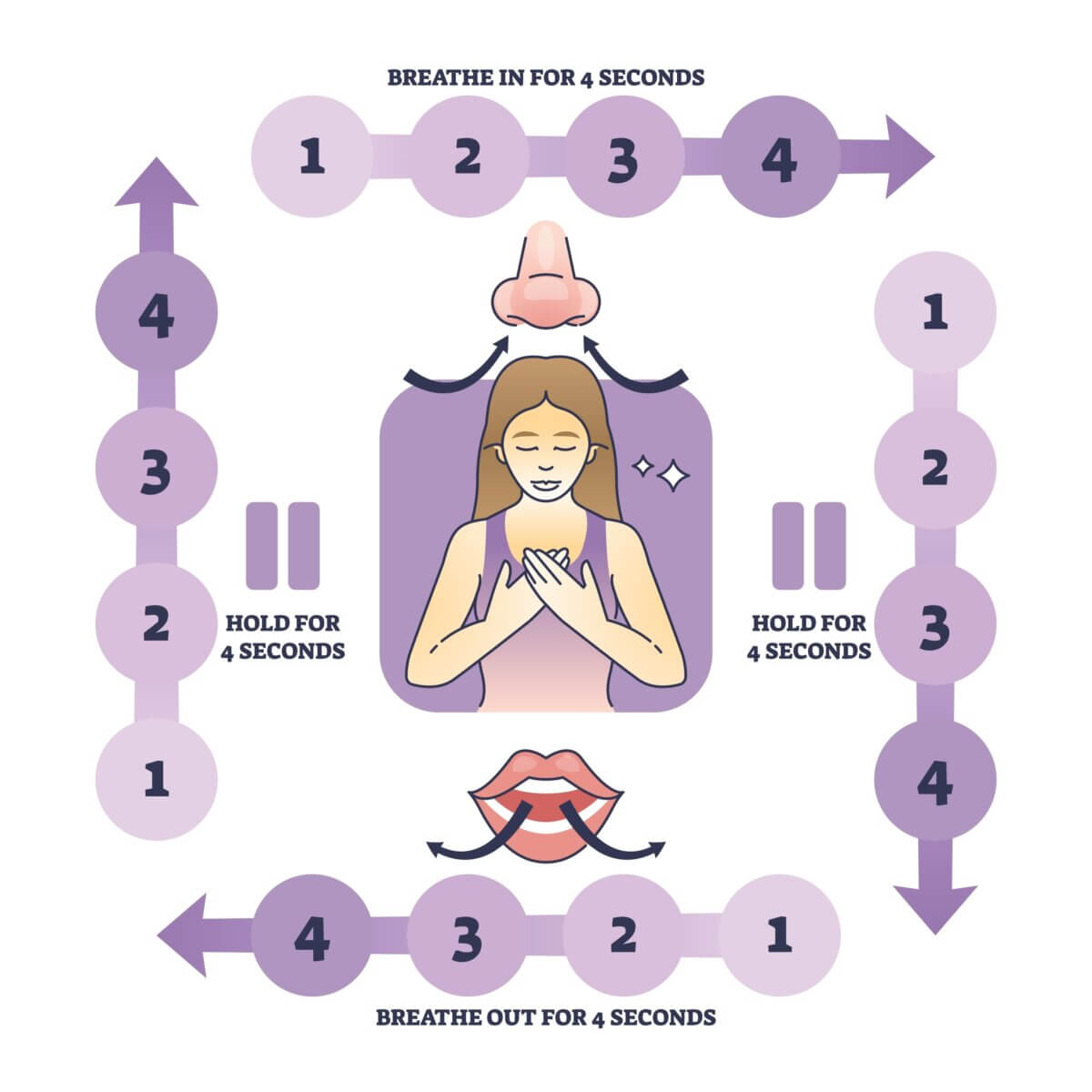
This easy-to-remember technique can be done at your desk or anywhere, making it convenient for regaining concentration whenever you need it.
2. Whole-Body Stretches
No time for yoga? This series of stretches is designed to release physical tension, improve circulation, and enhance both mental clarity and physical comfort.

ClockOn Australia Marketing Manager Blake Smith says you don’t need to go to the gym to do this simple routine. Here are some simple stretches that engage your entire body:
- Forward bend: Sit up straight, reach toward your toes, and hold for 10-15 seconds to stretch your lower back and hamstrings.
- Torso twist: Place your left hand on your right knee and twist your torso to the right, holding for a few breaths. Repeat on the other side to release tension in your back and shoulders.
- Overhead stretch: Interlace your fingers and reach upwards, holding for 10-15 seconds to lengthen your spine and relieve shoulder tension.
- Neck rolls: Slowly roll your head in a circle, bringing your chin to your chest and then over to each shoulder to release neck tension.
Smith encourages you to do these throughout the day to help you stay comfortable and focused.
3. The Two-Minute Reset
Need a mini pick-me-up? Think of the two-minute reset as a little mental hug! This quick, effective technique combines breathing, stretching, and gratitude to help you refocus on important tasks.

How to Practice the Two-Minute Reset:
- Set a timer for two minutes and close your eyes.
- Take a deep “double breath” (inhale through the nose twice, then exhale slowly).
- Roll your shoulders back and forward three times, then gently rotate your head in a circle.
- Reflect on three things you’re grateful for.
- Finally, look at something 20 feet away for 20 seconds to ease eye strain, then jot down your next task.
This method offered up by Chris Kirksey, CEO at Diretion.com, brings calm and clarity in just minutes so you can easily resume your work.
4. Shake a ‘Magic Pencil‘
Sometimes a quick brain reboot is all you need. Enter the “magic pencil” trick because a little shake-up (literally!) can work wonders. Suggested by Sam Panitch, Co-Founder & CEO of Elevation Nation, this quirky hack helps reset your focus by giving your mind a simple focal point.
Imagine a “magic pencil” in your hand and shake it gently for a minute, focusing solely on its motion. After a short break from your current thoughts, Panitch says you’ll feel refreshed and ready to dive back into work.
5. Create a Distraction-Free Workspace
Think of your desk as the pit crew for your productivity. John Kawecki of F1 Blast knows that focus is everything—whether you’re in a high-speed race or tackling a full workday. To keep your workspace as streamlined as a racecar cockpit, try a few simple adjustments to cut down on distractions:
- Silence your phone: Switch to focus mode and disable notifications.
- Limit tabs: Keep only the essential tabs open on your computer.
- Declutter your desk: Only keep what you need for your current task.
- Add a calming element: A small plant or photo can bring a sense of calm.
With this setup, Kawecki believes you’ll have a distraction-free workspace that keeps you focused and in control.
6. Desk Yoga Stretches
No yoga mat? No problem. Make your desk your new zen zone! Vladislav Podolyako of Folderly suggests desk yoga as a powerful tool to combat the tension of sitting for hours. With a few simple stretches, you can refresh your mind and body, boost blood flow, and stay energized throughout the day. Here are two easy moves to try:
- Seated twist: Sit up straight, place one hand on the back of your chair, and gently twist to one side, holding for 20 seconds. Repeat on the other side to release back and shoulder tension.
- Overhead stretch: Interlace your fingers, stretch your arms up, and hold for a few breaths to relieve shoulder tightness.

Podolyako recommends incorporating these moves to reduce tension and stay focused, keeping both mind and body ready for the next task.
7. Noise-Canceling Headphones
When the office buzz feels more like a rock concert, noise-canceling headphones are your new best friend. Milosz Krasinski of Chilli Fruit Web Consulting recommends them as a powerful tool to block out distractions in busy environments. Even without music, the sound barrier alone helps you stay focused. For an added boost, try this two-step approach:
- Slip-on headphones: Let the noise-canceling effect create an immediate quiet zone.
- Play focus music: For extra immersion, choose deep-focus or calming sounds.
This simple hack lets you tune out the noise and dive into your work, turning even the busiest setting into a productivity zone.
8. 5-5-5 Technique
When you’re feeling scattered, it’s time to “high-five” your brain with the 5-5-5 technique! Yoyao Hsueh of Topical Maps believes it’s a quick way to reset focus and boost motivation between tasks. This mental reset combines breathing, self-reflection, and goal setting to help re-center your mind.

What is the 5-5-5 technique?
- Take five deep breaths: Focus solely on each breath to calm your mind.
- Reflect on five accomplishments: Acknowledge five tasks you’ve completed today to build confidence.
- Set five goals: Identify five specific goals for the next hour.
This technique is easy to implement and can help refocus your energy for the next phase of your work.
9. 20-20-20 Rule
Stuck in screenland? Give your eyes a mini vacation with the 20-20-20 rule! Alex Vasylenko of The Frontend Company says this simple trick can make eye strain a thing of the past while giving your mind a quick breather.
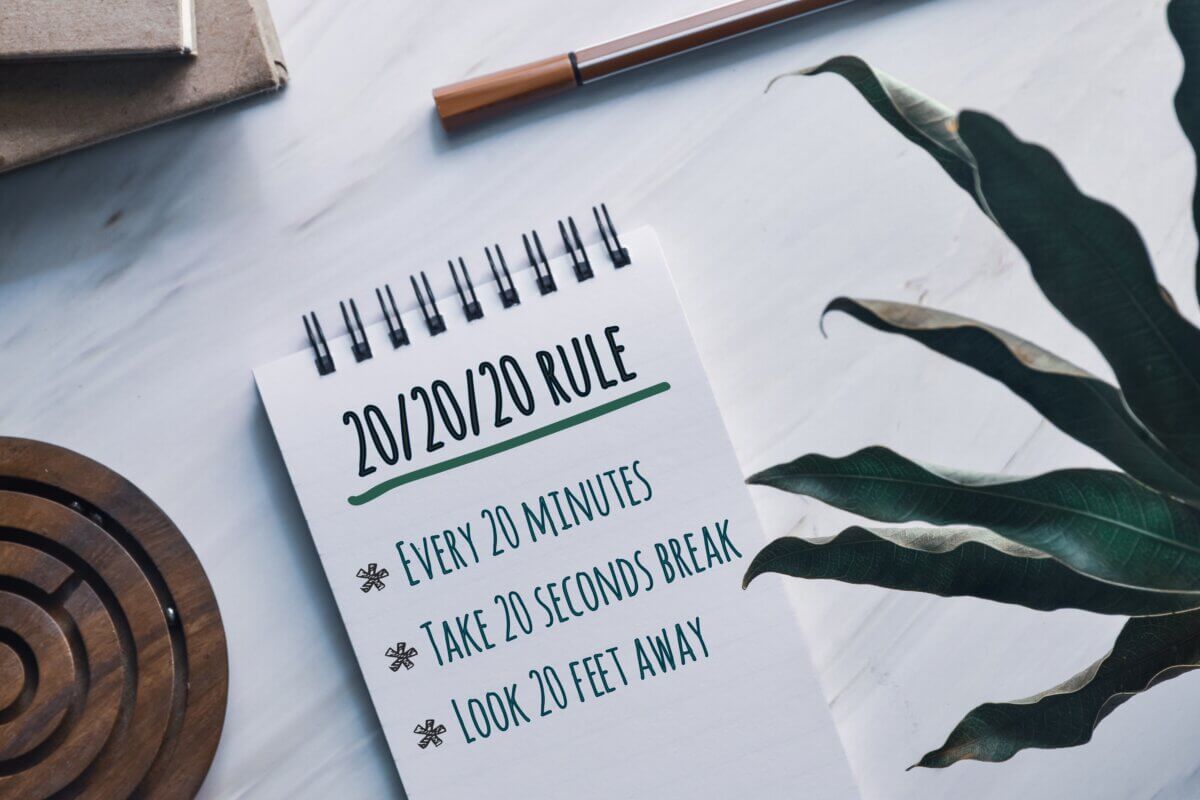
What is the 20-20-20 rule?
- Every 20 minutes: Step away from your screen momentarily.
- Look 20 feet away: Focus on something 20 feet away for 20 seconds.
- Add deep breaths: Take a few calming breaths to ease tension.
This rule provides a mental and physical reset that is great if you spend long hours at your computer.
10. Brain Dump Method
When your brain feels overstuffed — it’s time for a “brain dump” refresh! Aja Chavez from Mission Prep Healthcare suggests the brain dump method for times when your mind feels overloaded. This helps clear mental clutter, making it easier to approach tasks with focus and clarity. Here’s how to get dumping:
- Write everything down: Use a notebook or digital app to jot down all tasks, ideas, and to-dos crowding your mind.
- Prioritize: Once everything’s down, organize your thoughts into actionable steps.
Once this is done, you will not only feel, better, but you have a visual plan to get things done.
Give It a Try!
Try out a couple of these mental hacks and see what sticks! Don’t sweat it if you feel a bit silly! Who knows, you might just kick off an office trend and send productivity through the roof.
Share your favorites in the comments below! With a little practice, these tricks will slip right into your routine, keeping you on track to crush that to-do list by 5 p.m.


