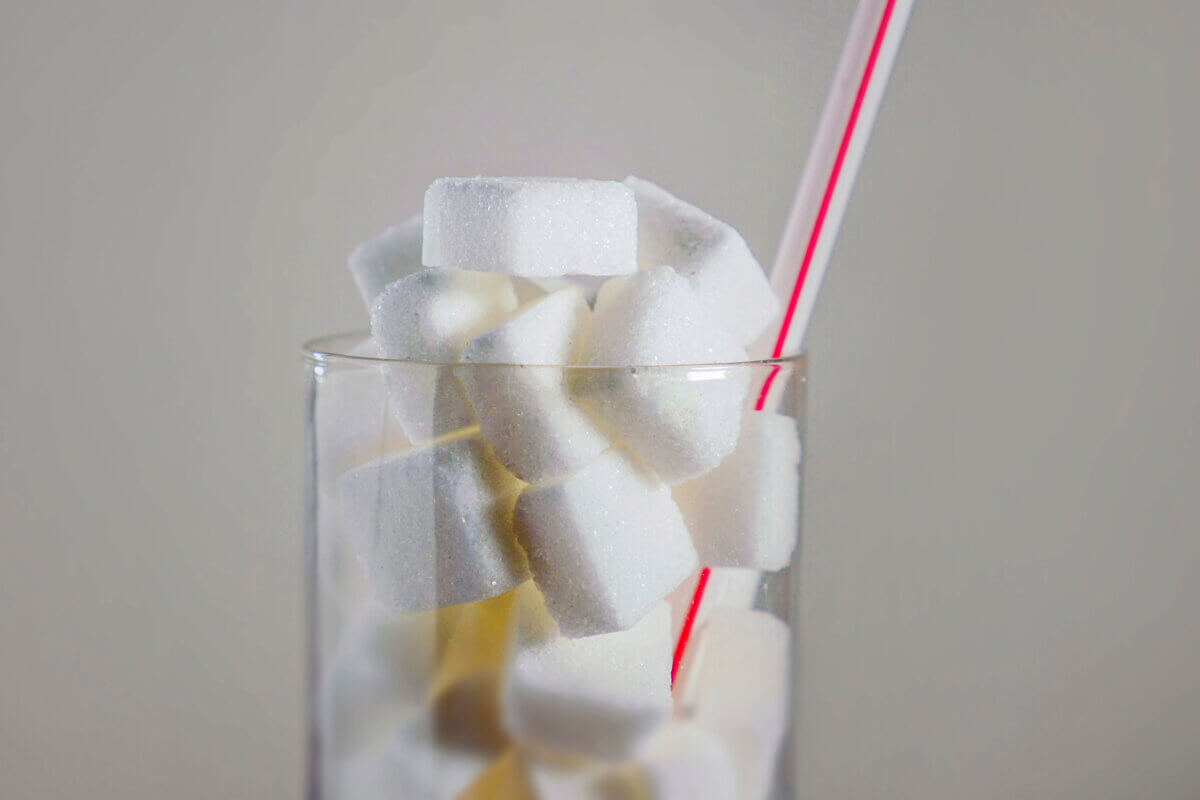
(Image by TheVisualsYouNeed on Shutterstock)
MEDFORD, Mass. — Every eight-ounce serving of a sugar-sweetened beverage consumed worldwide contributes to a mounting public health crisis. According to new research from Tufts University, these drinks, from sodas to fruit punches, now cause millions of cases of preventable diseases annually, with developing nations bearing the heaviest burden.
The study, published in Nature Medicine, reveals the staggering global health impact of sugar-sweetened beverages (SSBs). Researchers at Tufts’ Friedman School of Nutrition Science and Policy found that in 2020 alone, these drinks were responsible for 2.2 million new cases of Type 2 diabetes and 1.2 million new heart disease cases worldwide.
The comprehensive analysis, spanning 184 countries, paints a concerning picture of how these beverages affect public health across different regions and demographics. Researchers analyzed dietary surveys from 118 countries, representing 87% of the global population, to understand the scope of SSB consumption and its health consequences.
“Sugar-sweetened beverages are heavily marketed and sold in low- and middle-income nations. Not only are these communities consuming harmful products, but they are also often less well equipped to deal with the long-term health consequences,” says Dariush Mozaffarian, senior author and director of the Food is Medicine Institute at the Friedman School, in a statement.
The impact varies significantly by region, with developing nations bearing a disproportionate burden. Latin America and the Caribbean face the highest rates, where sugary drinks contribute to 24.4% of new diabetes cases and 11.3% of heart disease cases. Sub-Saharan Africa follows closely, with 21.5% and 10.5% respectively.
Individual countries show even more dramatic statistics. In Colombia, sugary drinks contribute to an unprecedented 48.1% of new diabetes cases and 23% of heart disease cases. Mexico, known for high per capita SSB consumption, attributes 30% of new diabetes cases to these beverages. South Africa reports 27.6% of diabetes cases and 14.6% of heart disease cases linked to sugary drink consumption.
The study reveals concerning trends in sub-Saharan Africa, where SSB-related health problems increased significantly between 1990 and 2020. The region experienced the largest rise in SSB-attributable diabetes and cardiovascular disease cases, with increases of 8.8% and 4.4% respectively, coinciding with aggressive beverage industry marketing in emerging markets.
Demographics play a crucial role in sugary drink-related health outcomes. Men generally face higher risks than women, and younger adults show greater vulnerability compared to older populations. Urban residents demonstrate higher rates of SSB-related health issues than their rural counterparts. Education levels influence consumption patterns differently across regions, sometimes correlating with increased sugary drink intake and sometimes showing inverse relationships.
The mechanism behind these health impacts is complex. Sugar-sweetened beverages are rapidly consumed and digested, leading to poor satiety and increased caloric intake. The high doses of quickly digested glucose activate insulin pathways, potentially resulting in visceral fat production and insulin resistance. These beverages often replace healthier alternatives, compounding their negative health effects.
Some countries have implemented policies to address this crisis. Mexico, for example, introduced a tax on sugary drinks in 2014, showing early signs of reduced consumption, particularly among lower-income populations. However, the researchers emphasize that current measures may be insufficient to address the scale of the problem.
“We need urgent, evidence-based interventions to curb consumption of sugar-sweetened beverages globally, before even more lives are shortened by their effects on diabetes and heart disease,” says Laura Lara-Castor, lead author who earned her Ph.D. at the Friedman School and is now at the University of Washington.
The study calls for comprehensive global action, particularly in developing nations where clean water access is limited and marketing for sugary beverages is aggressive. “Much more needs to be done, especially in countries in Latin America and Africa where consumption is high and the health consequence severe,” Mozaffarian adds.
Paper Summary
Methodology
The researchers employed a comparative risk assessment model incorporating data from multiple sources. They analyzed dietary surveys from 450 different sources covering 2.9 million individuals, combined with health outcome data, population demographics, and socioeconomic indicators. They considered both direct effects of SSB consumption and indirect effects through body mass index (BMI) changes.
Results
The study found that SSBs contributed to 2.2 million new diabetes cases and 1.2 million new cardiovascular disease cases globally in 2020. Regional variations were significant, with Latin America and the Caribbean showing the highest burden. The research also revealed concerning trends in sub-Saharan Africa and identified specific demographic patterns related to age, gender, education, and urbanization.
Limitations
The research relied on available dietary survey data, which was limited in some regions. The study couldn’t include data on sweetened teas and coffees due to inconsistent reporting. The researchers also had to make assumptions about disease burden distribution across educational levels and urban/rural areas where specific data wasn’t available.
Discussion and Takeaways
The findings emphasize the urgent need for targeted interventions, particularly in regions showing high or increasing SSB-related health burdens. The study suggests current policies may be insufficient and highlights the need for comprehensive approaches that consider regional differences, commercial influences, and infrastructure challenges.
Funding and Disclosures
The research was supported by various institutions including the Gates Foundation, the American Heart Association, and Mexico’s National Council for Science and Technology. The researchers declared various funding sources and potential conflicts of interest, though none directly related to beverage industry funding.
Publication Information
This study was published in Nature Medicine in January 2025, titled “Burdens of type 2 diabetes and cardiovascular disease attributable to sugar-sweetened beverages in 184 countries” by Laura Lara-Castor and colleagues. DOI: https://doi.org/10.1038/s41591-024-03345-4


