

(© thodonal - stock.adobe.com)
OAK BROOK, Ill. – An alarming new study finds that many non-smokers are carrying some concerning growths in their lungs, putting their future health at risk. Researchers from the Netherlands have discovered that small growths in the lungs, known as lung nodules, are surprisingly common even among people who have never picked up a cigarette in their lives.
The research, published in Radiology, challenges previous assumptions about the prevalence of these nodules in seemingly healthy people and could have significant implications for how doctors approach lung health in the general population. The study found that over 40% of non-smokers had at least one lung nodule. Even more startling, about 11% had nodules large enough to be considered “clinically relevant,” meaning they might require further medical evaluation or follow-up.
Lung nodules are small, round growths in the lung tissue. While most are benign, some can be early signs of lung cancer. Traditionally, these nodules have been associated with smoking, and much of our understanding of their prevalence comes from studies of heavy smokers or people at high risk for lung cancer.
This new research paints a different picture. It suggests that lung nodules are far more common in the general population than previously thought, even among those who have never smoked a cigarette in their lives.
“This study is groundbreaking as it provides the first comprehensive analysis of the prevalence and size distribution of solid lung nodules in a population-based Northern European non-smoking cohort,” says senior author Rozemarijn Vliegenthart, MD, PhD, radiologist and professor of cardiothoracic imaging at the University Medical Center Groningen and the University of Groningen in the Netherlands, in a media release. “Unlike prior studies that predominantly targeted high-risk lung cancer screening cohorts or Asian cohorts, this research yields fundamental data for the general non-smoking population in northern Europe.”
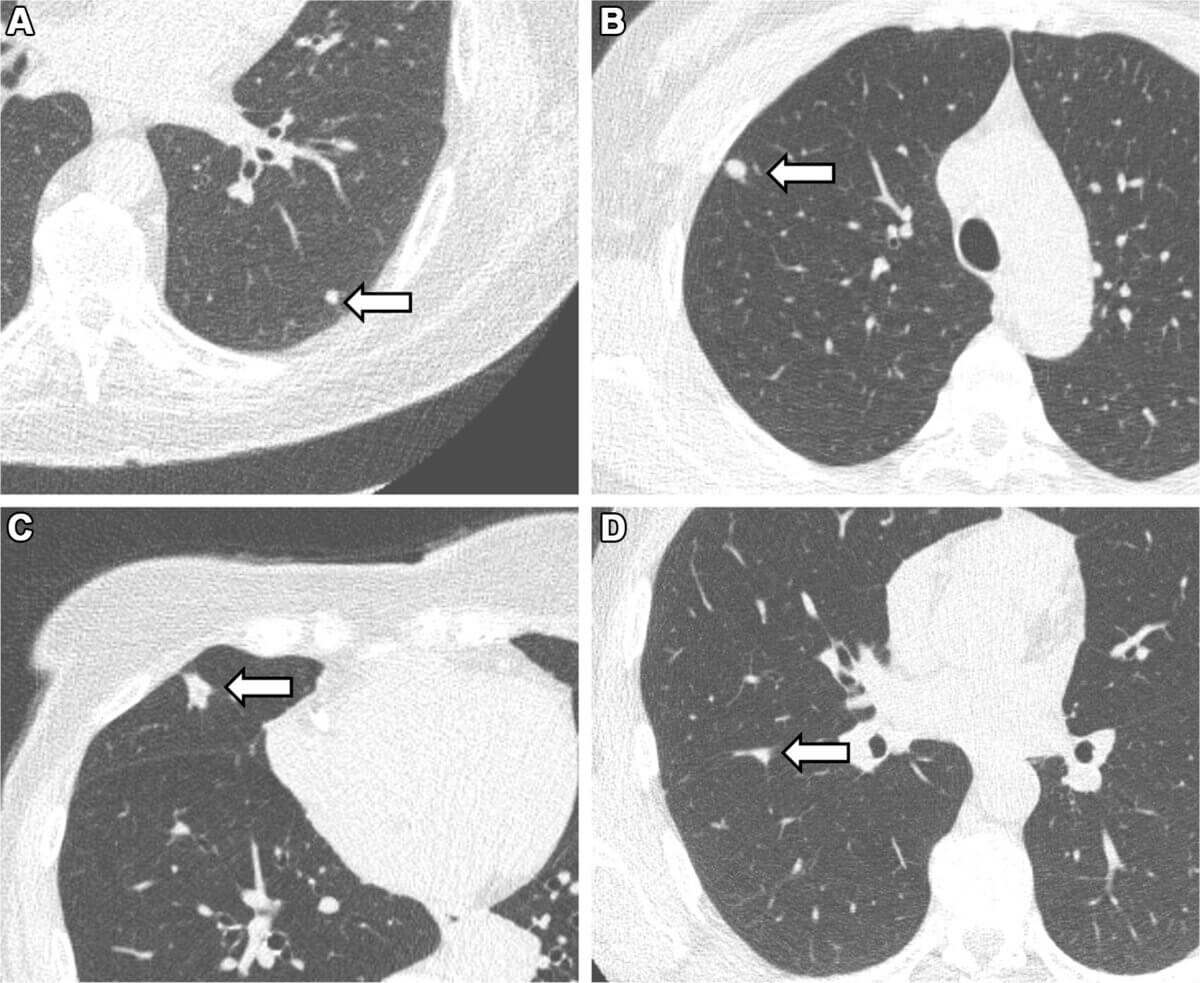
The study included over 10,000 participants from northern Netherlands, all of whom were either former smokers or had never smoked. Using low-dose CT scans, the researchers were able to detect lung nodules as small as 3.9 millimeters in diameter.
One of the most surprising findings was that the prevalence of lung nodules increased with age for both men and women. In the 45-49 age group, about 39% of men and 28% of women had at least one nodule. By the time people reached 80 and older, these percentages jumped to 61% for men and 51% for women.
The study also found that men were more likely to have lung nodules than women across all age groups. However, when women did have nodules, they tended to be slightly larger on average.
“Our study revealed the presence of clinically relevant nodules in 11.1 percent of a non-smoking cohort, traditionally considered low risk,” Dr. Vliegenthart explains. “This was higher than we expected and even similar to the prevalence reported in high-risk populations of smokers.”
These findings raise important questions about how we approach lung health and cancer screening. Currently, lung cancer screening programs typically focus on older individuals with a history of heavy smoking. But if lung nodules are this common in nonsmokers, should we be casting a wider net?
It’s important to note that the presence of a lung nodule doesn’t necessarily mean cancer. In fact, the vast majority of nodules, especially small ones, are benign. They can be caused by old infections, scar tissue, or simply a normal variation in lung structure.
However, the high prevalence of these nodules, particularly those large enough to be considered clinically relevant, suggests that our current approach to lung health might need some reconsideration. It may lead to more incidental findings during routine chest imaging, potentially causing anxiety for patients and leading to additional, sometimes unnecessary, medical procedures.
“We know that the incidence of lung cancer in this population (LifeLines cohort), is very low (0.3%), suggesting that most of the clinically relevant and even actionable nodules in a non-smoking cohort are benign,” Dr. Vliegenthart concludes. “Future data on lung cancer diagnosis in ImaLife participants with clinically relevant and actionable nodules may help to optimize nodule management recommendations for individuals considered at low risk.”
Paper Summary
Methodology
The researchers used data from a large, ongoing health study in the Netherlands called Lifelines. They invited participants who were at least 45 years-old and had completed lung function tests to undergo low-dose CT scans of their chests. The scans were then examined by trained readers who looked for and measured any lung nodules. They focused on solid nodules (as opposed to partly solid or non-solid ones) that were at least 30 cubic millimeters in volume.
Key Results
Out of 10,431 participants, 42% had at least one lung nodule. About 11% had nodules large enough to be considered clinically relevant (100 cubic millimeters or larger), and 2.3% had actionable nodules (300 cubic millimeters or larger) that would typically require further investigation. Men were more likely to have nodules than women, and the prevalence increased with age for both sexes.
Study Limitations
The study population was primarily composed of White individuals from the northern Netherlands, which may limit how well the results apply to other racial or ethnic groups. Additionally, the study relied on single readings of the CT scans, which might have missed some smaller nodules. The study also didn’t follow up to determine how many of these nodules might eventually develop into cancer.
Discussion & Takeaways
This study provides valuable data on the prevalence of lung nodules in a general, nonsmoking population. The findings suggest that lung nodules are much more common than previously thought, even in people who have never smoked. This could have implications for how we approach incidental findings on chest imaging and may influence future guidelines for lung cancer screening. However, the researchers stress that most of these nodules are likely benign, and more research is needed to understand their long-term significance.
Funding & Disclosures
The study was supported by various sources, including the China Scholarship Council, Siemens Healthineers, and several Dutch government ministries. Some of the authors reported receiving grants or payments from organizations like Siemens Healthineers, the Dutch Cancer Society, and the Dutch Heart Foundation. However, these relationships were not considered to significantly influence the study’s findings.


