
(Image by Shutterstock AI on Shutterstock)
ENSCHEDE, Netherlands — While countless young viewers dream of becoming Disney princesses, a new study suggests the royal life isn’t all tiaras and true love’s kisses. Medical researchers have identified serious health risks faced by beloved characters like Snow White, Cinderella, and Pocahontas – from occupational lung disease to severe sports injuries.
Published in the BMJ’s 2024 Christmas issue – an annual tradition featuring playful but scientifically rigorous research papers – this tongue-in-cheek analysis by researchers from the University of Twente examines the medical challenges that would plague Disney’s heroines if they existed in reality. As the authors note, “Disney princesses face serious real-world health hazards. Surprisingly, however, despite these risks, they seem to live happily ever after.”
Social isolation emerges as a major threat, with several princesses experiencing extreme loneliness. Snow White’s limited interaction as a scullery maid puts her at increased risk of cardiovascular disease, depression, anxiety, and higher mortality rates. Similarly, Jasmine’s confined palace life exposes her to the dangers of social isolation. While “the Genie might sing ‘you ain’t never had a friend like me,’ the truth is that Jasmine has no friends at all.”
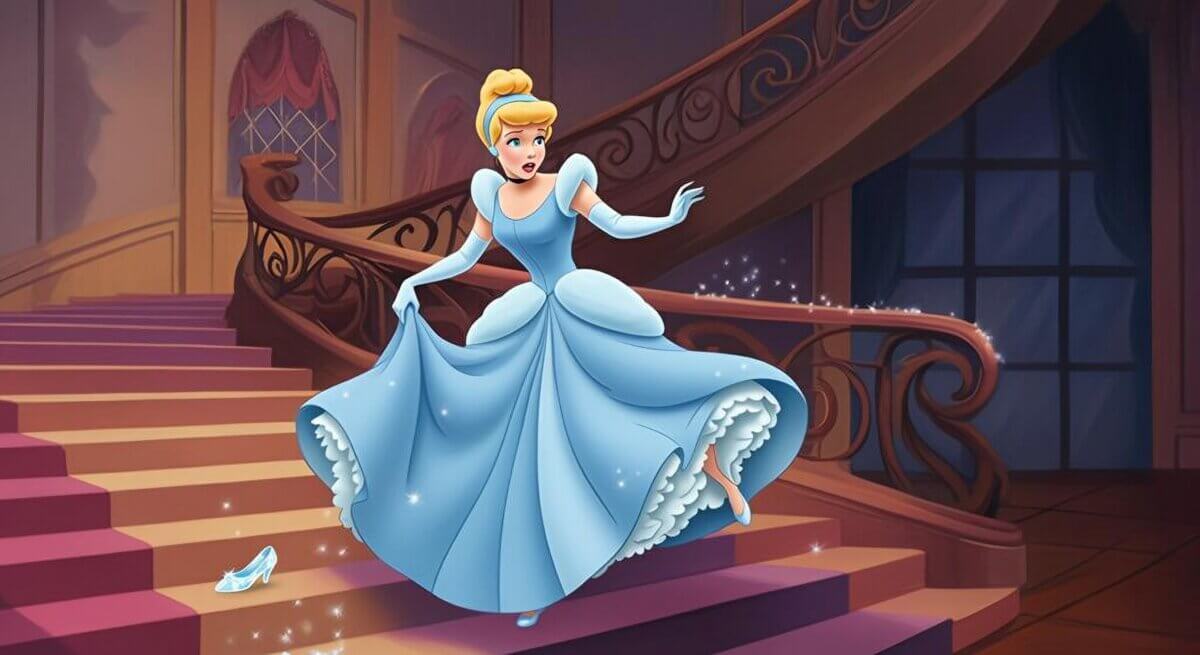
Some princesses face severe occupational hazards. Cinderella’s constant exposure to dust while cleaning could lead to occupational lung disease, made worse by her fairy godmother’s liberal use of glitter. As the researchers note, when things couldn’t get worse—”bibbidi-bobbidi-boo!”—Cinderella’s fairy godmother puts the icing on the cake by spreading massive quantities of magical glitter—otherwise known as aluminium-coated microplastics.
For the more adventurous princesses, physical dangers abound. Using mathematical modeling, the researchers calculated that Pocahontas’s famous cliff dive lasted nine seconds – suggesting a height of 252 meters. The consequences would be severe: “Hence, a repeat leap would show Pocahontas the monochromatic hues of her x-rays instead of the Colors of the Wind, with a symphony of fractures rather than a harmonious tune with nature.”
Even sleeping poses risks. Aurora’s enchanted slumber in Sleeping Beauty could have led to cardiovascular disease, stroke, obesity, diabetes, pressure ulcers, and muscle atrophy from prolonged bed rest. Prince Philip breaks the spell quickly, “though he also breaks with current social norms by neglecting to obtain consent.”
Some princesses navigate complex psychological challenges. Mulan experiences honor-based violence through familial pressure and public defamation. Her dragon companion Mushu offers questionable support, asking “Who knew you’d end up shamin’ him [Mulan’s father] and disgracing your ancestors and losin’ all your friends?” As the researchers observe, “In our opinion, A Girl Worth Fighting For deserves better.”
Belle’s situation presents unique medical risks – her captor, the Beast, is technically a chimera, combining parts of buffalo, gorilla, boar, lion, bear, and wolf. This exposes her to numerous zoonotic diseases. However, choosing Gaston – “a narcissist with an ego so inflated it is practically a third character” – might have been worse for her mental health. As the researchers conclude: “Despite obvious risks the advice is: better the Beast you know.”
Even Rapunzel’s signature feature poses health risks. Her 21-meter braid, repeatedly used as an elevator cable, likely caused traction alopecia – hair loss from excessive pulling – along with scalp pain and chronic headaches. “Her long hair might keep Gothel young but, thanks to constant headaches, Rapunzel is the one who needs a magical remedy.”
The study concludes that Disney must consider interventions to protect its princesses’ health, including “mindfulness and psychotherapy, training on cohabitation with animals, and personal protection measures against infectious agents and toxic particles.” Only then can these beloved characters truly live “healthily ever after.”
Paper Summary
Methodology
The researchers conducted a systematic review of Disney princess films, identifying potential health risks based on the characters’ living conditions, activities, and environments. They then cross-referenced these observations with existing medical literature and public health studies to determine likely health outcomes. For specific scenarios like Pocahontas’s cliff dive, they employed mathematical modeling using physics equations to calculate precise measurements and potential medical impacts.
Results
The study identified multiple categories of health risks affecting Disney princesses: social isolation leading to physical and mental health issues, occupational hazards causing respiratory problems, physical injuries from dangerous activities, complications from prolonged immobility, psychological trauma from honor-based violence, zoonotic disease exposure, and chronic conditions from repetitive physical strain.
Limitations
The analysis is inherently limited by its application of real-world medical science to fictional animated characters. The researchers acknowledge the playful nature of their investigation while maintaining scientific rigor in their medical references and calculations. The study also focuses primarily on classic Disney princesses, excluding more recent characters who might face different health challenges.
Key Takeaways
The research highlights how even idealized fairy tale scenarios would pose serious health risks in reality. While humorous, the study makes valid points about occupational safety, mental health support, and the importance of protective measures in hazardous situations. It also demonstrates how medical research methodologies can be applied creatively to examine popular culture.
Funding and Disclosures
The study was not commissioned or externally peer-reviewed. The researchers disclosed using ChatGPT during the initial draft preparation, solely for improving text sections rather than generating content. The authors declared no competing interests.


