
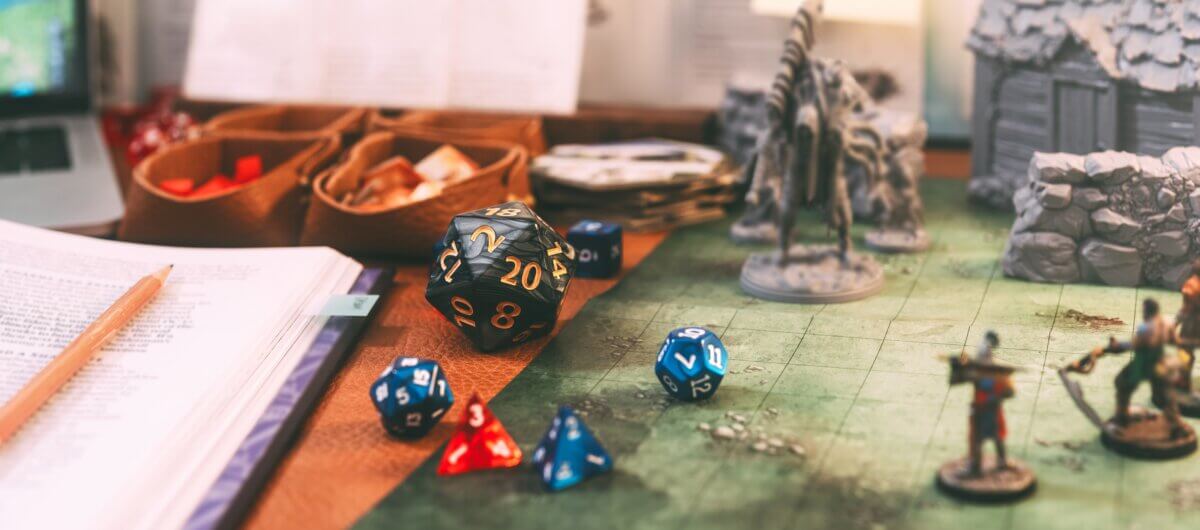
(Credit: dodotone/Shutterstock)
PLYMOUTH, United Kingdom — Roll for initiative, cast a spell, and slay a dragon – but the real magic of Dungeons & Dragons might be happening off the game board. A new study suggests that this classic role-playing game could be a powerful tool for building social connections among autistic adults.
A study published in the journal Autism explores how Dungeons & Dragons and other tabletop role-playing games (TTRPGs) could provide a unique social outlet for autistic individuals. The research, conducted by a team led by Gray Atherton, delves into the experiences of autistic adults playing D&D together and uncovers some fascinating insights.
Autism, a developmental condition affecting about 1 in 100 people worldwide, often presents challenges in social interaction and communication. Many autistic individuals struggle to find comfortable social settings where they can be themselves without feeling pressure to “mask” or hide their autistic traits. This masking can be exhausting and negatively impact mental health over time.
Enter the world of D&D, where players take on the roles of fictional characters and collaboratively weave stories guided by dice rolls and imagination. The study suggests that this structured yet creative environment might be particularly well-suited to autistic adults’ social needs.
The researchers gathered eight autistic adults, split them into two groups, and led them through a six-week online Dungeons & Dragons campaign. Afterwards, they interviewed each participant to discuss their experiences both in and out of the game.
What they found was eye-opening. Participants reported finding social interactions during D&D sessions significantly easier and more comfortable compared to their everyday lives. They attributed this to several factors:
- Clear structure: The game’s rules provided a framework for social engagement, reducing anxiety about unspoken social norms.
- Shared focus: Having a common goal and interest made the conversation flow more naturally.
- Character “buffer”: Role-playing as a character offered a degree of social distance, making interactions feel less intimidating.
- Collaborative nature: The game encouraged teamwork, fostering a sense of camaraderie.
- Autistic-friendly environment: Being in a group of all autistic players reduced the pressure to mask autistic traits.
“I seem to have better interactions with Dungeons and Dragons than any other activity. Maybe that’s why I do Dungeons and Dragons so well. Because it’s specifically a group game. There’s no real player-vs-player aspect and you know there’s no competitiveness. It’s a group activity,” one participant explains.
Perhaps most intriguingly, many participants developed strong emotional connections to their D&D characters. Some found that positive experiences and traits from their characters “bled” into their real lives, boosting their confidence. The fantasy setting also allowed them to reframe their personal stories in empowering ways.
One player likened the hero’s journey in D&D to the journey of an autistic person overcoming challenges and discovering their unique strengths. This provided a new, more positive lens through which to view their own life experiences.
The study’s findings suggest that TTRPGs like D&D may offer valuable social benefits for autistic adults. By providing a structured yet creative environment for social interaction, these games could help autistic individuals build social skills and connections in a low-pressure setting. The fantasy elements may also support positive identity development and self-esteem.
“I also think a lot of the themes of fantasy can be very compelling to people who are part of the minority group. If you have autism and you don’t feel like you fit in, then you know you’re obviously gonna relate to a hero’s journey story where someone doesn’t fit in and then they find out that… they have magic powers. And you think ‘wouldn’t it be cool if what was different about me was actually, you know, really awesome’,” another D&D participant says.
This research opens up exciting possibilities for using Dungeons & Dragons and other TTRPGs as a tool to support autistic adults’ social well-being. It also highlights the importance of creating neurodiversity-affirming spaces where autistic individuals can socialize authentically without the pressure to conform to neurotypical social norms.
“There are many myths and misconceptions about autism, with some of the biggest suggesting that those with it aren’t socially motivated, or don’t have any imagination,” says lead author Dr. Gray Atherton, Lecturer in Psychology at the University of Plymouth, in a statement.
“Dungeons and Dragons goes against all that, centering around working together in a team, all of which takes place in a completely imaginary environment. Those taking part in our study saw the game as a breath of fresh air, a chance to take on a different persona and share experiences outside of an often-challenging reality. That sense of escapism made them feel incredibly comfortable, and many of them said they were now trying to apply aspects of it in their daily lives.”
The journey of understanding how best to support autistic adults is ongoing, but studies like this shine a light on innovative approaches. Dungeons & Dragons, with its blend of structure and creativity, may be paving the way for new forms of social support.
Paper Summary
Methodology
The researchers used a qualitative approach called Interpretative Phenomenological Analysis (IPA) to dig deep into participants’ experiences. Here’s how it worked:
- Eight autistic adults played in a 6-week online D&D campaign.
- Researchers conducted 30 to 60-minute individual interviews with each participant.
- Interviews were recorded and transcribed.
- Two researchers carefully read through all transcripts multiple times.
- They made notes about emerging themes and patterns in participants’ responses.
- Researchers discussed and organized these themes into broader categories.
- They ensured themes were well-supported by participant quotes and applied across most or all participants.
This process allowed researchers to identify common experiences and meanings across participants while still honoring individual perspectives.
Key Results
The analysis revealed three main themes in how participants experienced playing D&D:
- Social Motivation: Participants wanted social connections but found everyday interactions challenging.
- Improved Social Interactions: D&D provided an easier, more comfortable social environment compared to daily life. Participants attributed this to the game’s structure, shared focus, and being with other autistic players.
- Emotional Connection: Many participants formed strong bonds with their characters. Some found positive traits or experiences from their characters influencing their real lives. The fantasy setting also allowed them to reframe personal struggles in more empowering ways.
Study Limitations
Some key limitations of this study include:
- Small sample size (only 8 participants)
- Participants were already interested in D&D/TTRPGs
- Short-term study (6 weeks) – long-term effects unknown
- The online format may differ from in-person play
- All-autistic groups may differ from mixed neurotype groups
- Focused only on autistic adults, not children or teens
Larger, longer-term studies with more diverse participants would help confirm and expand on these findings.
Discussion & Takeaways
This study highlights the potential of TTRPGs as a social tool for autistic adults. Key benefits included:
- Structured yet flexible social environment
- Reduced need for masking autistic traits
- Opportunity to practice social skills in a low-pressure setting
- Boost to self-esteem through character embodiment
- Reframing of personal narratives in empowering ways
The researchers suggest TTRPGs could be used to help autistic adults build social connections and confidence. They also propose exploring how mixed-neurotype TTRPG groups might improve mutual understanding between autistic and non-autistic individuals.
Future research could investigate longer-term effects, compare online vs in-person play, and explore how TTRPG experiences might transfer to real-world social situations.
Funding & Disclosures
The paper does not mention any specific funding sources for this study. The authors did not report any conflicts of interest. It’s worth noting that two of the four researchers identify as being on the autism spectrum themselves, which likely provided valuable insider perspectives in designing and conducting the study.


