
(Photo by Silas Jaeger from Pexels)
DSCHANG, Cameroon — Forget kale and quinoa – the next superfood might be crawling around in your backyard. Researchers in Cameroon have uncovered the surprising health benefits of a grasshopper-based diet, suggesting these insects could be the key to better sleep, healthier hair, and even a stronger libido.
The study published in the journal Food Science of Animal Products reveals that rats fed a diet of Ruspolia nitidula, a type of edible grasshopper common in Cameroon, experienced significant improvements in several health markers compared to rats on other diets.
As the world grapples with food security issues and a growing population, scientists are increasingly turning to unconventional protein sources. Insects, with their high nutritional value and low environmental impact, have emerged as a promising alternative. This study, led by researchers at the University of Dschang in Cameroon, adds weight to the argument that insects could be more than just a sustainable food source – they might also offer unique health benefits.
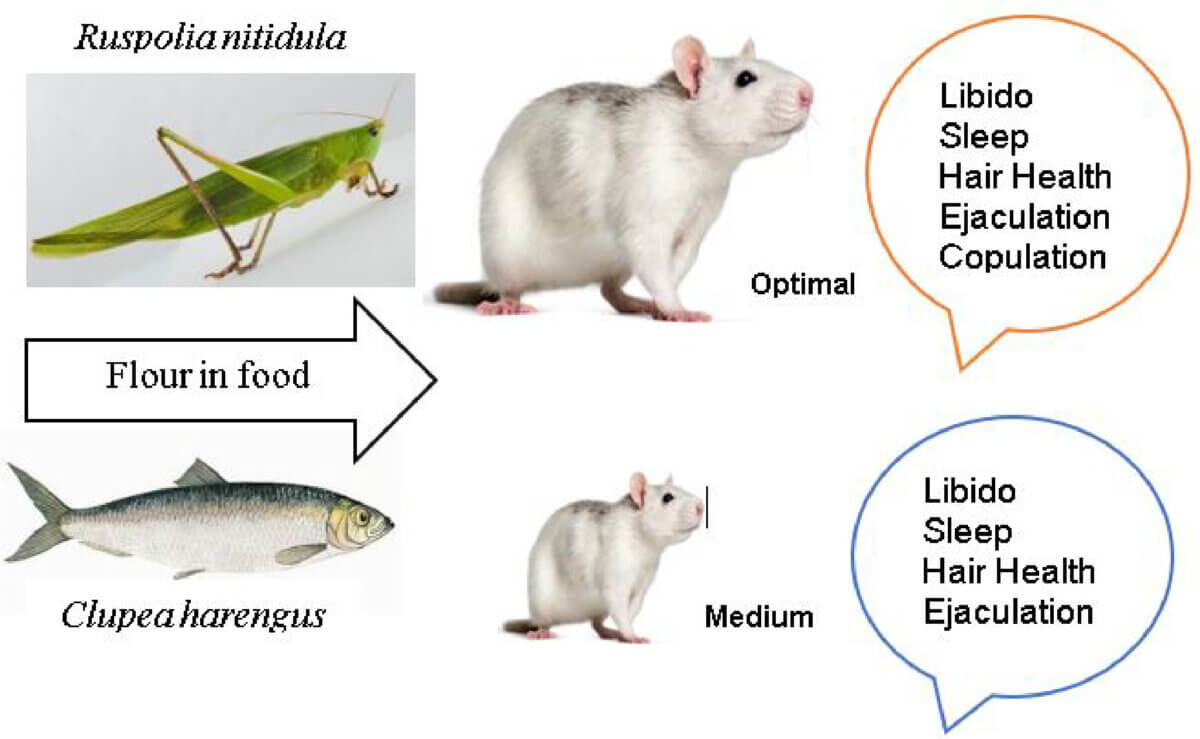
The research team, headed by Ngnaniyyi Abdoul, compared the effects of three different diets on rats: one based on Ruspolia nitidula meal (made from ground-up grasshoppers), another using traditional fishmeal from herring, and a third diet lacking in animal protein. Over 12 weeks, they monitored various health indicators in 216 rats, including body weight, sleep patterns, sexual behavior, and hair quality.
The results were striking. Rats on the grasshopper diet showed marked improvements across several health measures. Perhaps most notably, these rats experienced a significant boost in libido, with an increased frequency of sexual behaviors compared to rats on other diets. The grasshopper-fed rats also enjoyed better sleep, gaining nearly 12 hours of extra sleep per week compared to rats on the protein-deficient diet.
However, the benefits didn’t stop there. The study found that an astonishing 94.58% of hairs examined from grasshopper-fed rats were in excellent condition – lying flat and flexible to the touch. In contrast, only 5.55% of hairs from fishmeal-fed rats and a mere 0.27% from protein-deficient rats showed similar quality.
Body weight also saw improvements, with grasshopper-fed rats maintaining a healthy average weight of 180.10 grams, slightly higher than the fishmeal group at 172.76 grams. Rats on the protein-deficient diet lagged significantly behind at 146.15 grams.
The researchers attribute these health benefits to the unique nutritional profile of Ruspolia nitidula. Rich in essential amino acids, vitamins, and minerals, these grasshoppers appear to provide a potent cocktail of nutrients that support various bodily functions. For instance, the abundance of sulfur-containing amino acids like methionine and cysteine in grasshoppers is thought to contribute to improved hair quality by boosting keratin production.
“Our findings highlight the significant potential of edible insects like Ruspolia nitidula as alternative protein sources,” Abdoul says in statement. “The grasshopper meal not only meets nutritional needs but also offers substantial health benefits, including improved libido, better sleep, and enhanced hair quality, with far-reaching implications for both animal and human diets.”
While the idea of chomping on grasshoppers might not appeal to everyone, this research opens up exciting possibilities for nutrition and health. As we face global challenges in food production and seek ways to improve human health, unconventional solutions like insect-based diets could play a crucial role.
Paper Summary
Methodology
The researchers divided 216 rats (108 males and 108 females) into three groups of 72 each. Each group received a different diet: grasshopper meal, fishmeal, or a protein-deficient diet. Over 12 weeks, the team measured various health indicators. They weighed the rats weekly, examined hair samples under a microscope, monitored sleep patterns using special sensors, and observed sexual behaviors through video recordings. They also tested urine and fecal pH to assess digestive health.
Key Results
The grasshopper diet led to significant improvements across multiple health measures. Rats on this diet showed increased sexual activity, with more frequent mounting and intromission behaviors. They slept longer, gaining about 12 extra hours of sleep per week compared to the protein-deficient group. Hair quality was dramatically better, with over 94% of hairs examined showing ideal characteristics. Body weight was healthier, and digestive health indicators were more balanced.
Study Limitations
It’s important to note that this study was conducted on rats, and results may not directly translate to humans. The sample size, while reasonable for an animal study, is still relatively small. The study duration of 12 weeks provides insight into short-term effects, but long-term impacts remain unknown. Additionally, the study focused on a single species of grasshopper, and effects may vary with other insect species.
Discussion & Takeaways
The researchers suggest that the unique nutritional profile of Ruspolia nitidula, particularly its rich amino acid content, contributes to the observed health benefits. They highlight the potential of insect-based diets as a sustainable and nutritious food source, especially in regions where these insects are already part of traditional diets. The study opens up new avenues for research into insect-based nutrition and its potential health applications, from improving sexual health to addressing hair loss and sleep issues.
Funding & Disclosures
The study was funded by the North Cameroon Association for Ecological and Food Transition (ABC-ECOLO). The researchers declared no conflicts of interest. It’s worth noting that while this funding source suggests local interest in sustainable food solutions, readers should always consider potential biases in research funding.


Using sex to sell insects for food. Amazing.
Thanks but no thanks, I’d rather sleep less, become bald and remember the good sex from the past and dismiss the future of such fun!
It’s a research and a study find about health benefits of something! You know… something that helps EVERYONE to live longer and healthier.
Science doesn’t “care” about your subjective feelings, opinions, taste or life choices, mate :))
Also nobody cares about your preference in going bald with a limp peepee… lmao
Move along!