

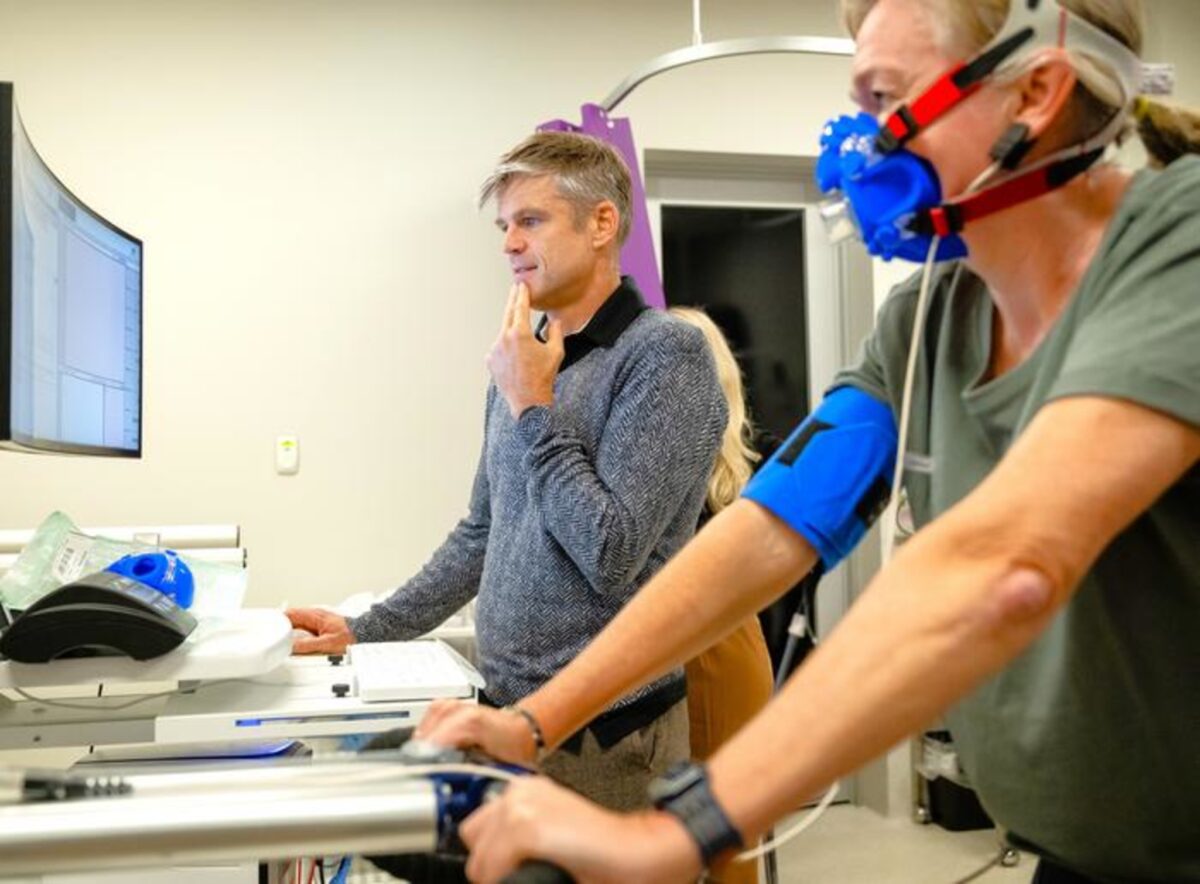
An athlete's heart is monitored while he runs on a treadmill. (Photo by Gorodenkoff on Shutterstock)
In A Nutshell
- Former Olympic-level rowers were far more likely to have an irregular heartbeat condition (AFib) than similar people who didn’t compete.
- Even decades after retiring, these athletes showed long-term heart changes from intense training.
- Genetics played a role, but rare disease genes didn’t explain the high AFib rates.
- The research suggests extreme endurance training may have lasting effects on heart rhythm.
SYDNEY — Former world-class rowers have a strikingly high rate of atrial fibrillation, a dangerous heart rhythm disorder, even though they are among the fittest people on Earth. A surprising study finds these elite endurance athletes develop the condition at a rate nearly seven times higher than people in the general population, raising uncomfortable questions about whether decades of intense training might actually harm the heart.
Atrial fibrillation, or AFib, causes the heart’s upper chambers to beat in a fast, irregular rhythm instead of maintaining a steady pace. This can allow blood to pool and form clots, potentially leading to life-threatening strokes. The condition typically affects older adults with risk factors like high blood pressure, obesity, or diabetes, but not Olympic-caliber athletes.
But researchers studying 121 former elite rowers found that 21.5% had developed AFib, compared to just 3.2% of similarly aged people from the general population. Even more striking, new cases continued to appear among the athletes during the study, at nearly three times the rate seen in the broader community.
“At a median age of 62 years, this represents one of the highest rates of prevalent AF in any population to date,” the researchers wrote in their paper, published in European Heart Journal.

Former Olympic Athletes Show Alarming Heart Rhythm Rates
The study focused on former Olympic and world championship rowers who had competed at the highest international levels for at least a decade. Among the 121 elite athletes studied, 23 were former Olympians who collectively won 21 Olympic medals.
Decades after retiring from competition, these athletes still showed signs of dramatic, lasting changes to their hearts. Their cardiac chambers were larger, their resting heart rates slower, and their heart rhythms remained altered from years of intense training. Rowing is known to be among the most physically demanding sports, requiring sustained, high-intensity effort that causes major structural changes to the heart.
Interestingly, the athletes who had stopped vigorous training had a higher AFib rate than those who continued exercising intensively (27.5% vs. 9.8%). However, the researchers caution that this difference may be influenced by factors like age, gender, and the possibility that some athletes may have reduced their exercise because of early symptoms.
Genetic Testing Reveals Hidden Risk Factors
Perhaps most intriguingly, the researchers examined genetic contributions to AFib risk. By analyzing each person’s DNA, they calculated a polygenic risk score, which is a tally of common genetic variations associated with the condition.
Athletes with high genetic risk scores were nearly four times more likely to develop AFib than those with low scores. However, the overall proportion of athletes with a high genetic risk wasn’t significantly different from the general population. That means genetics likely plays a role, but doesn’t fully explain why elite athletes develop the condition at such elevated rates.
The study also explored whether rare inherited heart disease mutations were to blame, but these appeared to have little impact. Just 2.7% of athletes carried rare gene variants associated with inherited cardiomyopathy, a rate similar to or lower than that seen in the general population. Most of the athletes with these mutations didn’t develop AFib.
What This Means for Athletes and Heart Health
The findings show that intense endurance training isn’t always good for the heart. While moderate exercise clearly protects cardiovascular health, this study suggests that extreme levels of training over many years may create lasting changes that disrupt the heart’s natural rhythm.
The athletes in the study had fewer typical risk factors for AFib. They smoked less, had lower blood pressure, and similar rates of diabetes compared to controls. Still, their AFib rates were much higher, and that had consequences. Though strokes were uncommon overall, athletes had a higher stroke rate than the control group (3.3% vs. 1.1%).
These results suggest that long-term cardiac remodeling from intense training may be the key factor driving AFib in these athletes. The structural and electrical changes to the heart, typically known as “athlete’s heart,” persisted even decades after retirement from sport.
Based on their findings, the researchers suggest that genetic testing for common AFib-related variants, rather than rare disease mutations, might be useful for identifying athletes at higher risk. While current guidelines recommend genetic testing in young athletes with AFib, this study found little evidence that such testing would yield meaningful results in most cases.
“We shouldn’t forget that athletes live healthier lives for longer,” said Professor André La Gerche, who heads the Heart, Exercise and Research Trials (HEART) Laboratory, in a statement. “This research should not discourage people from sports like rowing. Our job is to make sport safe for everyone and this study is an important advance in heart injury prevention.”
Former elite athletes occupy a unique place in heart health: the same training that propelled them to peak performance may also increase the risk of an irregular heartbeat later in life. For thousands of retired endurance athletes around the world, this study raises the possibility of a long-term health consequence that may warrant screening and medical attention.
Disclaimer: This article is based on findings from a peer-reviewed study. While the research highlights associations between elite athletic training and atrial fibrillation risk, it does not suggest that regular exercise is harmful to the general population. Always consult a healthcare provider for personalized medical advice.
Paper Summary
Methodology
Researchers recruited 121 former elite rowers aged 45-80 who had competed at national, world championship, or Olympic levels for at least 10 years. These athletes were compared to 11,495 age and gender-matched control subjects from the UK Biobank. All participants underwent electrocardiograms, cardiac MRI scans, and genetic analysis. The athletes were followed for a median of 4.4 years to track new cases of atrial fibrillation.
Results
Former elite rowers had a 21.5% prevalence of atrial fibrillation compared to 3.2% in controls, a 6.8-fold higher rate. During follow-up, 6.3% of athletes without prior atrial fibrillation developed the condition versus 2.3% of controls, representing a 2.8-fold higher incidence rate. Athletes with high polygenic risk scores were nearly 4 times more likely to have atrial fibrillation. The athletes also had larger heart chambers, slower heart rates, and longer electrical conduction times than controls.
Limitations
The study population was predominantly male (74%) and exclusively white, limiting generalizability. Different methods were used to detect incident atrial fibrillation between groups, with athletes receiving more sensitive Holter monitoring that may have detected more cases. The study couldn’t definitively determine whether the increased risk stems from past intensive training or continued exercise, though evidence points to past training as the primary factor.
Funding and Disclosures
The study was funded by the National Health and Medical Research Council of Australia and other government agencies. The authors declared no conflicts of interest. The research was approved by ethics committees and registered as a clinical trial.
Publication Information
Title: Atrial fibrillation in former world-class rowers: role of environmental and genetic factors
Journal: European Heart Journal, 2025
Authors: Flannery et al.
DOI: 10.1093/eurheartj/ehaf369


