
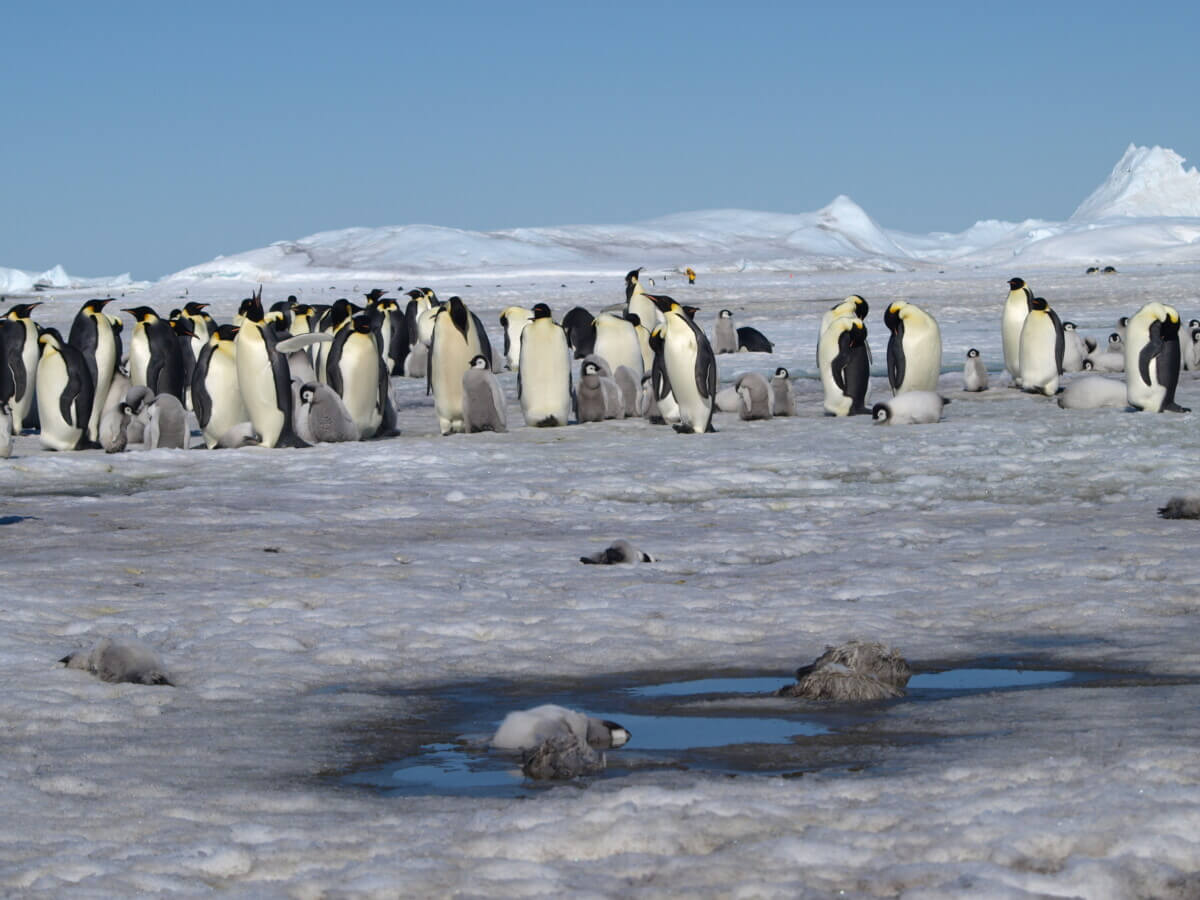
Emperor penguins in Antarctica (Credit: British Antarctic Survey)
CAMBRIDGE, England — In a bit of news that may just be worthy of throwing on a tuxedo in celebration, scientists just discovered 20% more emperor penguin colonies in Antartica. While that in and of itself is a great finding, the method behind the discovery is also of note. The research team, based out of the British Antarctic Survey, used satellite mapping technology to perform this feat.
The success of this project opens the door for more widespread use of satellites to track the progression of climate change and its subsequent impact on animal populations all over the world.
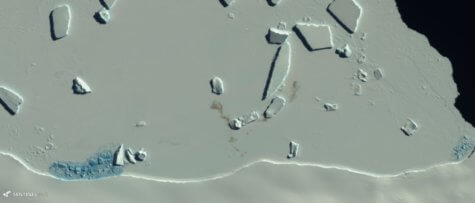
Via the European Commission’s Copernicus Sentinel-2 satellite, the team at BAS located 11 new emperor penguin colonies. Three of the 11 had been noted in the past, but remained unconfirmed. These excited discoveries increase the overall number of emperor penguin colonies in Antartica to 61.
Outlook not so hot for emperor penguins
As of today, emperor penguins aren’t on the endangered list, but that may soon change. They’re currently considered “nearly endangered.” Climate change and global warming, of course, don’t bode well for emperor penguins. These stylish birds need plenty of sea ice to properly procreate.
Besides all that, though, emperor penguins are quite difficult to study. Their penchant for cold temperatures make them hard to find for scientists. So, the exact number of emperor penguins has always been a bit mysterious. That being said, the BAS has been trying to locate emperor penguins for the past 10 years — by looking for stains from their excrement on antarctic ice.
“This is an exciting discovery. The new satellite images of Antarctica’s coastline have enabled us to find these new colonies. And whilst this is good news, the colonies are small and so only take the overall population count up by 5-10% to just over half a million penguins or around 265,500 – 278,500 breeding pairs,” says lead study author Dr. Peter Fretwell, a geographer at BAS, in a release.
CLICK HERE TO SUBSCRIBE TO OUR NEWSLETTER & GET THE LATEST STUDIES FROM studyfinds.com BY EMAIL!
Unfortunately, many of these colonies appear to be residing right on the edge of the penguins’ greater breeding area. This indicates these areas will be the first to melt away due to increasing temperatures.
“Whilst it’s good news that we’ve found these new colonies, the breeding sites are all in locations where recent model projections suggest emperors will decline. Birds in these sites are therefore probably the ‘canaries in the coalmine’ – we need to watch these sites carefully as climate change will affect this region,” explains Dr. Phil Trathan, Head of Conservation Biology at BAS
The study is published in Remote Sensing in Ecology and Conservation.
[fb_follow /]


