(Photo by Jeppe Gustafsson on Shutterstock)
Experts claim agency outsources much of its food safety oversight to the very companies it’s supposed to regulate
NEW YORK — In a shocking revelation, new research exposes an alleged gaping hole in the Food and Drug Administration’s (FDA) oversight of food ingredients. Thousands of potentially harmful substances may be lurking in our food supply without proper safety evaluation or public disclosure. This alarming situation stems from an apparent regulatory loophole that allows food companies to determine the safety of their own ingredients without FDA review.
An editorial published in the American Journal of Public Health reveals that while the FDA rigorously evaluates some food additives before they hit the market, it allows the food industry to self-regulate and classify many substances as “generally recognized as safe” (GRAS) based on undisclosed data. Even more concerning, the FDA lacks a formal process to systematically review the safety of additives and GRAS substances already in our food.
While this category was originally created for common ingredients like vinegar and spices, it has become a loophole big enough to drive a food truck through. The paper says that since 1997, the FDA has allowed food companies to determine on their own which new substances qualify as GRAS, without any requirement to notify the agency or share their safety data.
This means the ingredients in our food fall into a wide spectrum: from innocuous items like black pepper to substances harmful at high levels like salt. Then there are questionable chemicals like potassium bromate, a baked goods additive that may cause cancer, and unknown compounds that neither the FDA nor the public are aware of.
“Both the FDA and the public are unaware of how many of these ingredients—which are most commonly found in ultra-processed foods —are in our food supply,” says Jennifer Pomeranz, associate professor of public health policy and management at NYU School of Global Public Health and the editorial’s first author, in a statement.
The researchers argue that this regulatory gap leaves the FDA unable to fulfill its mission of ensuring a safe food supply. With diet-related diseases on the rise, addressing this oversight failure is crucial for public health.

How did this FDA oversight begin?
The problem stems from the 1958 Food Additives Amendment, which established two categories of food ingredients: food additives requiring FDA pre-market approval, and GRAS substances exempt from such scrutiny. While this exemption was initially intended for common ingredients like salt and pepper, the food industry has exploited it to introduce a wide array of new substances without FDA oversight.
In fact, the study cites research estimating that between 1990 and 2010, about 1,000 new ingredients entered the food supply without any report to the FDA. An additional 2,700 substances were deemed safe by industry panels, often comprised of experts with conflicts of interest.
“There are now hundreds, if not thousands, of substances added to our foods for which the true safety data are unknown to independent scientists, the government, and the public,” explains study senior author Dariush Mozaffarian, director of the Food is Medicine Institute at Tufts University.
The FDA’s hands-off approach was recently upheld in court, with a 2021 ruling affirming the agency’s voluntary notification system for GRAS substances. This decision essentially codified the existing regulatory gaps, leaving states to try filling the void. For instance, in October 2023, California banned four FDA-permitted food additives due to cancer and other health risks.
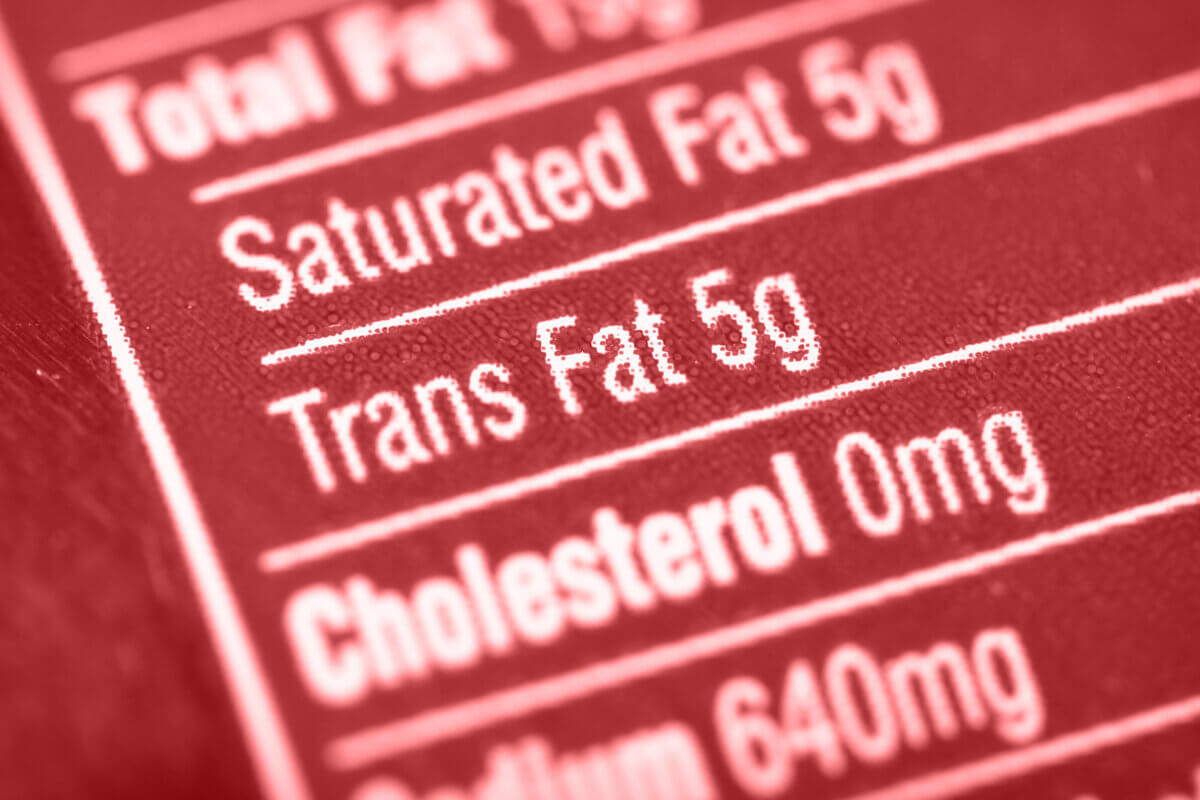
Even when clear evidence of harm emerges, the FDA’s ability to remove substances from the food supply is limited. The case of partially hydrogenated oils (trans fats) illustrates this challenge. Despite mounting evidence of their dangers since the 1950s, it took until 2015 for the FDA to revoke their GRAS status, with the ban not taking full effect until 2018.
Reforms needed to make food supply safer
The study’s authors argue that relying on post-market authority is an ineffective method for ensuring food safety, given the vast number of ingredients to review and the FDA’s lack of knowledge about self-GRAS substances. They call for a new framework to assess the safety of food ingredients, including mandatory pre-market notification, user fees to fund robust FDA reviews, and a system for regular post-market evaluation of substances already in the food supply.
“[The] FDA is only starting to utilize its post-market powers to review a tiny number of ingredients in the food supply, even though evidence of harm has been present for decades,” notes study co-author Emily Broad Leib, director of Harvard Law School Center for Health Law and Policy Innovation and founding director of the Harvard Law School Food Law and Policy Clinic.
“Both the FDA and Congress can do more to enable the FDA to meet its mission of ensuring a safe food supply,” adds Pomeranz.
Without such reforms, the American public may remain exposed to a food supply of uncertain safety, with potential long-term consequences for public health.
StudyFinds has reached out to the FDA for a response to the paper.
Paper Summary
Methodology
The researchers conducted a comprehensive review of existing FDA regulations, court decisions, and scientific literature related to food additives and GRAS substances. They analyzed the historical development of these regulations, examined key case studies, and evaluated the current state of FDA oversight.
Results
The study found significant gaps in the FDA’s regulation of food ingredients, particularly those classified as GRAS. Key findings include:
- The FDA allows food companies to determine GRAS status without agency review or public disclosure.
- An estimated 1,000 new ingredients entered the food supply between 1990-2010 without FDA notification.
- Industry panels determining GRAS status often have conflicts of interest.
- The FDA lacks a systematic process for reviewing the safety of additives and GRAS substances already in use.
- Recent court decisions have upheld the FDA’s voluntary notification system, despite safety concerns.
Limitations
The study primarily relies on existing literature and regulatory analysis, rather than new empirical data. Additionally, the full extent of self-GRAS determinations by industry is unknown due to lack of reporting requirements. The authors acknowledge that some food companies may conduct thorough safety assessments, but the lack of transparency makes it impossible to evaluate the adequacy of these processes across the industry.
Discussion and Takeaways
The researchers argue that the current regulatory framework is inadequate to ensure food safety. They propose several policy recommendations, including:
- Implementing a mandatory pre-market notification system for GRAS substances.
- Establishing user fees to fund more robust FDA reviews.
- Creating a framework for regular post-market review of food additives and GRAS substances.
- Increasing congressional funding for FDA oversight activities.
- Addressing conflicts of interest in industry GRAS determinations.
The authors emphasize that without significant reform, the FDA cannot fulfill its mission of protecting public health through food safety oversight. They call for urgent action by both the FDA and Congress to address these regulatory gaps.
Funding and Disclosures
The research was supported by the National Institutes of Health (NIH). The authors declared no conflicts of interest related to this study.


