

The rich are contributing to a huge portion of climate change. (John Gomez/Shutterstock)
Shocking climate research shows how the richest 1% drive an astonishing 20% of global warming
In a nutshell
- The wealthiest 10% of people contribute seven times more to extreme heat events than the average person, while the top 1% contribute 26 times more.
- If everyone emitted like the poorest half of humanity, we’d have almost no additional warming since 1990. If everyone emitted like the top 10%, we’d face a catastrophic 2.9°C warming in just 30 years.
- The emissions of the wealthy in countries like the US and China directly cause heat waves and droughts in vulnerable regions like the Amazon and parts of Africa.
LAXENBURG, Austria — A bombshell study by researchers from the International Institute for Applied Systems Analysis in Austria reveals something many suspected but couldn’t prove: the world’s wealthiest people are cooking the planet at an alarming rate. According to the research, the richest 10% of people worldwide caused about two-thirds of global warming since 1990, while the top 1% alone contributed one-fifth of temperature increases.
The numbers get worse when you look at extreme weather. Those sweltering heat waves you’ve been suffering through? The top 10% of earners contribute seven times more to their increase than the average person. For drought conditions in places like the Amazon rainforest, their contribution is six times higher than average.
The study, published in Nature Climate Change, demonstrates that climate impacts aren’t just about differences between countries anymore. There’s massive inequality within countries too—wealthy individuals in the U.S., China, and Europe are having huge impacts on climate extremes that hit vulnerable communities worldwide.
Consider this reality check: if everyone lived like the poorest half of humanity, we’d have almost zero additional warming since 1990. But if we all consumed like the top 10%? We’d be facing nearly 3°C of warming in just thirty years. And if everyone copied the top 1%? A catastrophic 6.7°C.
Wealthy Emissions Cross Borders
The research exposes a disturbing pattern where emissions from wealthy Americans and Chinese are linked to two to three times more heat waves across already struggling regions like the Amazon, Southeast Asia, and parts of Africa.
Instead of just comparing countries, the researchers examined how different income groups within nations drive climate change. The gap between rich and poor is stark. In America, the top 10% emit roughly 3 times more than the average American—but 17 times more than the global average person.
For the super-rich, the numbers are shocking. The top 1% in the U.S. contribute 53 times more than their fair share to global warming. The top 0.1%? A mind-boggling 190 times their fair share.
Even in countries with lower average emissions like China and India, the rich still punch above their weight. China’s wealthiest 10% emit about 4 times their fair share, while India’s top 10% emit 1.2 times the global average despite India’s overall emissions being below global averages.
From Heat Waves to Droughts: Tracking the Impact
The researchers created alternative climate scenarios by asking what today’s climate would look like if these wealthy groups hadn’t emitted greenhouse gases since 1990. This allowed them to link specific climate impacts directly to specific groups of emitters.
For extreme heat, they found emissions from the wealthiest 10% globally have dramatically increased what used to be rare heat events. Heat waves that once happened only once every hundred years now occur more than 12 times more frequently due to post-1990 emissions, with the wealthy 10% driving most of this increase.
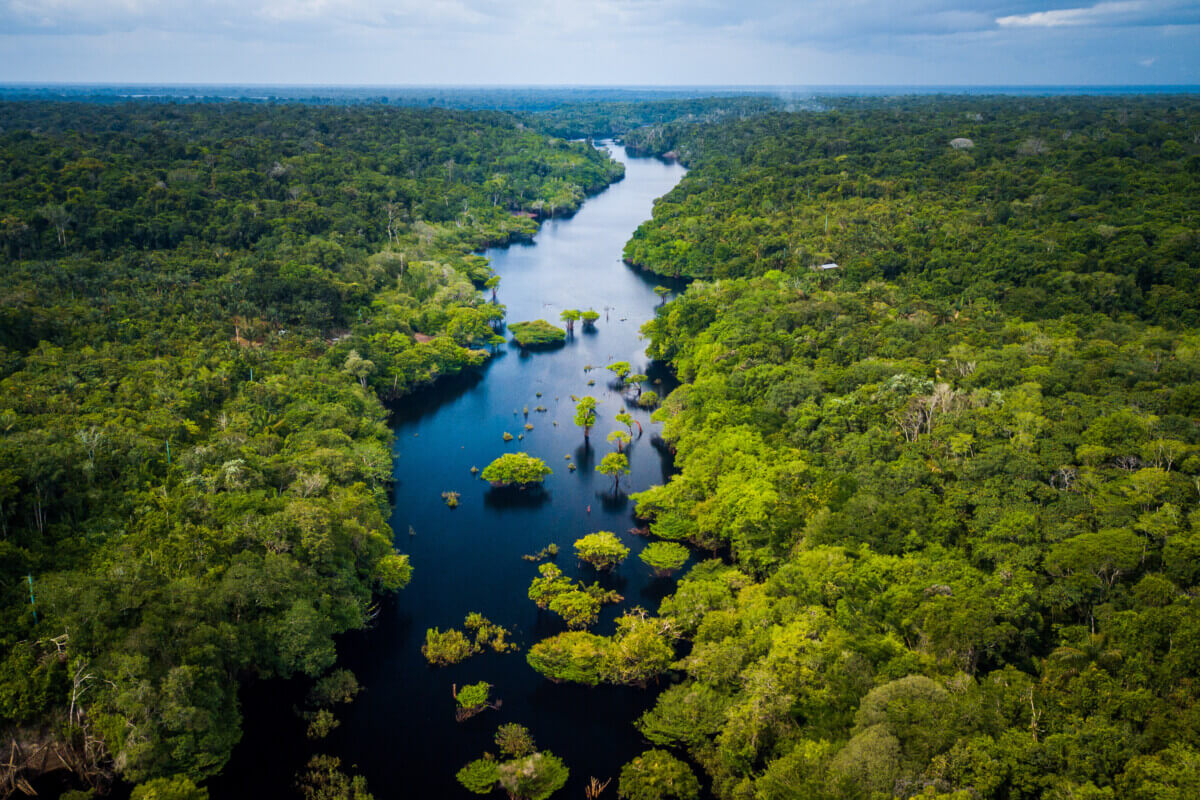
These impacts hit different regions unevenly. The Amazon region, Southeast Asia, and central Africa now face months where extreme heat is up to 30 times more likely because of emissions from the wealthy.
Drought showed similar patterns. The Amazon faces three times more extreme drought risk compared to 1990, with the top 10% of earners responsible for much of this increase.
The Rich Here Make Life Miserable There
Perhaps the most eye-opening finding concerns what researchers call “cross-border impacts”—how wealthy people in one country create climate disasters elsewhere.
Emissions from just the top 10% in the United States cause 1.3 additional once-in-a-century heat events globally during peak temperature months—23 times the global average contribution. In vulnerable areas like the Amazon and southeast Africa, emissions from just the top 10% in China or the U.S. cause approximately 2.5 to 2.7 more extreme heat events.
Even when looking at just the super-rich 1%, the impacts are measurable. In the Amazon, 0.8 additional heat extremes come just from the top 1% of Chinese emitters—representing an 80% increase in how often these events happen.
The findings certainly won’t surprise many environmental justice advocates who have argued for years that extreme wealth often means extreme climate impact
Implications for Climate Justice
The gap between those causing climate change and those suffering its worst effects creates both moral and practical problems. Places with historically low emissions and income levels typically face worse climate impacts while having fewer resources to adapt.
According to the paper, “Quantifying the link between wealth disparities and climate impacts can assist in the discourse on climate equity and justice.”
As climate disasters intensify worldwide, addressing extreme wealth inequality could be an effective climate strategy. If the richest redirected their money toward climate-friendly investments and supported vulnerable communities’ adaptation efforts, it could improve both climate outcomes and perceptions of fairness.
The takeaway is clear: climate change isn’t just about countries or industries—it’s increasingly about super-rich individuals whose lifestyle choices create heat waves and droughts in communities thousands of miles away.
Paper Summary
Methodology
Researchers combined wealth-based carbon inequality assessments with climate modeling to attribute climate extremes to specific emitter groups. They created counterfactual emission pathways by subtracting emissions from specific wealthy groups (top 10%, 1%, and 0.1% globally and in the US, EU27, India, and China) for the period 1990-2019. These pathways were converted into global mean temperature (GMT) levels using a climate model called MAGICC, then into grid-level climate variables using an Earth system model emulator (MESMER-M-TP). The researchers focused on monthly heat extremes and meteorological droughts, defined as 1-in-100-year events in pre-industrial climate. They quantified how much each wealth group contributed to the increase in frequency and intensity of these extremes compared to 1990 levels.
Results
The study found that about 65% of global warming since 1990 (0.4°C of 0.61°C) is attributable to the global top 10%, with 20% attributable to the top 1%. For extreme heat events, the wealthiest 10% contributed 7.3 times the global average to increases in monthly extreme heat probability, while the top 1% contributed 25.7 times more. Intensity of heat extremes increased by 0.83°C since 1990, with 0.55°C attributable to the top 10%. Drought impacts were most pronounced in regions like the Amazon, where the top 10% contributed 6.1 times the global average to increased drought frequency. The study also revealed transboundary effects, with the US top 10% contributing 23 times the global average to heat extremes worldwide, and China’s top 10% linked to 2.7 additional heat extremes in vulnerable regions like the Amazon.
Limitations
The research faced several key limitations. First, the researchers had to make assumptions about how CO₂, methane, and other greenhouse gas emissions are distributed across income groups since detailed data was unavailable. Second, the drought indicator only considered precipitation changes, potentially underestimating drought risks. The study also noted limitations in modeling climate effects of air pollution, particularly for regions like India and China where results showed less change than expected given observed climate disasters. Finally, all results were based on modeled data rather than observations, which may deviate from real-world conditions.
Funding and Disclosures
The study received funding from multiple European sources, including the German Federal Environmental Foundation, the European Union’s Horizon 2020 Research and Innovation Programme, Horizon Europe Programme, and the European Research Council. The authors declared no competing interests.
Publication Information
The paper titled “High-income groups disproportionately contribute to climate extremes worldwide” was authored by Sarah Schöngart, Zebedee Nicholls, Roman Hoffmann, Setu Pelz, and Carl-Friedrich Schleussner. It was published in Nature Climate Change on May 7, 2025.


