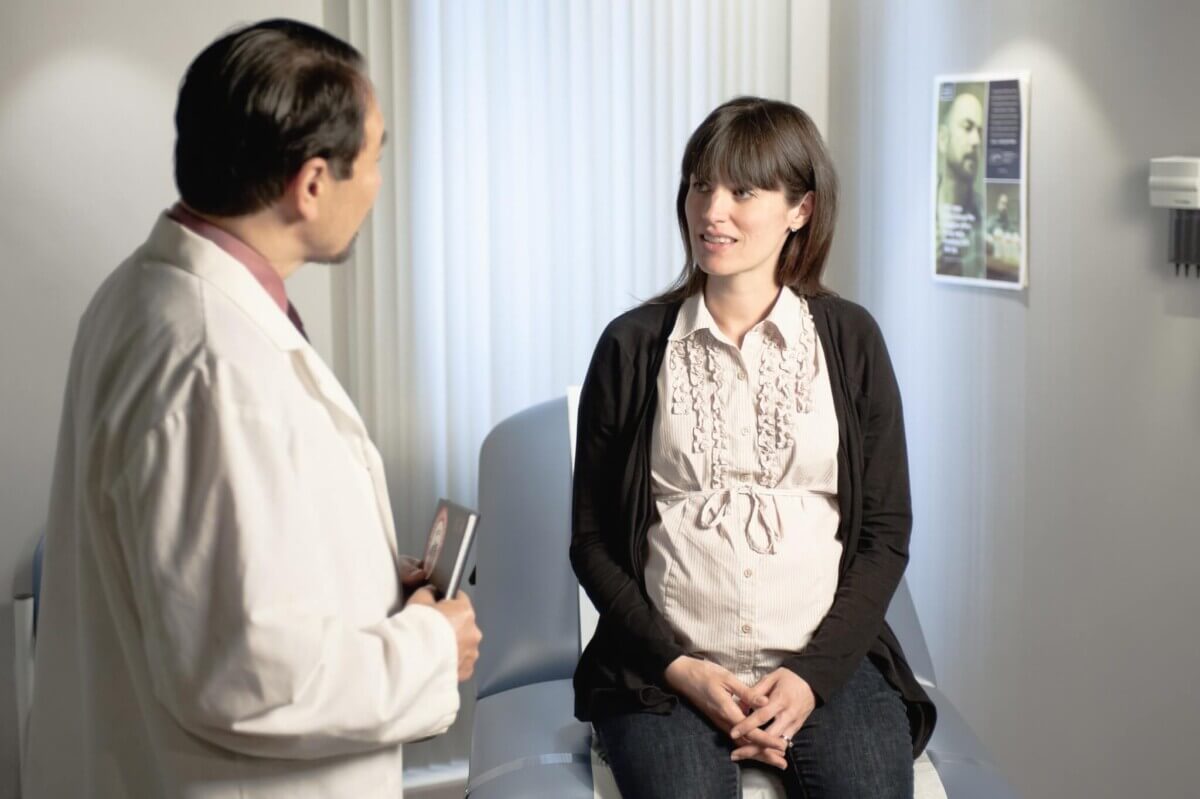
The protein complex called cohesin begins to break down as women enter their mid-30s (Photo by CDC on Unsplash)
Research indicates every woman’s molecular fertility timer begins ticking before she is born.
In A Nutshell
- Women’s eggs contain a protein complex called cohesin that holds chromosomes together, but it can’t be replaced and slowly deteriorates over decades
- After age 32, chromosome errors spike dramatically; by the mid-thirties, more than 50% of eggs contain the wrong number of chromosomes, leading to miscarriages or conditions like Down syndrome
- The breakdown causes sister chromatids to separate prematurely during egg maturation, with 87% of eggs from women over 35 showing split kinetochores compared to just 13% in younger women
- Scientists have identified potential therapeutic targets in the mTOR and ATM signaling pathways that could one day help preserve cohesin and extend fertility
From the early thirties onward, something dramatic happens to many women’s eggs. By the mid-thirties, more than half can contain the wrong number of chromosomes, an error that often stops a pregnancy before it can begin. Scientists have now traced this fertility decline to a molecular timer that begins ticking inside every egg before a woman is born.
The culprit is a ring-shaped protein complex called cohesin that acts like molecular velcro, holding chromosomes together during the delicate process of creating an egg. As women approach their mid-thirties, this protein machinery begins to fall apart. The result is a sharp spike in miscarriages, failed implantations, and babies born with chromosomal conditions like Down syndrome.
A review published in Mechanisms of Ageing and Development reveals how cohesin loss drives the age-related fertility decline affecting millions of women. The research synthesizes studies tracking chromosome behavior in thousands of human and mouse eggs, offering perhaps the clearest picture yet of why fertility drops so precipitously after age 32.
“Female fertility sharply declines from the mid-thirties of their life, mainly due to age-related decreases in oocyte quality and quantity,” write researchers from Jilin University in China. Among various factors contributing to egg quality decline, they identify weakened chromosome cohesion as “a leading cause of oocyte competence decrease.”
The Sharp Drop After 32
The numbers tell a stark story. In women between the ages of 20 and 32, roughly 20 percent of eggs have chromosome errors. But after 32, that rate begins climbing steeply. By a woman’s mid-thirties, more than 50 percent of her eggs are aneuploid, meaning they contain too many or too few chromosomes. Each additional year pushes the odds higher.
The pattern isn’t a gentle, straight-line decline. The curve steepens markedly in the mid-thirties. Researchers analyzing data from 15,169 embryos created through in vitro fertilization confirmed this pattern: aneuploidy rates remain relatively stable through the early thirties before shooting upward. The relationship between age and chromosome errors follows a U-shape, with rates also elevated in very young women but for different reasons.
The timing traces back to fetal development. Before a girl is even born, her eggs begin forming and enter a suspended state called meiotic arrest. Cohesin complexes wrap around chromosomes like rings on a chain, holding everything in place. These molecular connections must persist intact for decades until an egg is finally ovulated and has a chance at fertilization.
“Once formed, oocytes are arrested at meiotic prophase I for several decades until being employed for reproduction,” the researchers explain. Unlike nearly every other cell type, eggs cannot manufacture fresh cohesin to replace worn-out copies. The protein rings installed during fetal life are all they get.
What Happens When Molecular Velcro Wears Out
Studies comparing eggs from young and older women reveal the consequences of this biological constraint. Using high-resolution microscopy, researchers measured cohesin levels on chromosomes. Eggs from women over 40 show clearly lower cohesin levels than eggs from women in their twenties, with roughly a one-quarter to one-third drop in key cohesin proteins. In mice, the decline is even more dramatic. By 17 months of age, which is roughly equivalent to late thirties in human years, more than 95 percent of chromosome-bound cohesin has vanished.
As cohesin levels drop, eggs lose the ability to properly segregate chromosomes. During egg maturation, chromosomes must be divided precisely in two rounds of cell division, reducing the genetic material from 46 chromosomes to 23. This allows the egg to combine with sperm’s 23 chromosomes to restore the full complement of 46 in the embryo.
But when cohesin weakens, chromosomes start separating at the wrong times. Structures called kinetochores that should stick together as a single unit split apart prematurely. In eggs from young women, about 13 percent show separated kinetochores during the first division. In eggs from women over 35, that jumps to 87 percent.
Live imaging studies tracking individual human eggs reveal what happens during these failures. Sister chromatids that should remain connected until the final division split apart too early. Entire chromosomes can end up in the wrong place. Some eggs wind up with extra copies of certain chromosomes while others are missing chromosomes entirely.
“Premature separation of sister chromatids rather than homologous non-disjunction is the primary origin of aneuploidy in oocytes from aged women,” the researchers note based on genome-wide analyses.
The protective machinery meant to prevent these errors also deteriorates. A protein called shugoshin normally shields the connection between sister chromatids from being severed prematurely. But in eggs from women over 36, most chromosome pairs lack the protective bridge that shugoshin creates. Without this safeguard, chromosomes become vulnerable to separation at precisely the wrong moment.
Even the kinetochore structure itself fragments when cohesin levels drop. High-resolution imaging revealed that more than 30 percent of kinetochores in eggs from older women and mice break into multiple pieces. These fragmented kinetochores are much more likely to attach the wrong way to the spindle fibers that pull chromosomes apart, making mistakes during division far more common.

The DNA Damage Connection
DNA damage also accumulates more rapidly when cohesin declines. The protein complex helps repair DNA by holding damaged sections of chromosomes close to their undamaged sister copies, which serve as templates for repair. When this proximity is lost, repair efficiency plummets and mutations build up.
What triggers cohesin loss in the first place remains partially mysterious. The proteins themselves have an exceptionally long half-life compared to typical cellular components. Researchers estimate the half-life of chromosome-bound cohesin at roughly two months in mouse eggs. For human eggs maintaining function for 40-plus years, the timescale must be far longer.
Several factors likely conspire to eventually overwhelm cohesin’s stability. Protective proteins that normally shield cohesin from degradation decline with age. Oxidative stress from accumulated reactive oxygen species may damage the cohesin rings directly. Cellular signaling pathways that reinforce cohesin attachment weaken over time.
The mTOR pathway, which regulates cell metabolism and growth, also modulates cohesin binding to chromosomes. Recent studies in yeast showed that temporarily reducing mTOR activity promoted cohesin attachment. Whether the same approach could help preserve cohesin in aging human eggs represents a tantalizing research direction.
Another signaling pathway involving ATM, a protein that coordinates DNA damage responses, also strengthens cohesin’s grip on chromosomes. But ATM signaling becomes less efficient in eggs from older females, potentially accelerating cohesin loss when eggs need it most.
What This Means for Women Delaying Pregnancy
More women are delaying childbearing. In 1970, the average age of first-time mothers in the United States was 21. By 2022, it had climbed to 27, with many women waiting into their thirties or even forties. While these delays often reflect thoughtful choices about education, careers, and relationships, they run headlong into biological constraints.
Current options like egg freezing allow women to bank younger eggs for later use, effectively stopping the clock on cohesin deterioration. But the approach requires foresight, expense, and invasive procedures. If researchers can determine what governs cohesin’s half-life in human eggs, interventions to extend that stability might become possible.
The research also points out important limitations of mouse models commonly used to study egg aging. Human chromosomes have centromeres positioned differently than mouse chromosomes. Human egg maturation takes roughly twice as long. The cellular checkpoint that prevents premature chromosome segregation operates differently between species. These distinctions mean findings in mice don’t always translate directly to humans.
For now, the molecular basis of the fertility cliff at 32 comes into focus. Cohesin deterioration stands out as the primary driver, creating a cascade of failures in chromosome segregation. The complexity suggests that reversing age-related fertility decline will require addressing multiple factors rather than a single intervention.
Women attempting pregnancy at 40 face odds shaped by proteins installed before they were born, proteins that have been silently deteriorating for decades. The fertility cliff isn’t arbitrary—it reflects the physical limits of molecular machines asked to function far longer than evolution typically required. Understanding those limits is the first step toward potentially extending them.
Disclaimer: This article is for informational purposes only and is not intended as medical advice. Women concerned about their fertility should consult with a qualified healthcare provider or reproductive endocrinologist. The research discussed represents ongoing scientific investigation, and any potential therapeutic interventions mentioned are experimental and not currently available as clinical treatments.
Paper Notes
Methodology
This review article synthesizes research on age-related aneuploidy in mammalian oocytes, with particular focus on how chromosomal cohesin loss contributes to fertility decline. The authors analyzed data from multiple studies using immunofluorescence microscopy to measure cohesin levels, live-cell imaging to track chromosome segregation, genome-wide sequencing to detect aneuploidy patterns, and genetic manipulation experiments in mouse models.
Key methodologies examined include measuring protein levels of cohesin subunits REC8 and SMC1β on chromosomes through immunostaining, tracking individual oocytes through meiotic divisions using time-lapse microscopy, analyzing chromosome configurations and kinetochore distances using high-resolution imaging, and comparing outcomes between oocytes from young versus aged females across multiple mammalian species.
Limitations
The review acknowledges several limitations. Most mechanistic data derives from mouse models rather than human oocytes due to limited availability of human research material. Important biological differences exist between species, including chromosome structure (metacentric in humans versus telocentric in mice), maturation timing (20-30 hours in humans versus 7-11 hours in mice), baseline error rates (higher in human oocytes), and spindle assembly checkpoint strength (weaker in humans).
The molecular mechanisms causing initial cohesin loss during the dictyate arrest stage remain poorly understood. While cohesin decline correlates with increased aneuploidy, there is a temporal gap in mice where cohesin becomes undetectable at 9 months but meiotic errors don’t spike until 12 months, suggesting additional factors beyond simple cohesin depletion.
Sample sizes for human oocyte studies are often small due to ethical and practical constraints on accessing research material. Most human studies examined oocytes that failed to fertilize during IVF procedures, which may not perfectly represent the full population of oocytes. The precise half-life of cohesin in human oocytes has not been directly measured, only estimated indirectly from age-related comparisons.
Funding and Disclosures
This work was supported by the Natural Science Foundation of Jilin Province (No. YDZJ202301ZYTS429). The authors declare no competing interests.
Publication Details
Fu, L., Zhang, J., Zhang, X., Xu, Y., Zhang, F., & Zheng, L. (2026). “Causes and consequences of chromosomal cohesin loss: Novel insights for mechanisms of aging-related oocyte aneuploidy,” was published in the February 2026 edition of Mechanisms of Ageing and Development, 229, 112129. DOI:/10.1016/j.mad.2025.112129


