pixabay.com
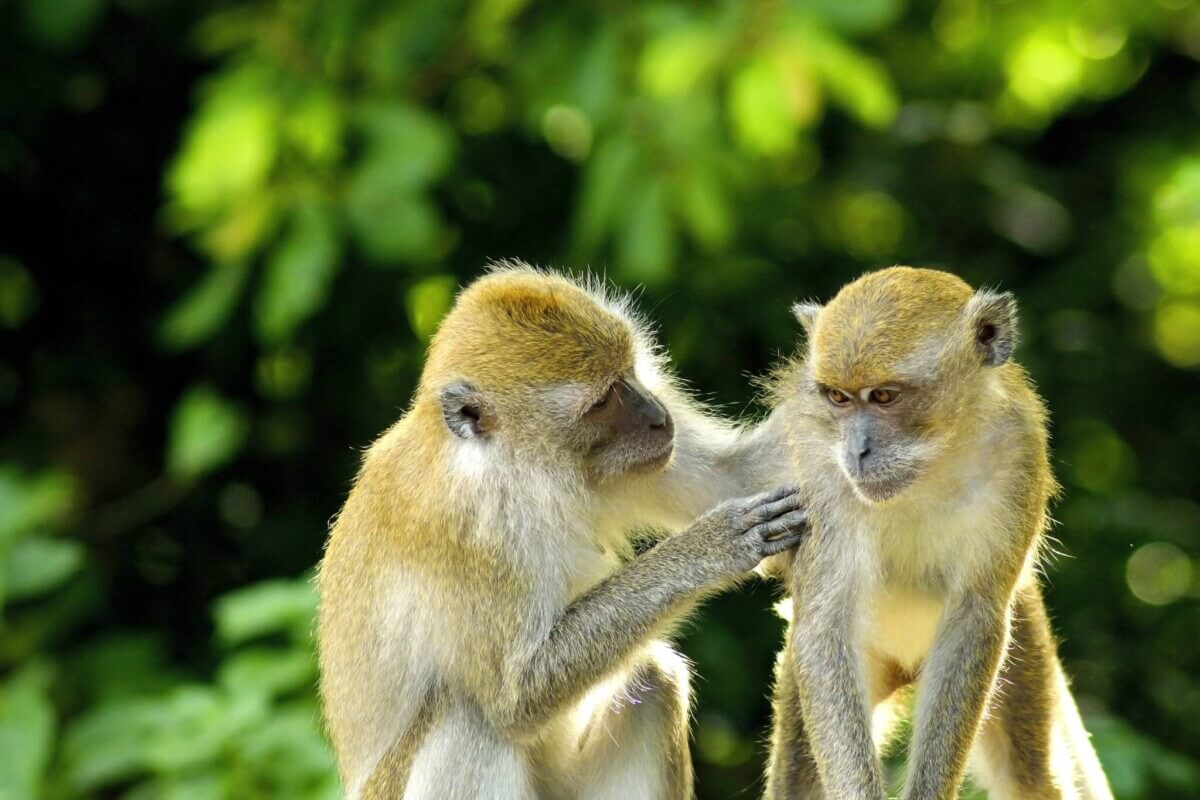
EXETER, United Kingdom — Keeping a small circle of friends helps you avoid drama, and if you’re a monkey, it keeps you from getting ill. Researchers have noticed that aging rhesus macaques are less likely to contract diseases when they are less social.
“Our findings suggest a powerful reason why many animals, including humans, might reduce their social connections as they age,” says study co-author Erin Siracusa, a researcher from the University of Exeter’s Centre for Research in Animal Behavior, in a media release.
According to the team from the universities of Exeter and Edinburgh, the study is one of the first to examine how the potential risk of disease influences social aging from an evolutionary perspective. Like humans, many animals experience social aging, a behavior in which social connections decrease as one ages.
Humans are predisposed to being social creatures — it’s why our ancestors survived when the socially reclusive Neanderthals did not. With that in mind, the researchers wondered why our mindset shifts to keeping fewer friends in old age.
In a special issue of Philosophical Transactions of the Royal Society B, the study authors used our closest human relatives to solve this social mystery. While social ties are important to the species’ survival, older adults may reduce their social connections to avoid getting sick.
Older adults have weaker immune systems and would be more prone to catching infectious diseases from others. However, the new data showed older macaques had lower infectious disease rates than younger macaques in their group.
“This cost-benefit ratio can change across individuals’ lifespans, which may drive changes in social behavior,” says Siracusa. “Older individuals may be more susceptible to diseases—but once we accounted for that in our data, we found that older macaques suffered lower infection costs than their younger counterparts.”
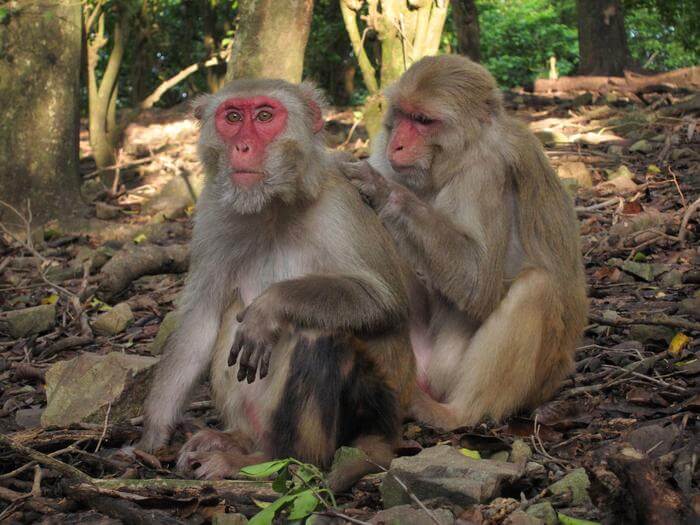
The benefits of social aging, being more selective about whom to hang out with, depended on what diseases were spreading. Social aging worked best when highly infectious diseases were being transmitted in the group, which would severely damage older macaques.
“Our results point to illness potentially helping to explain why ‘social aging’ evolves—something we are keen to test in future research,” says study co-author Matthew Silk, a researcher at the University of Edinburgh.
Although this may be one part of the answer to this complicated question, the researchers also noted that social aging may also occur because older macaques take longer to recover from wounds. The decreased healing ability would affect their socialization with other members, causing a change in their social interactions with others. This point was not examined in the study.
Paper Summary
Methodology
The researchers observed a group of adult female rhesus macaques on Cayo Santiago Island to understand how aging impacts their social interactions and infection risk. They used social network models to measure “social centrality”—a combination of the number of social partners, the time spent interacting, and the interconnectedness within the group.
By tracking how these factors changed with age, they combined this social data with epidemiological models to simulate the spread of an infectious disease. They tested if reduced social connectivity in older individuals could lower infection risk, especially under conditions that simulate age-related declines in immune function.
Key Results
The study found that older macaques, who tend to have fewer social interactions, benefit from reduced disease costs compared to younger, more social macaques. For instance, as the macaques aged, their limited interactions reduced their risk of catching an infection from the group, thus showing a “protective effect” of aging. This effect was strongest when the disease was moderately or highly contagious and particularly relevant for older animals who are more vulnerable due to weaker immune systems.
Study Limitations
The study only considered diseases spread through close contact, similar to how a cold might spread among humans. This focus means that the findings might not apply to diseases spread through other means, like contaminated food. Also, the study assumes that the risk of infection grows linearly with interaction time, but some infections might need only a short interaction to spread.
Discussion & Takeaways
The findings suggest that as primates age, reducing social interactions can be beneficial, especially when faced with contagious diseases that older individuals are more susceptible to. This pattern mirrors observations in humans, where older adults often engage in fewer social interactions to avoid exposure. The study opens doors to understanding how social behavior changes with age might be an evolutionary strategy to reduce disease risk.
Funding & Disclosures
The study was funded by the National Institutes of Health and Dr. Silk’s Royal Society University Research Fellowship. The research complied with ethical guidelines, and there were no conflicts of interest reported among the authors.


Like so many “scientific studies,” this one relies on many assumptions. A big one here is the assumption that diseases spread by contact with other people, which is something that has never been confirmed by scientific experiment. In fact, whenever researchers have tried to study how diseases are “caught,” they have been unable to even make that happen. See the Rosenau studies of the “Spanish” flu of 1918-20: https://quod.lib.umich.edu/f/flu/3750flu.0016.573/1/–experiments-upon-volunteers-to-determine-the-cause-and-mode?page=root;rgn=full+text;size=125;view=image
Trust No One .
Assume Nothing .
Accomplishing different types of goals can take a lot of time. Having a lot of friends, especially of an active and ongoing nature, introduces a lot of social demands and expectations. This can stress an individual, as ones personal needs, are pitted against the wants and desires of others, for social interaction, and contribution, in different ways.
I have less friends now I am 74 because a lot of them died already! Why is that not mentioned?
The fact that the name/nature is a singular “I AM” in all of its varieties, variants and variations called “living” suggests that the whole concept of a human is contained in his seed and nothing on the ‘outside’ can add anything (pills, potions etc. pp.; ‘other’ people are mere witnesses and/or messengers). 1st Eve erroneously gave this pseudo power to a fruit leading to the curse of her + Adam.
The Neandertals were wiped out by the supervolcanic eruption of Campi Flegrei about 40000 years ago…
Yeah but…like yesterday there was an article about how loneliness will kill you. There’s no way to win! haha
This is true – the less people in my life the better. And the quality matters, not the quantity.
Unless we’re talking boobs.
Wow! Talk about a waste of money and time this is it. The reason older people (I’m 68) have fewer friends is because so many of our friends have died ahead of us.