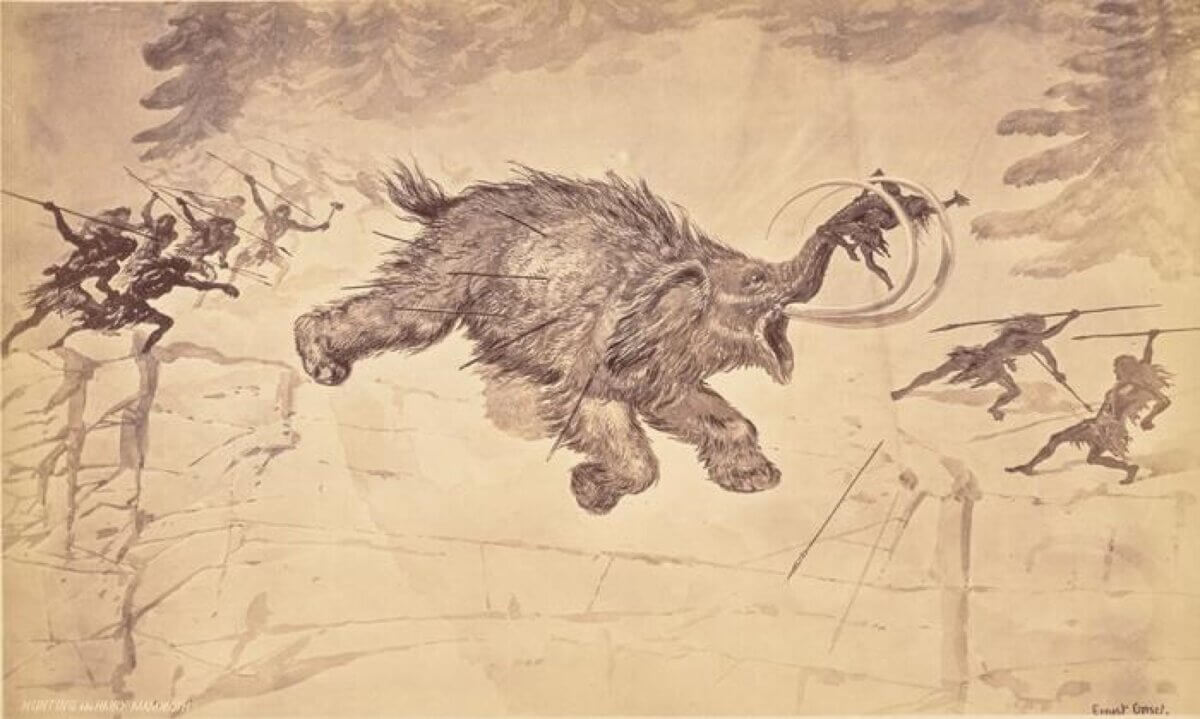
Prehistoric humans hunt a woolly mammoth. More and more research shows that this species – and at least 46 other species of megaherbivores – were driven to extinction by humans. (CREDIT: Engraving by Ernest Grise, photographed by William Henry Jackson. Courtesy Getty's Open Content Program)
HAMILTON, Ontario — In the bitter cold of Ice Age Montana some 13,000 years ago, a grieving band of early Americans buried a young child with extraordinary care, surrounding the tiny body with over 100 sophisticated stone and bone tools covered with red ochre powder. That burial site, known as Anzick, would remain untouched until its accidental discovery in 1968, preserving crucial clues about how the first peoples to colonize North America survived and thrived in a landscape teeming with prehistoric megafauna.
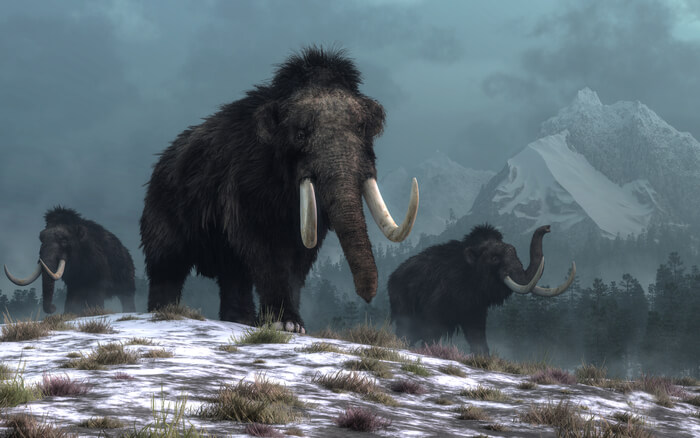
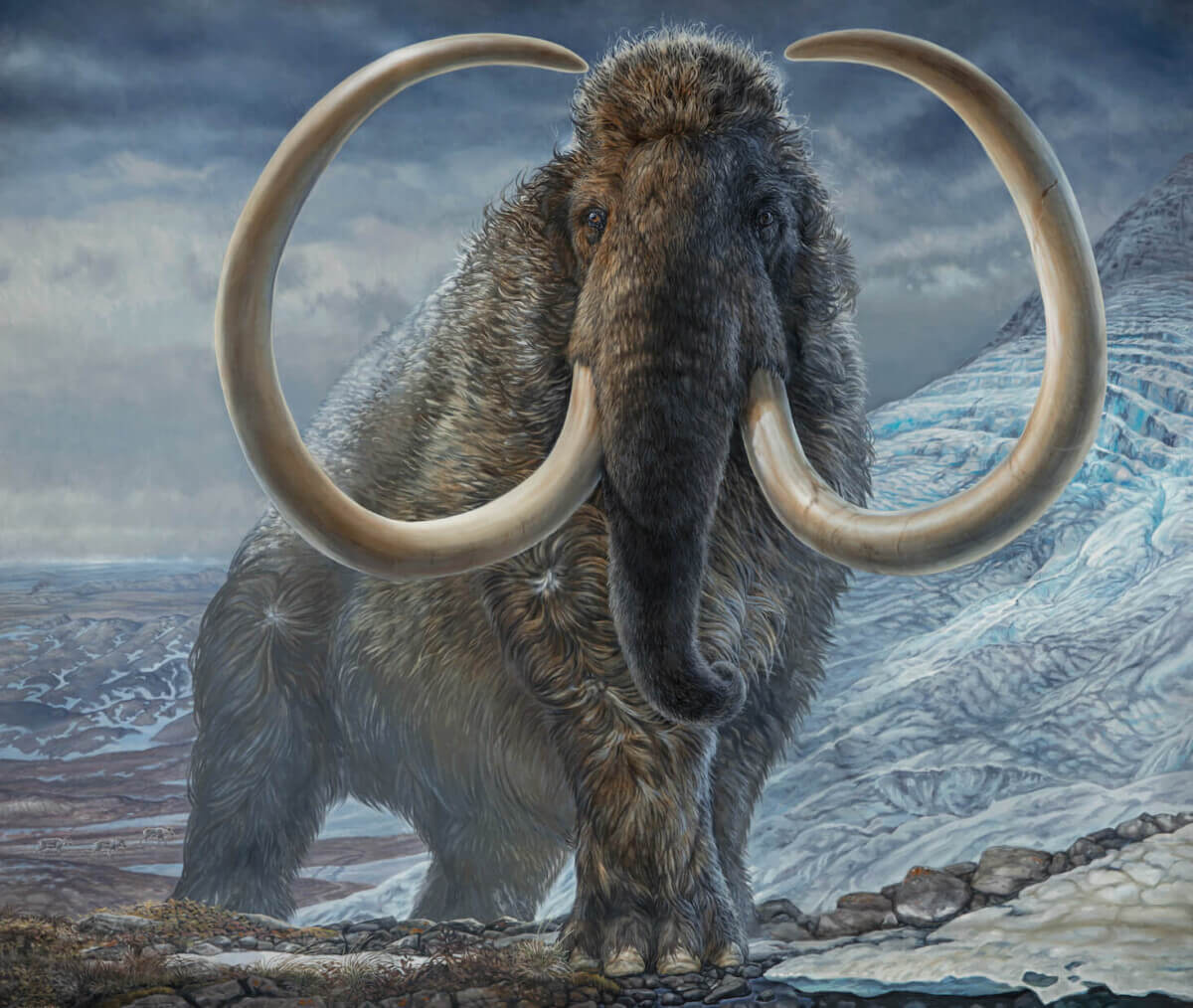
Now, new research published in Science Advances reveals surprising details about what these ancient people, known as the Clovis culture, actually ate. Before this study, archaeologists could only guess at Clovis diets by looking at indirect evidence – stone tools left behind at hunting sites or animal bones with cut marks from butchering. But by analyzing chemical signatures preserved in the bones of the Anzick child, researchers have discovered that the infant’s mother obtained much of her food from hunting mammoths — the giant, woolly relatives of modern elephants that once roamed North America.
“The focus on mammoths helps explain how Clovis people could spread throughout North America and into South America in just a few hundred years,” explains co-lead author James Chatters of McMaster University in a statement. Think of mammoths as walking grocery stores: they provided enormous amounts of meat and fat, making them an ideal food source for mobile hunting groups.
The Anzick child, only 18 months old at death, represents our only direct window into the Clovis people, the earliest widespread culture in North America south of the glacial ice sheets. Just as tree rings can tell us about ancient climate, chemical signatures in bones can reveal ancient diets. Mat Wooller, director of the Alaska Stable Isotope facility at UAF and study co-author, explains it this way: these chemical signatures provide a “fingerprint” of what someone ate, which scientists can compare to the fingerprints of potential food sources.
Study authors discovered something remarkable when they compared the mother’s dietary fingerprint to those of various Ice Age animals: her pattern most closely matched that of the scimitar-toothed cat, an extinct big cat that specialized in hunting young mammoths. Further analysis showed that mammoth meat formed the largest portion of her diet, followed by elk and bison or camel meat. Smaller animals like rabbits and marmots made up only a tiny fraction of what she ate.
“What’s striking to me is that this confirms a lot of data from other sites,” says co-lead author Ben Potter, an archaeology professor at the University of Alaska Fairbanks. “The animal parts left at Clovis sites are dominated by megafauna, and the projectile points are large, affixed to darts, which were efficient distance weapons.”
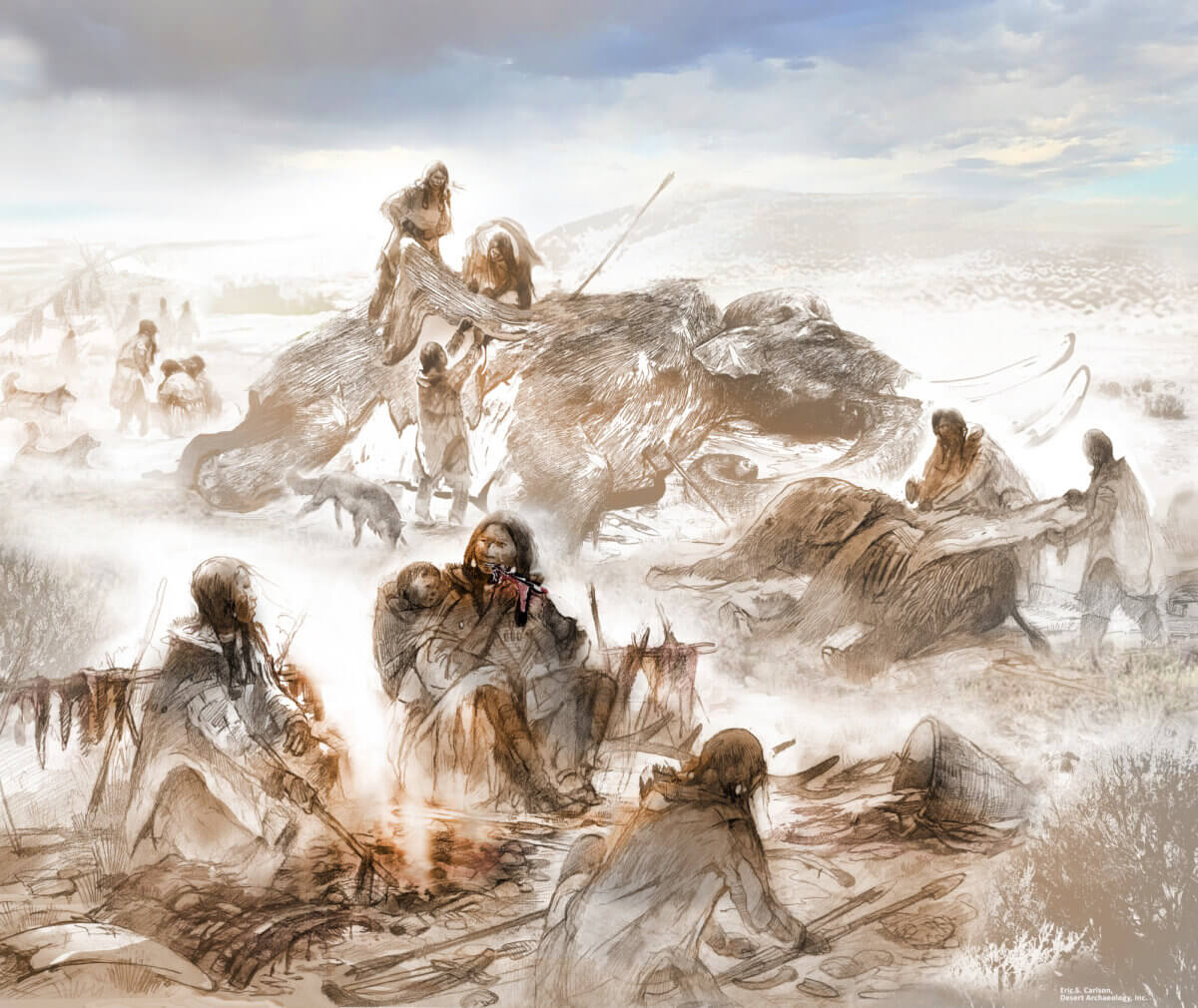
This mammoth-hunting lifestyle offered a crucial advantage: flexibility. Unlike smaller game animals, which might be abundant in one area but scarce in another, mammoths roamed across vast territories. By following these herds, Clovis hunters could move into new areas without having to learn the patterns of local prey. As Potter notes, “They were highly mobile. They transported resources like toolstone over hundreds of miles.”
However, this hunting prowess may have come at a cost. During this period, many of North America’s largest animals were already struggling with environmental changes as the Ice Age drew to a close. “You had the combination of a highly sophisticated hunting culture — with skills honed over 10,000 years in Eurasia — meeting naïve populations of megafauna under environmental stress,” explains Chatters. In other words, these ancient hunters may have delivered the final blow to already vulnerable species.
The changing climate would eventually reshape the continent’s ecology entirely. As temperatures warmed and glaciers retreated, many Ice Age animals, including mammoths, went extinct. The Clovis people would have needed to adapt their hunting strategies or face extinction themselves. Those who survived likely shifted their focus to animals like bison, which would remain abundant on North American grasslands for thousands of years to come.
Importantly, this research was conducted with deep respect for Native American heritage. The researchers worked closely with tribal representatives throughout Montana, Wyoming and Idaho, consulting through Shane Doyle, executive director of Yellowstone Peoples. As Doyle notes, “This study reshapes our understanding of how Indigenous people across America thrived by hunting one of the most dangerous and dominant animals of the day, the mammoth.“
The story of the Anzick child and its mother provides a remarkable window into life during the Ice Age. These early Americans weren’t just surviving – they were thriving, using their hunting skills and knowledge to tackle the biggest game animals ever to walk North America. While their way of life eventually disappeared along with the mammoths they hunted, their legacy lives on in the bones they left behind, telling us the story of how humans first spread across a new continent.
Paper Summary
Methodology
The researchers started with previously published chemical data from the Anzick infant’s bones. Since the child was only 18 months old and still nursing, they had to mathematically adjust the values to account for the effects of mother’s milk to figure out what the mother was actually eating. Then they compared these adjusted values to similar chemical signatures from the bones of various Ice Age animals from the same region and time period. Think of it like comparing fingerprints – each type of food leaves its own chemical signature, and by matching these signatures, researchers could determine what the mother was eating.
Results
The analysis showed that mammoth meat was the single largest component of the mother’s diet, followed by elk and bison/camel meat. The chemical pattern of her diet looked remarkably similar to that of the scimitar-toothed cat, a big cat known to specialize in hunting young mammoths. Small mammals like rabbits and marmots made up only a tiny portion of her diet.
Limitations
The study has some important limitations. It’s based on just one person – the mother of the Anzick child – who might not represent all Clovis people. Also, while the chemical signatures can tell us about protein sources (meat), they can’t tell us much about other foods like fruits and berries that these people might have eaten. Some potential food sources, like ground sloths, couldn’t be included because no suitable bone samples were available.
Key Takeaways
This research provides the first direct evidence that Clovis people were specialized big-game hunters rather than generalists who ate whatever they could find. Their focus on hunting mammoths and other large animals aligns with other archaeological evidence, including their sophisticated hunting tools and highly mobile lifestyle. This strategy would have allowed them to spread rapidly across the Americas, though it may have contributed to the extinction of some Ice Age animals.
Funding & Disclosures
The study was partially funded by the National Science Foundation, with additional support from various laboratories and institutions. Importantly, the research was conducted in consultation with Native American tribes from the region, and no new analysis was performed on the Anzick remains, which have been reburied.


