
Many fitness trackers are designed without consideration for different body types. (AYO Production/Shutterstock)
In a nutshell
- Most commercial fitness trackers provide inaccurate calorie burn estimates for people with obesity, due to differences in body shape, movement, and gait that these devices weren’t designed to account for.
- Researchers at Northwestern University developed a new algorithm specifically for wrist-worn smartwatches that dramatically improves energy expenditure accuracy in people with obesity, outperforming nearly all existing methods.
- The new model opens the door to more inclusive health tech, potentially enabling smartwatches to better monitor not just physical activity, but also eating and other health-related behaviors.
CHICAGO — Fitness trackers promise to monitor daily energy expenditure and help guide health decisions, but they’ve consistently failed to provide accurate readings for people carrying extra weight. Hip-worn devices get thrown off by different walking patterns, and wrist-worn trackers haven’t been properly tested for people with obesity. Until now, people with obesity have been making health decisions based on fundamentally flawed data.
Researchers at Northwestern University have created the first algorithm specifically designed to give people with obesity accurate energy expenditure readings from commercial smartwatches. Their work, published in Scientific Reports, could finally put reliable fitness tracking within reach for this underserved population.
The research was born from a deeply personal moment. Lead researcher Nabil Alshurafa got the inspiration for the algorithm after going to an exercise class with his mother-in-law, who has obesity.
“She worked harder than anyone else, yet when we glanced at the leaderboard, her numbers barely registered,” says Northwestern University researcher Alshurafa, in a statement. “That moment hit me: fitness shouldn’t feel like a trap for the people who need it most.”
Why Your Tracker Fails You
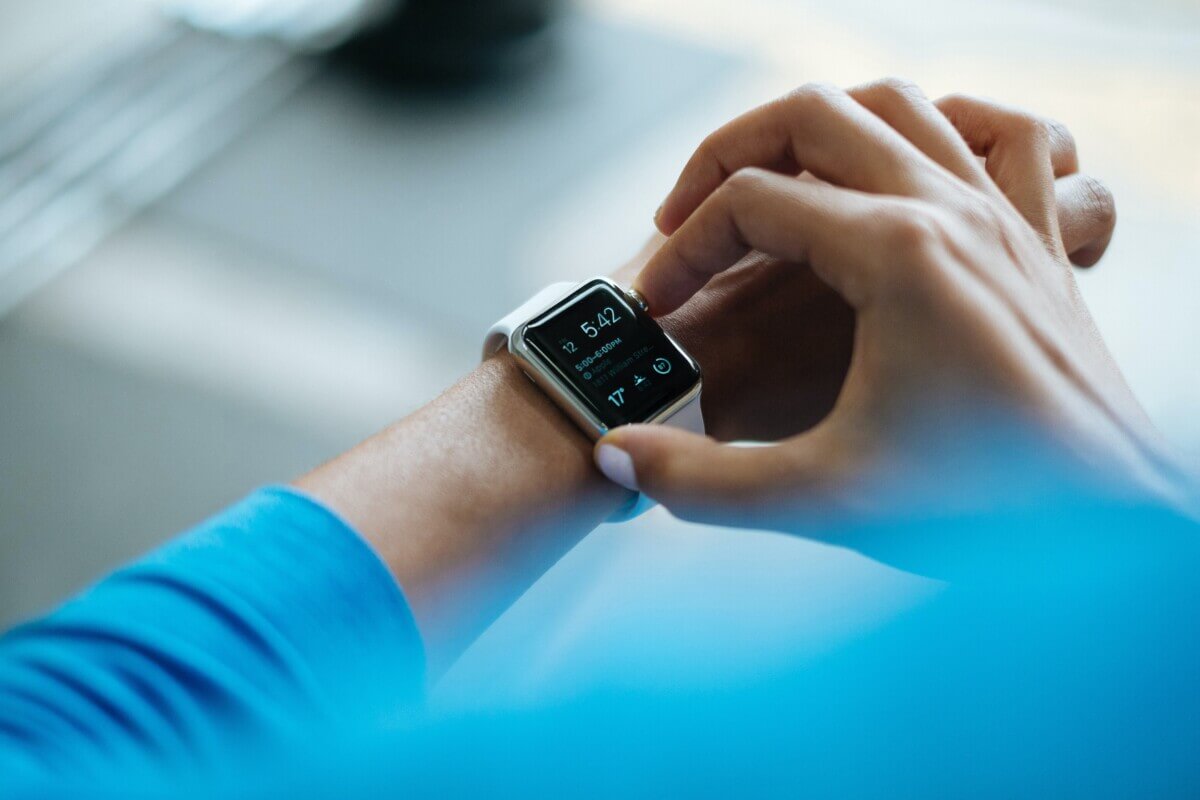
Fitness trackers were designed with “average” bodies in mind. For people with obesity, everything changes. Walking patterns shift, preferred speeds differ, and body composition affects how devices sit and function. Due to body composition differences, hip-worn devices can tilt at different angles, leading to inconsistent and unreliable measurements.
Wrist-worn devices seemed like the obvious solution. They’re more comfortable, people actually wear them consistently, and they’re less affected by body composition variations. But until this study, nobody had properly validated wrist-based energy expenditure algorithms specifically for people with obesity.
The researchers noted that existing commercial wrist-mounted device companies have developed algorithms to determine calorie expenditure, but these algorithms remain proprietary and lack transparency in their validation, leaving a critical gap for people with obesity.
Northwestern’s team recruited 52 participants, all with BMIs of 30 or higher. The average BMI was around 36, and participants ranged from their early 40s to mid-50s.
In the lab portion, 27 people wore both a commercial Fossil Sport smartwatch and a research-grade ActiGraph device while performing everything from computer work to vigorous aerobics. Researchers also hooked participants up to a metabolic cart, the ultimate truth detector for measuring actual energy expenditure through breath analysis.
Another 25 participants took the devices home for two days of real-world testing. Researchers used wearable cameras to visually confirm what people were actually doing, ensuring their algorithm matched reality rather than just other estimates.
A Smarter Two-Step Process
Most existing algorithms try to estimate energy expenditure directly from movement data. Northwestern’s team took a different approach, creating a two-step process specifically designed for wrist-worn devices.
First, the system determines whether someone is doing sedentary activities (sitting, reading, typing) or non-sedentary activities (walking, exercising, moving around). For sedentary activities, the algorithm assigns a standard resting value.
For non-sedentary activities, it applies a more sophisticated model that considers not just movement patterns from the smartwatch sensors, but also personal factors like age, sex, weight, height, and BMI.

When tested against the metabolic cart in the lab, the new algorithm achieved much better accuracy than existing methods. It outperformed six out of seven established algorithms, including several designed for hip-worn devices that supposedly provide more accurate readings.
In real-world testing, the algorithm’s estimates fell within acceptable ranges 95% of the time when compared to the best existing methods. Among algorithms tested at the same time window, Northwestern’s approach consistently delivered the lowest error rates.
Statistical analysis confirmed these represented significant improvements in accuracy compared to existing methods.
Algorithm Struggles
No system is perfect, and Northwestern’s algorithm is no exception. It tends to underestimate energy expenditure when the dominant hand stays relatively still compared to the rest of the body. This could happen, for example, when holding a phone against your ear while walking.
On the other hand, it overestimates when the dominant hand moves more than the rest of the body, like scrolling through social media while sitting still or gesturing during a phone conversation.
Walking while talking on the phone led to underestimation more often than overestimation. Sitting activities showed varied results depending on hand movement; passive activities like watching TV led to underestimation, while active phone use led to overestimation.
However, since the algorithm works with smartwatches worn on the dominant hand, it could potentially integrate with other health monitoring applications that track eating, drinking, or smoking behaviors—all activities primarily performed with the dominant hand.
A health monitoring system like this could track both calories consumed and calories burned using the same device. For people managing their weight or monitoring their overall health, having reliable data on both sides of the energy equation could be transformative.
Making Tech More Inclusive
This is a step toward making fitness technology actually useful for people across different body types. Currently, people with obesity may be making health decisions based on flawed data from their fitness trackers.
During the study, Alshurafa would challenge participants to do as many pushups as they could in five minutes. The experience opened his eyes to broader inequities in how we measure fitness and exercise success.
“Many couldn’t drop to the floor, but each one crushed wall push-ups, their arms shaking with effort,” says Alshurafa. “We celebrate ‘standard’ workouts as the ultimate test, but those standards leave out so many people. These experiences showed me we must rethink how gyms, trackers, and exercise programs measure success — so no one’s hard work goes unseen.”
If someone is trying to lose weight, increase activity levels, or simply understand their daily energy expenditure, inaccurate data leads to poor outcomes. When fitness trackers only work accurately for certain body types, they’re failing a significant portion of their users.
Paper Summary
Methodology
Researchers recruited 52 participants with obesity (BMI ≥30) for two separate studies. In the laboratory study, 27 participants wore a Fossil Sport smartwatch and ActiGraph device while performing 12 activities of varying intensities for 5 minutes each, with actual energy expenditure measured using a metabolic cart. A separate free-living study involved 25 participants wearing devices for 2 days during normal activities, with wearable cameras providing visual confirmation of behaviors. The team developed a machine learning algorithm using a two-step process: classifying activities as sedentary or non-sedentary, then applying regression models to estimate metabolic equivalent (MET) values based on smartwatch sensor data and demographic information.
Results
The algorithm achieved a root mean square error of 0.281 METs when tested against metabolic cart measurements, outperforming most existing algorithms designed for hip-worn devices. In real-world testing, estimates were within acceptable ranges for 95.03% of minutes compared to established actigraphy-based estimates. The algorithm performed optimally with a 60-second analysis window and showed consistent performance across different activity intensities. Statistical analysis confirmed significantly better performance compared to most existing research-grade algorithms, with effect sizes ranging from moderate to large.
Limitations
The study focused exclusively on people with obesity, so performance in other populations remains unknown. Free-living validation relied on comparison to other algorithms rather than direct metabolic measurements. The algorithm struggles with activities where wrist movement doesn’t reflect overall body activity, such as holding phones steady while walking or scrolling while sitting. The study population was relatively small and conducted in controlled settings, which may not fully represent real-world diversity.
Funding and Disclosures
Research was supported by multiple National Institutes of Health grants, including awards from the National Institute of Diabetes and Digestive and Kidney Diseases, National Science Foundation, National Institute of Biomedical Imaging and Bioengineering, and National Center for Advancing Translational Sciences. The authors declared no competing interests.
Publication Information
The paper “Developing and comparing a new BMI inclusive energy expenditure algorithm on wrist-worn wearables” is authored by Wei, B., Romano, C., Pedram, M., Nolan, B., Morelli, W.A. & Alshurafa, N. It was published in Scientific Reports (15, 20060) on June 19, 2025. The study was approved by Northwestern University’s Institutional Review Board and conducted according to the Declaration of Helsinki.


