
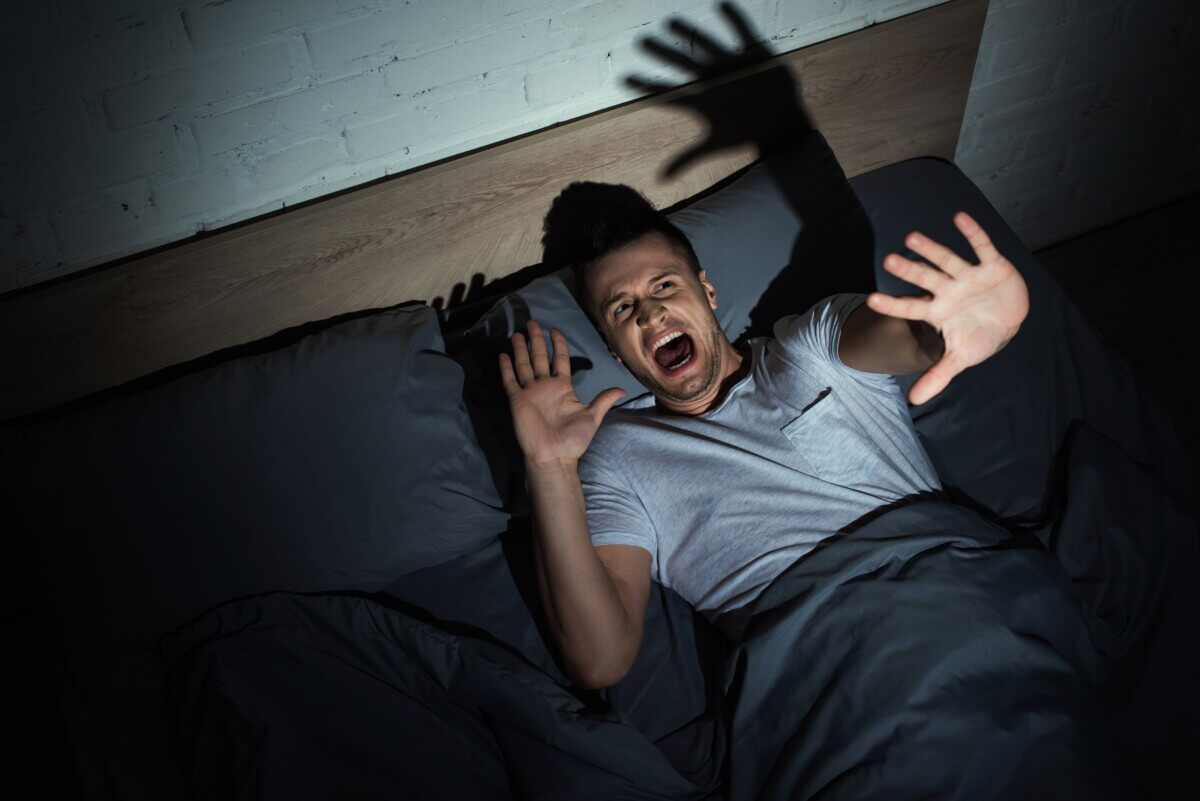
(Photo by LightField Studios on Shutterstock)
CORVALLIS, Ore. — Feeling lonely may do more than just dampen your mood – it could also be disrupting your sleep in frightening ways. A new study finds that people who experience more loneliness tend to have more frequent and intense nightmares.
Researchers from several U.S. universities examined the connection between loneliness and nightmares in two separate studies involving over 1,600 participants. Their findings, published in The Journal of Psychology, reveal that loneliness is a significant predictor of both how often people have nightmares and how disturbing those nightmares are.
About 18% of people report experiencing nightmares regularly. For some, nightmares can be so severe and frequent that they qualify as a clinical sleep disorder.
The researchers were interested in exploring potential reasons why loneliness might lead to more nightmares. They drew on a theory called the evolutionary theory of loneliness, which proposes that feelings of loneliness evolved as a kind of alert system to warn us when our social connections are lacking. Just as physical pain motivates us to address injuries, the psychological pain of loneliness may motivate us to seek out social bonds essential for survival.

“Interpersonal relationships are very much a core human need,” explains Colin Hesse, director of the School of Communication at Oregon State University, in a statement. “When people’s need for strong relationships goes unmet, they suffer physically, mentally and socially. Just like hunger or fatigue means you haven’t gotten enough calories or sleep, loneliness has evolved to alert individuals when their needs for interpersonal connection are going unfulfilled.”
What’s the link between loneliness and bad dreams?
The study, which surveyed over 1,600 U.S. adults aged 18 to 81, found that lonelier individuals reported more frequent and disturbing nightmares. But what’s driving this nocturnal torment? The researchers identified three key factors: stress, rumination (persistent worrying), and hyperarousal (a state of heightened alertness).
Indeed, the study found that both hyperarousal and rumination helped explain the connection between loneliness and nightmares. Lonely individuals tended to experience more of these mental states, which in turn were associated with more frequent and intense nightmares.
Interestingly, while stress was found to play a role in the first study, it did not emerge as a significant factor when examined alongside hyperarousal and rumination in the second study. The researchers suggest this could mean that hyperarousal and rumination may be more specific manifestations of stress that are particularly relevant to nightmare experiences.
These mental states, all associated with loneliness, appear to be the bridges connecting our waking isolation to our dream world distress. It’s as if loneliness sets off an internal alarm system, keeping our minds on high alert even as we sleep – a vigilance that manifests in vivid, often frightening dreams.
Is your body alerting you to an unmet need?
The implications of this research extend far beyond restless nights. Both loneliness and sleep disorders are serious public health concerns, linked to increased risks of heart disease, stroke, and premature death. The U.S. Surgeon General reports that even before the COVID-19 pandemic, about half of American adults experienced measurable levels of loneliness. The health risks associated with lacking social connection are staggering – comparable to smoking in terms of raising the risk of early death.
This study offers a new perspective on nightmares, framing them not just as products of individual trauma or anxiety, but as potential evolutionary responses to social isolation. It’s a reminder that our need for human connection isn’t just a matter of emotional fulfillment – it’s integral to our physical and mental wellbeing, influencing us even in our most vulnerable state of unconsciousness.
While it’s too early to prescribe specific interventions, the research opens up intriguing possibilities. Could treating loneliness be a key to quieting the demons that haunt our dreams? As we navigate an increasingly digital and often isolating world, understanding the deep-rooted impacts of loneliness becomes ever more crucial.
So the next time you find yourself tossing and turning after a particularly vivid nightmare, consider reaching out to a friend, joining a community group, or simply engaging in more meaningful social interactions. Your dreams – and your health – may thank you for it.
Paper Summary
Methodology
The researchers conducted two separate studies involving over 1,600 U.S. adults. Participants completed established questionnaires measuring loneliness, nightmare frequency and intensity, stress, rumination, and hyperarousal. Statistical analyses were then performed to examine the relationships between these variables.
Results
The study found significant associations between loneliness and both the frequency and intensity of nightmares. Stress, rumination, and hyperarousal were identified as factors mediating this relationship, helping to explain how loneliness might lead to more disturbing dreams.
Limitations
As Hesse emphasizes, the study demonstrates a correlative rather than causative relationship between loneliness and nightmares. The research relied on self-reported data and was limited to U.S. adults, which may affect its generalizability to other populations.
Discussion and Takeaways
This research provides new insights into the far-reaching impacts of loneliness on wellbeing, extending its effects into our sleep and dreams. It supports key aspects of the evolutionary theory of loneliness and suggests potential avenues for addressing sleep disturbances in lonely individuals. The findings underscore the critical importance of social connections for both mental and physical health.
Funding and Disclosures
The research was supported by the Flora Family Fund at Whitworth University. No conflicts of interest were disclosed by the researchers.


