
(Credit: Schulting et al. Antiquity, December 2024)
OXFORD, England — Deep beneath the peaceful Somerset countryside lies evidence of one of British prehistory’s darkest chapters – a mass killing that forces us to reconsider everything we thought we knew about violence in ancient societies. At Charterhouse Warren, archaeologists have meticulously documented the remains of at least 37 individuals – men, women, and children – who met a brutal end between 2210 and 2010 BCE. The systematic nature of their deaths and the ritual treatment of their bodies present unprecedented evidence of organized violence in prehistoric Britain, challenging long-held assumptions about early human society.
The discovery is particularly significant because, while hundreds of human skeletons have been found in Britain dating to between 2500-1500 BCE, direct evidence for violent conflict during this period is surprisingly rare. Most Bronze Age burials from this time show careful, ritualized treatment of the dead. The Charterhouse Warren remains tell a very different story.
“We actually find more evidence for injuries to skeletons dating to the Neolithic period in Britain than the Early Bronze Age, so Charterhouse Warren stands out as something very unusual,” explains lead researcher Professor Rick Schulting, from the University of Oxford, in a statement. “It paints a considerably darker picture of the period than many would have expected.”
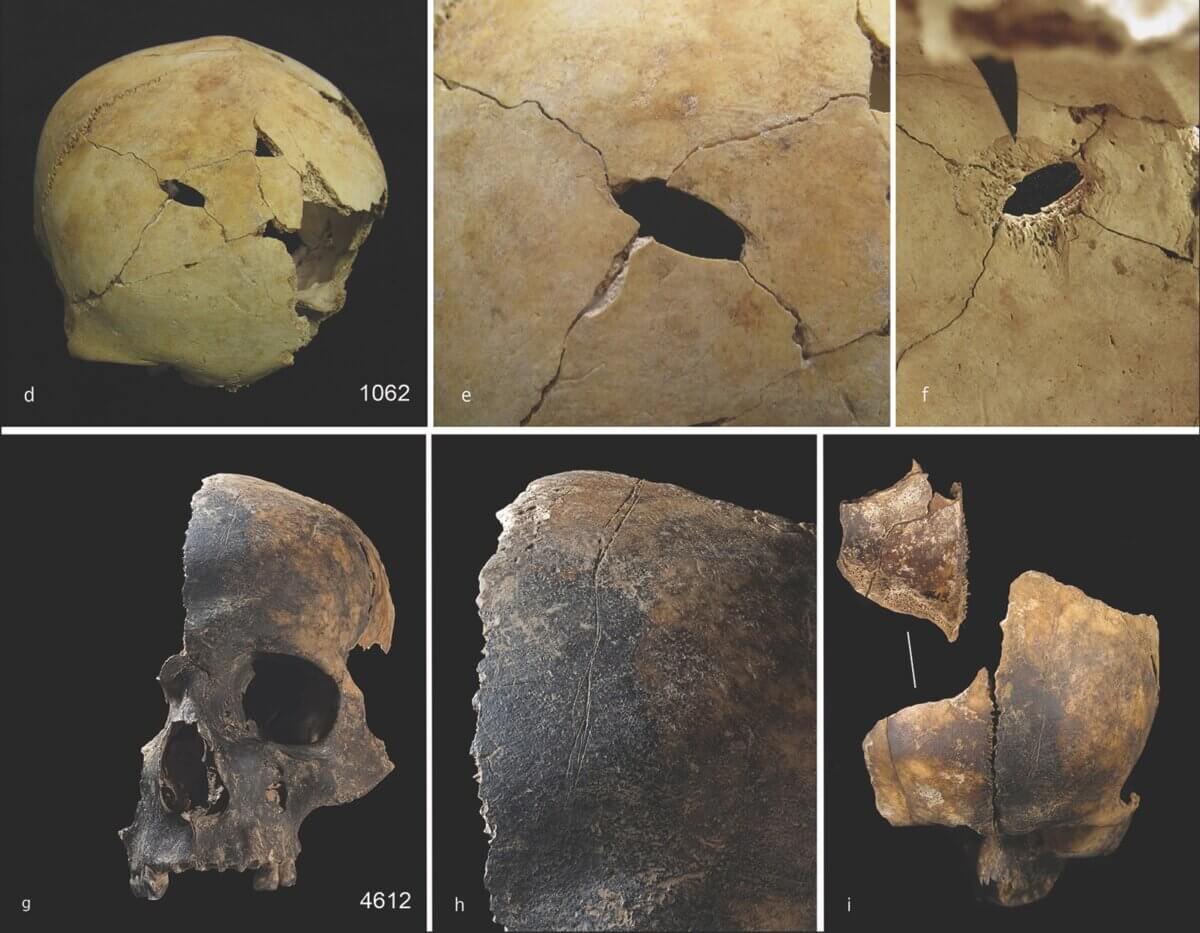
The study, published in Antiquity, suggests the victims had little chance to defend themselves. Unlike other known cases of Bronze Age violence – such as the well-documented example of a young adult male found in Stonehenge’s ditch with multiple arrow wounds – there are no signs of arrow injuries or defensive wounds at Charterhouse Warren. Instead, the remains show evidence of blunt force trauma to the head, with 45% of identifiable skull fragments showing signs of perimortem (around time of death) fracturing.
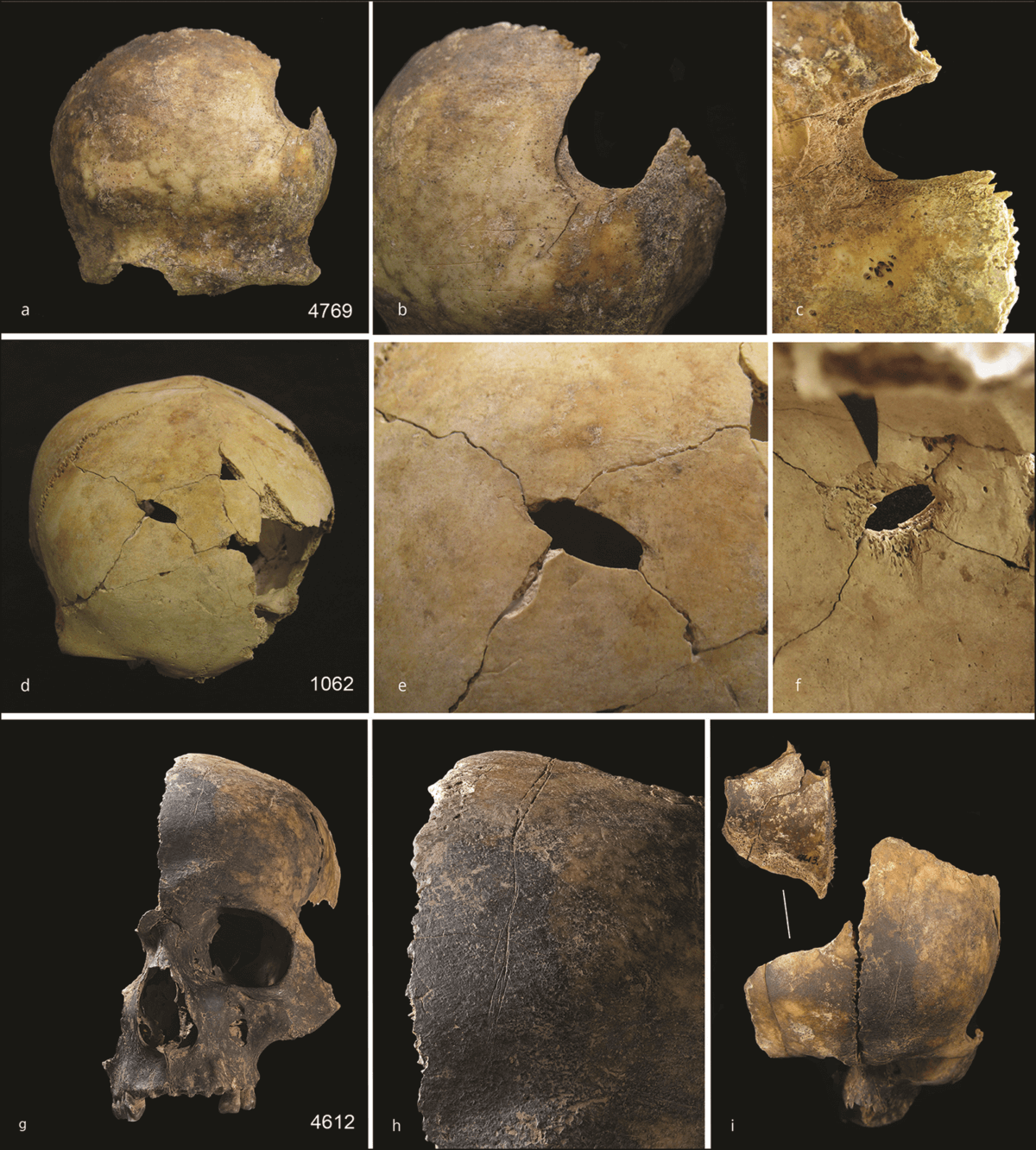
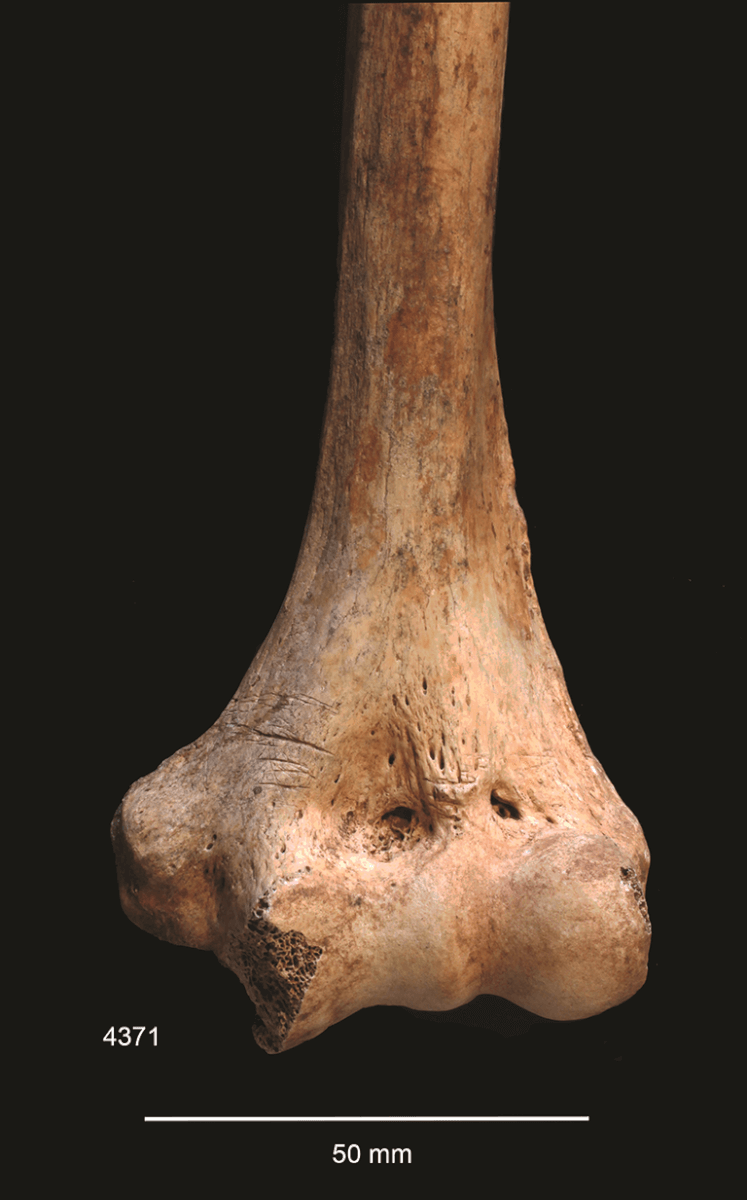
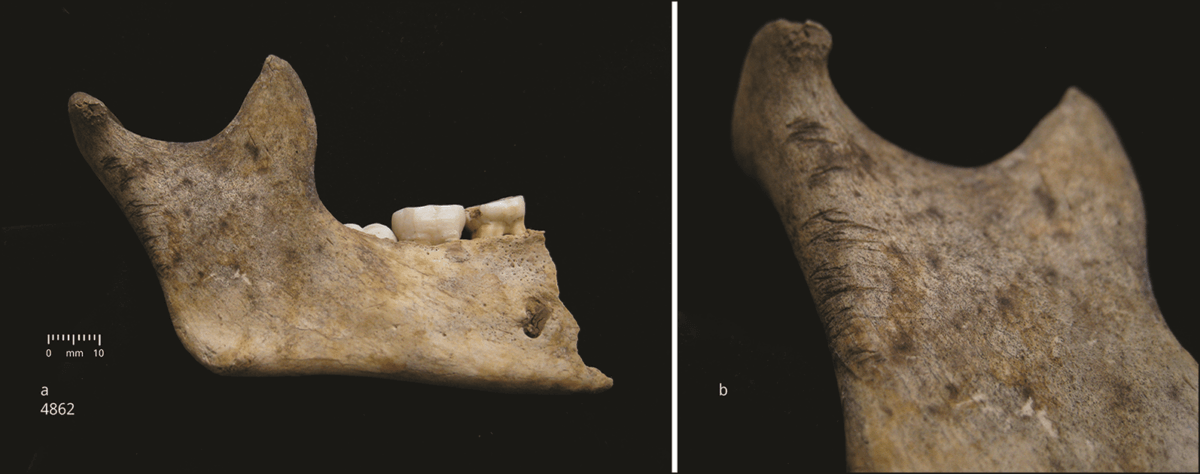
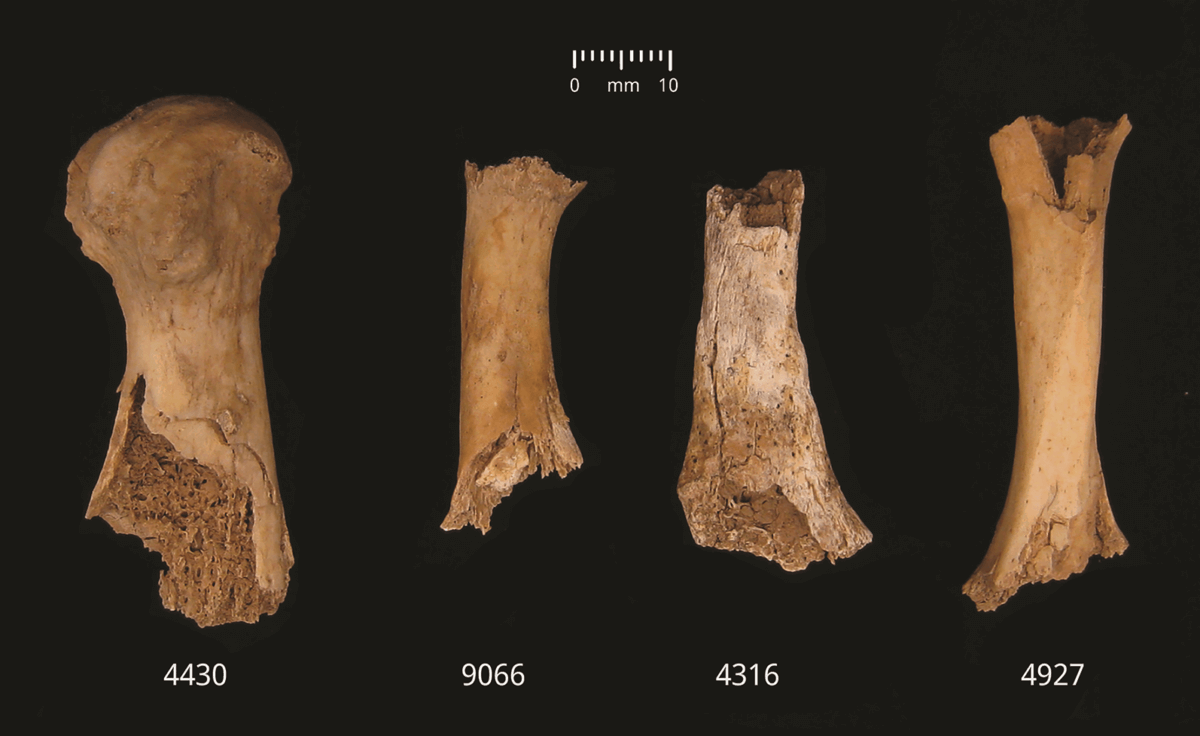
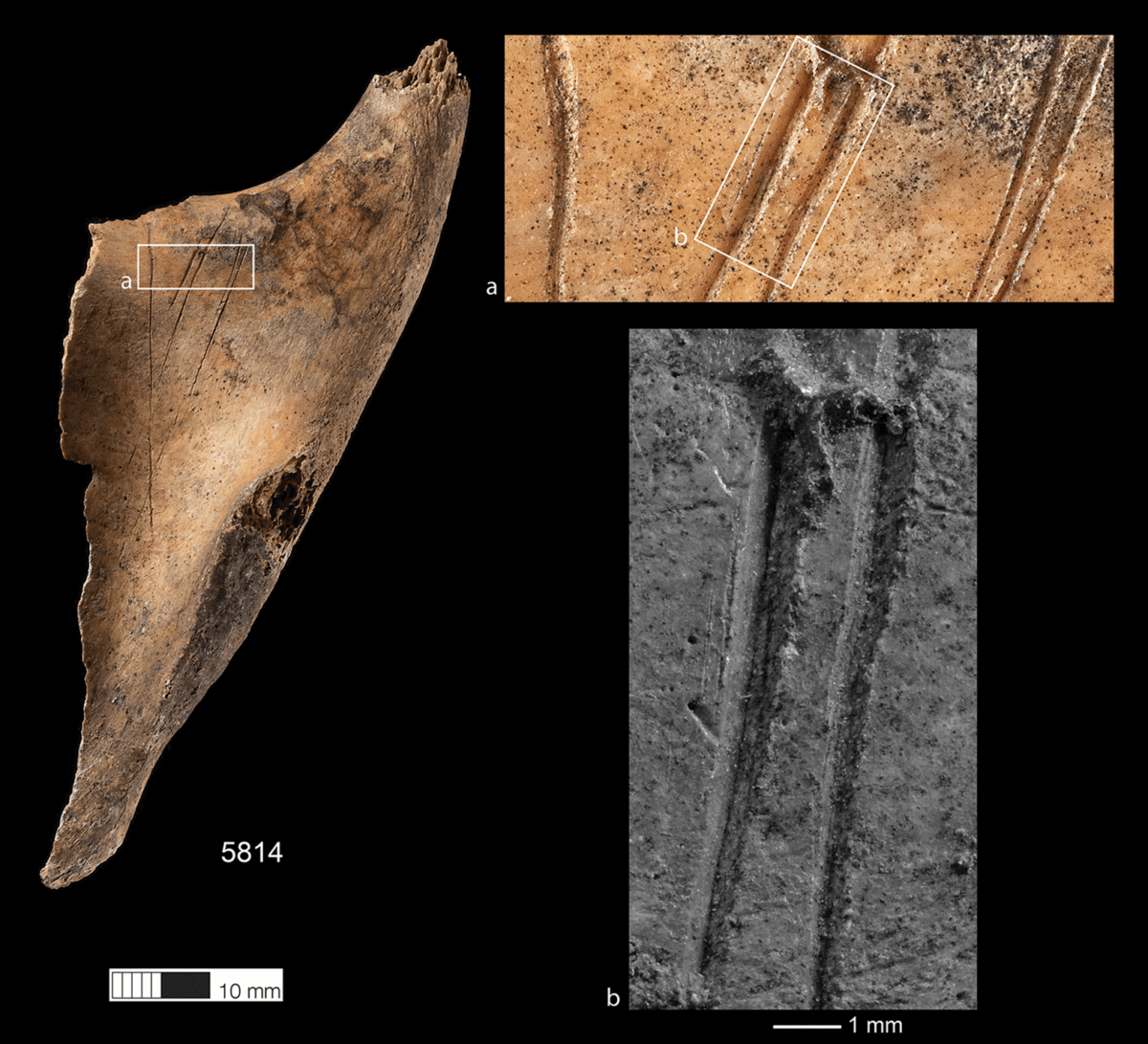
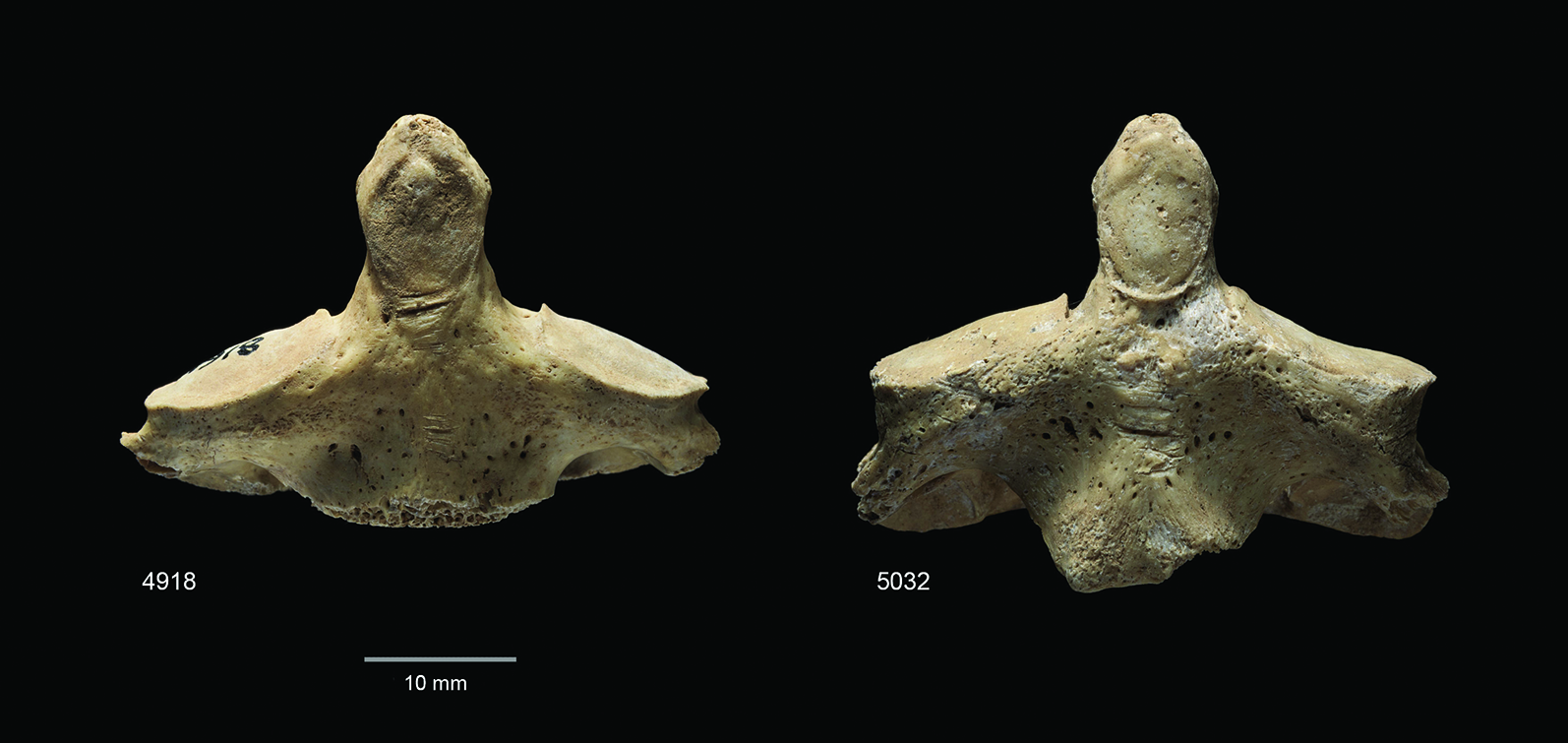
But it’s what happened after death that has particularly shocked researchers. Of the more than 3,000 human bones recovered, 20 percent show systematic cut marks indicating methodical dismemberment. The precision of these cuts tells its own story – this wasn’t random mutilation but rather a deliberate process. Skulls show evidence of scalping, jaws were systematically removed, and tongues appear to have been cut out. Even more disturbingly, some small bones of hands and feet show crushing patterns consistent with human bite marks.
The demographic profile of the victims suggests this was the systematic elimination of a community. Nearly half were older children and adolescents, an unusually high proportion that points to the intentional targeting of an entire population group rather than natural mortality. Among the victims were two children whose teeth contained genetic evidence of the plague bacterium Yersinia pestis, a finding that adds another layer of complexity to the story.
“The finding of evidence of the plague in previous research by colleagues from The Francis Crick Institute was completely unexpected,” says Professor Schulting. “We’re still unsure whether, and if so how, this is related to the violence at the site.”
The remains were found mixed with abundant cattle bones in a 15-meter-deep natural shaft in the limestone plateau of the Mendip Hills. This commingling of human and animal remains appears deliberate, and researchers suggest it may represent an attempt to dehumanize the victims by treating their bodies like animal carcasses. Importantly, the presence of cattle bones indicates the community had access to adequate food resources, ruling out starvation as a motive for any cannibalistic practices.
What could have driven people to commit such an act? The researchers considered several possibilities. Climate change was one candidate – the killings occurred during what’s known as the 4.2ka climate event, a period of cooling and drying across the northern hemisphere. However, evidence suggests this had limited impact in Britain, where the effect was actually increased rainfall rather than drought.
Resource competition seems unlikely – while the Mendip Hills would later become important for lead mining in Roman times, they held no significant mineral resources in the Bronze Age that would have been worth fighting over. The land itself, while good for grazing, was not so exceptional as to provoke this level of violence.
Ethnic conflict was another possibility the team considered. This period saw significant population movements across Britain, but genetic evidence suggests the victims were local rather than outsiders, and there’s no evidence for the co-existence of distinct populations that might have come into conflict.
Instead, the researchers suggest this may have been an act of political violence – perhaps revenge or retaliation for some perceived transgression. The systematic nature of the killing and subsequent treatment of the bodies suggests this was a planned, ritualized event rather than a spontaneous outbreak of violence.
“Charterhouse Warren is one of those rare archaeological sites that challenges the way we think about the past,” Professor Schulting concludes. “It is a stark reminder that people in prehistory could match more recent atrocities and shines a light on a dark side of human behavior. That it is unlikely to have been a one-off event makes it even more important that its story is told.”
The discovery was completely accidental – had the remains been left on the ground or buried in a shallow pit, they likely wouldn’t have survived the millennia. This raises the haunting possibility that similar events may have occurred but left no trace in the archaeological record. The shaft itself may have been chosen for its symbolic significance, with its depth and connection to an underlying cave system perhaps representing a portal to the underworld in the minds of Bronze Age people.
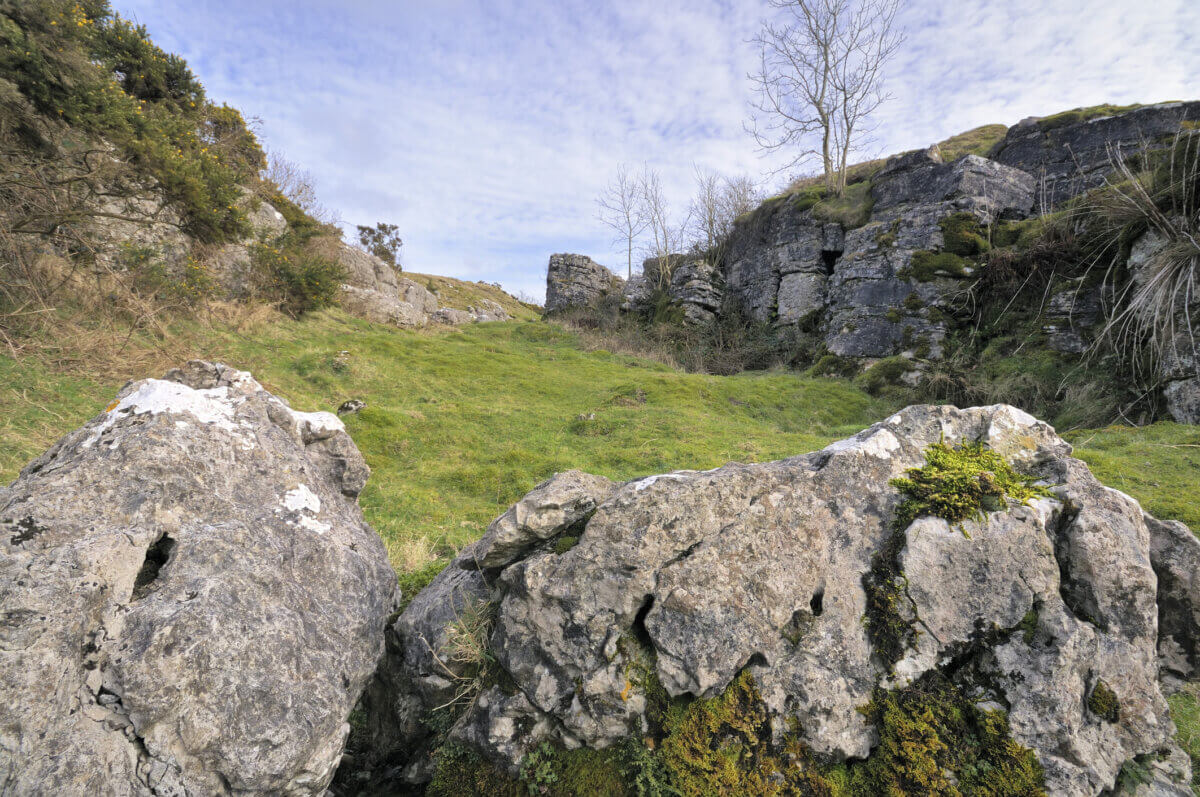
Today, the limestone plateaus of Somerset appear peaceful, giving no hint of the dark history buried beneath. Yet the story of Charterhouse Warren forces us to reconsider not just our view of Bronze Age Britain, but our understanding of human society itself. In the systematic violence inflicted on these 37 individuals, we see patterns that would be repeated throughout human history – the ritualization of killing, the dehumanization of victims, the use of violence as political theater. The shaft may have preserved these remains for 4,000 years, but the human behaviors they evidence remain disturbingly familiar.
Paper Summary
Methodology
The researchers examined 3,000 individual human bones and fragments found in a 15m-deep shaft in Somerset. They carefully documented signs of trauma, including both fractures that occurred around the time of death and cut marks made by tools. They used radiocarbon dating on eleven human bone samples to determine when the deaths occurred. They also analyzed isotopes (chemical signatures) in the teeth of 25 victims to learn about where they grew up, finding that most were local to the region. DNA analysis revealed the presence of plague bacteria (Yersinia pestis) in two of the children’s teeth.
Results Breakdown
The study found that at least 37 individuals were killed, though the actual number may have been higher since only part of the shaft was excavated. About 45% of examined skull fragments showed evidence of violent trauma. Cut marks were found on 20% of the bones, indicating systematic dismemberment. The violence appears to have occurred as a single event between 2210-2010 BCE. Most victims were local to the area, and about half were older children and adolescents.
Limitations
The main limitations include the partial excavation of the site (only about half the shaft was accessible), the fragmentary nature of many remains, and the difficulty of determining exact numbers of victims due to the disarticulated state of the bones. The motives for the violence can only be inferred from the evidence, not known with certainty.
Discussion and Takeaways
The discovery represents the largest example of organized violence known from Bronze Age Britain. The systematic nature of the killing and post-mortem treatment suggests this was a planned, ritualized event rather than random violence. The research challenges previous assumptions about the level of violence in Bronze Age society and suggests that organized mass killing has very ancient roots.
Funding and Disclosures
The research was supported by a British Academy grant and the Natural Environment Research Council’s National Environmental Isotope Facility programme. Additional funding came from a British Academy Newton International Fellowship. The study was conducted with permission from the Trustees of the Wells & Mendip Museum.


Some how I do not find this surprising. Butchering the enemy has probably been around as long as we have. That cannibalism, though, is more iffy. Even dogs won’t eat dog meat!
Since there was evidence of plague might it have been their attempt to stop the death from the plague ? Of course they did not understand its true source