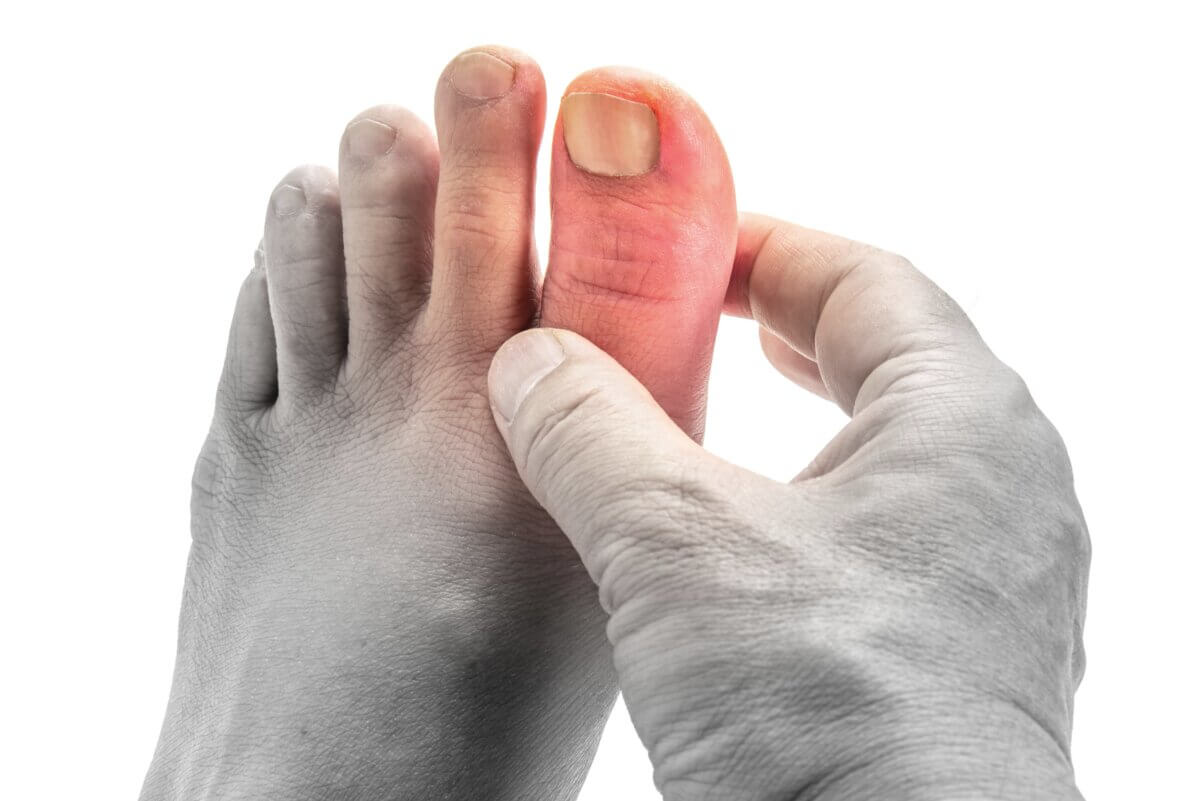
(Credit: Caito/Shutterstock)
DUNEDIN, New Zealand — Gout, a painful form of arthritis that affects millions worldwide, has long been misunderstood as primarily a result of poor lifestyle choices. However, an international study has revealed that genetics plays a far more significant role in the development of gout than previously thought. These findings challenge long-held beliefs about the condition and could fundamentally change how we approach its prevention and treatment.
The study, led by researchers from the University of Otago, analyzed the genetic information of an astounding 2.6 million people, including 120,295 individuals with gout. This makes it the largest-ever genetic study of the condition, providing unprecedented insights into its underlying causes. The findings are published in Nature Genetics.
One of the most striking findings is that inherited genetics is a major factor in determining who develops gout. The researchers identified 377 genetic regions associated with gout, including 149 that had never been linked to the condition before. This wealth of new information provides a treasure trove of potential targets for future treatments and could revolutionize our understanding of gout.
Professor Tony Merriman, the study’s senior author from the University of Otago’s Department of Microbiology and Immunology, hopes these findings will help dispel common misconceptions about gout.
“Gout is a chronic disease with a genetic basis and is not the fault of the sufferer – the myth that gout is caused by lifestyle or diet needs to be busted,” Prof. Merriman says in a media release.
This revelation is particularly important because the stigma associated with gout often prevents people from seeking proper medical care. Many sufferers, believing their condition is solely due to poor lifestyle choices, may feel ashamed and avoid seeing a doctor. This can lead to unnecessary pain and complications, as there are effective treatments available that can prevent gout attacks by lowering urate levels in the blood.

While specific dietary factors, such as consuming red meat, can trigger gout attacks in susceptible individuals, the study emphasizes that the fundamental cause of gout is more complex. It involves high urate levels, the formation of urate crystals in the joints, and an immune system primed to react to these crystals. Genetics plays a crucial role in all of these processes.
One of the most intriguing aspects of the study was the identification of numerous immune genes and pathways involved in gout. This discovery opens up new avenues for preventing gout attacks and developing more targeted treatments. For example, the researchers found a link between gout and a gene associated with interleukin-6, an immune signaling molecule. This finding suggests that existing drugs used to treat other immune-related diseases, such as rheumatoid arthritis, could potentially be repurposed to treat gout.
The study also shed light on why some people with high uric acid levels develop gout while others don’t. This has been a long-standing puzzle in the field, and the new genetic insights could lead to better ways of predicting who is most at risk for gout and how to prevent it.
Furthermore, the researchers developed a genetic risk score that could predict a person’s likelihood of developing gout with remarkable accuracy. When applied to a sample population, this score showed that people in the highest risk category had a 22.6% chance of having gout, compared to virtually no risk in the lowest category. This kind of predictive tool could be invaluable for identifying at-risk individuals and implementing preventive measures early on.
Researchers say that by identifying so many new genetic targets, their study opens up numerous possibilities for developing new gout treatments. These could potentially address not just the symptoms of gout but its underlying causes, offering hope for more effective management or even prevention of the disease.
Moreover, the findings underscore the complexity of gout. Far from being a simple condition caused by excess uric acid, gout appears to involve intricate interactions between genetics, metabolism, and the immune system. This more nuanced understanding could lead to more personalized approaches to gout treatment, tailored to an individual’s specific genetic profile.
While there’s still much work to be done to translate these genetic discoveries into practical applications, this study represents a significant leap forward in our understanding of gout. It provides a solid foundation for future research and offers hope to the millions of people worldwide who suffer from this painful condition.
Paper Summary
Methodology
This study was a genome-wide association study (GWAS), which looks for connections between specific genetic variations and particular traits or diseases. The researchers collected DNA samples from over 2.6 million people, including 120,295 with gout, from various countries and ethnic backgrounds.
They then used powerful computers to analyze millions of genetic markers across all these samples, looking for variations that were more common in people with gout than in those without. They also performed additional analyses to understand how these genetic variations might influence gout risk and to identify the specific genes and biological processes involved.
Key Results
The study identified 377 genetic regions associated with gout, including 149 new ones. They found genes involved in inflammation, immune response, and uric acid metabolism. A genetic risk score was developed that could predict gout risk with high accuracy. The researchers also found evidence linking a condition called clonal hematopoiesis (CHIP) to gout risk, and identified genes that might explain why some people with high uric acid levels develop gout while others don’t.
Study Limitations
Despite its large scale, the study had some limitations. The majority of participants (84.1%) were of European ancestry, with smaller proportions of other ethnic groups. This could limit the applicability of some findings to non-European populations. Additionally, some of the gout diagnoses were based on self-report or medication use rather than clinical examination, which could introduce some inaccuracy.
Discussion & Takeaways
This study provides the most comprehensive view of gout genetics to date. It highlights the complex nature of gout, involving not just uric acid metabolism but also inflammation and immune responses. The findings open up new avenues for research into gout prevention and treatment, and the genetic risk score could be a powerful tool for identifying at-risk individuals. The study also underscores the importance of considering factors beyond just uric acid levels in understanding and managing gout.
Funding & Disclosures
The study was supported by various funding sources, including grants from health research councils, national science foundations, and disease-specific foundations across multiple countries. Some of the researchers reported receiving funding from or having affiliations with pharmaceutical companies, but these were disclosed in the paper and did not appear to influence the study’s design or results.


Red Wheat Rice plus vitamin E stopped pain of gout.