
(Photo by Basicdog on Shutterstock)
Anxiety affects one in five Australian men at some point in their lives. But the condition remains highly stigmatized, misunderstood and underdiagnosed.
Men are around half as likely to be diagnosed with an anxiety disorder compared to women. Some feel pressure to be fearless and hide their emotions. Others simply don’t understand or have the language to describe anxiety symptoms.
This has serious consequences. Our latest research shows young men are turning to ambulance services when their symptoms become overwhelming – some even think they’re having a heart attack.
So why do so many men wait until they need to call emergency services, rather than seek support earlier from a doctor or psychologist? And what prompts them to call? We reviewed the paramedic notes of 694 men aged 15 to 25 years in Victoria, Australia, to find out.
Young Men Haven’t Seen Others Asking For Help
Boys are raised to value courage, strength and self-assurance, and to suppress vulnerability.
When parents encourage boys to “face their fears,” rather than offering emotional comfort and tenderness, anxiety gets positioned in conflict with masculinity. This leads to a disjuncture between the support young men are met with (and come to expect) from others, and the support they may want or need.
This also means boys grow up believing their male role models – dads, brothers, grandads, coaches – don’t get anxious, deterring boys and men from seeking help. As a result, anxiety goes undiagnosed and opportunities for early intervention are missed.
Recently, we have seen positive shifts challenging restrictive masculine stereotypes. This has improved awareness surrounding men’s depression – opening up conversations, normalizing help-seeking and leading to the development of men’s mental health programs and resources.
However, men’s anxiety remains in the shadows. When anxiety is talked about, it’s not with the same weight or concern as depression. This is despite men’s anxiety having harmful health impacts including turning to alcohol and drugs to cope, and increasing the risk of male suicide.
What Does Anxiety Look Like?
When men are encouraged to talk about anxiety, they describe various challenges including repetitive worries, feeling out-of-control and intense physical symptoms. This includes a high heart rate, shortness of breath, body pains, tremors and headaches.
Jack Steele, a prominent Australian personality and one half of the Inspired Unemployed, opened up about his anxiety difficulties on The Imperfects Podcast last year saying:
I didn’t know what anxiety was. I thought I was the opposite of anxiety.
The way I explain it, it’s like […] your whole body just shuts down. My throat starts closing up and my whole body just goes numb. […] It feels like you’re just so alone. You feel like no-one can help you.
You genuinely think the world’s ending – like there’s no out.
These physical symptoms are common in men but can be frequently dismissed rather than recognized as anxiety. Our research has found that, when left unaddressed, these symptoms typically worsen and arise in more and more contexts.
Why Do Anxious Men Call Ambulances?
Our new study investigated the consequences of men’s anxiety going unaddressed.
First, we used data from the National Ambulance Surveillance System to identify and describe the types of anxiety young men experience. We then looked at the characteristics and contexts of young men’s anxiety presentations to ambulance services.
Overwhelmed and lacking support, many young men turn to ambulances in crisis. Anxiety now accounts for 10% of male ambulance attendances for mental health concerns, surpassing depression and psychosis.
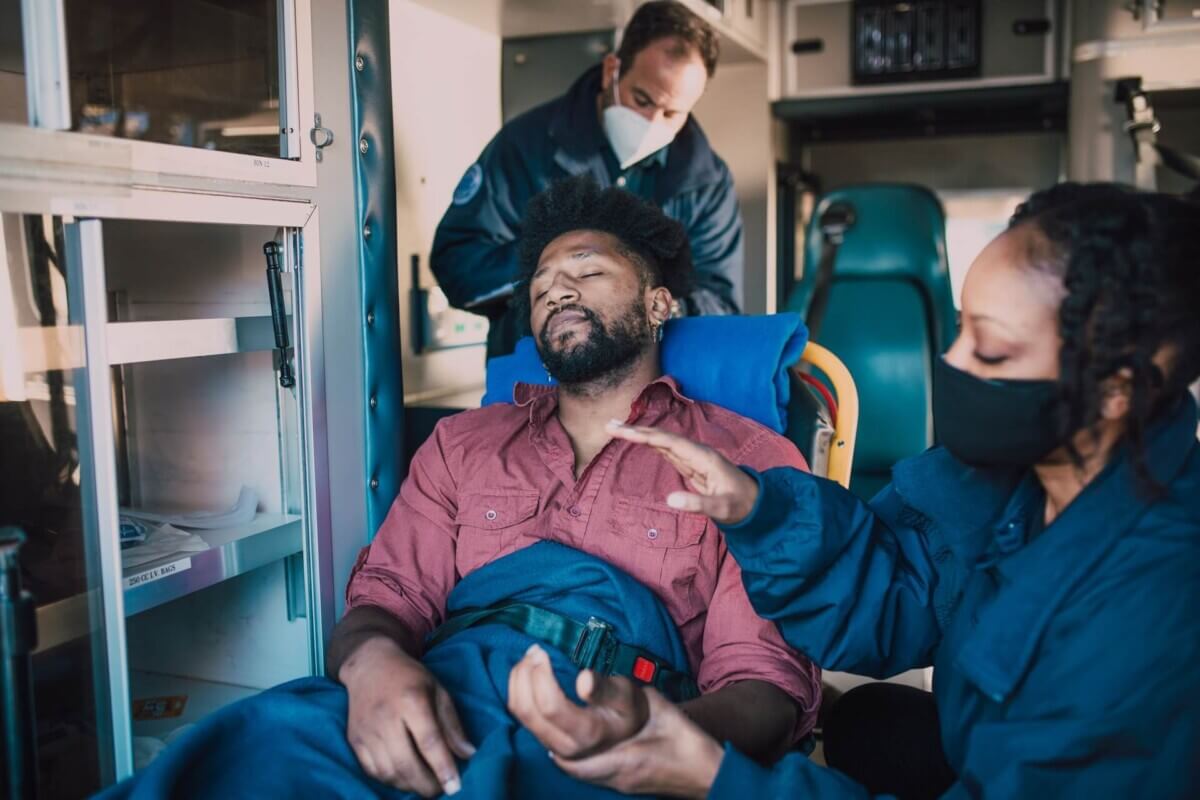
While every presentation is different, our study identified three common presentations among young men:
1. Sudden onset of intense bodily symptoms resembling life-threatening physical health conditions such as heart attacks.
Twenty-two-year-old Joshua, for example, whose case files we reviewed as part of our study, was on a tram home from work when he experienced sudden numbness in his hands and feet. A bystander saw he was having muscle spasms in his hands. Joshua was alert but extremely anxious and asked the bystander for help.
2. Severe anxiety triggered or worsened by substance use.
Adam, a 21-year-old man, consumed a substantial amount of diazepam (Valium) while driving home, after having an anxiety attack at work. Adam reached out to paramedics because he was concerned his anxiety symptoms hadn’t dissipated, and was worried he may have taken too much diazepam.
3. Mental health deterioration with self-harm or suicidal thoughts, often tied to situational stressors such as unstable housing, unemployment, financial difficulties and relationship strain.
Leo, aged 25, had been increasingly anxious for the past three days. Leo’s parents called an ambulance after he told them he wanted to kill himself. Leo told paramedics on arrival that he still felt suicidal and had been getting worse over the past three months.
Directing Resources Where They’re Needed
Young men’s anxiety presentations are time- and resource-intensive for paramedics, many of whom feel poorly equipped to respond effectively. After ruling out physical causes, paramedic support is typically limited to reassurance and breathing techniques.
Most young men are then instructed to follow up with GPs, psychologists or other health professionals in the general community.
But taking that next step involves overcoming the stigma associated with help-seeking, the shame of having called an ambulance and deep tensions between anxiety and what it means to be a man.
This means many young men slip through the cracks. And without ongoing mental health support, they face high risks of presenting again to emergency services with increasingly severe mental health symptoms.
To address this, we need to:
- ramp up conversations about men’s anxiety and take their experiences seriously
- develop an awareness campaign about men’s anxiety. Awareness campaigns have successfully dismantled stigma and shed light on men’s depression and suicide
- improve diagnosis of men’s anxiety disorders by up-skilling and training clinicians to detect anxiety and the unique and distinct constellations of symptoms in men
- create accessible pathways to early support through digital psychological education resources, focused on improving awareness and literacy surrounding men’s anxiety experiences.
Krista Fisher, Research Fellow, Centre for Youth Mental Health, The University of Melbourne. She received funding from the Men in Mind scholarship through the global men’s health charity, Movember.
Dan Lubman, Executive Clinical Director, Turning Point & Director of Monash Addiction Research Centre, Monash University. He is supported by a NHMRC Leadership Fellowship.
Simon Rice, Associate Professor & Clinical Psychologist, Mental Health in Elite Sports, The University of Melbourne. He received funding from the National Health and Medical Research Council.
Zac Seidler, Associate Professor, Centre for Youth Mental Health, The University of Melbourne. He has been awarded an NHMRC Investigator Grant. He is also the Global Director of Research with the Movember Institute of Men’s Health. He advises government on men’s health, masculinities, violence prevention and social media policy.
This article is republished from The Conversation under a Creative Commons license. Read the original article.


This is a real issue and is actually quite prevalent within the US. Unfortunately, stigma for common mental health problems like anxiety disorders remain. More information about this topic is provided in our protocol paper, Comparing the effectiveness of existing anxiety treatment options among patients evaluated for chest pain and anxiety in the emergency department setting study protocol for the PACER pragmatic randomized comparative effectiveness trial.
https://www.sciencedirect.com/science/article/abs/pii/S1551714422003469?via%3Dihub
The product of decades of emasculation.
they thought they had “shellshock’. Read a book.
Or we could treat causes instead of symptoms and teach emotional resilience.
It is not anxiety. It’s heart damage from mRNA clotshots. Obvious misdirection paid for by big pharma.
Ask the 18 year olds who had to carry a rifle on the front lines what they thought about “anxiety”