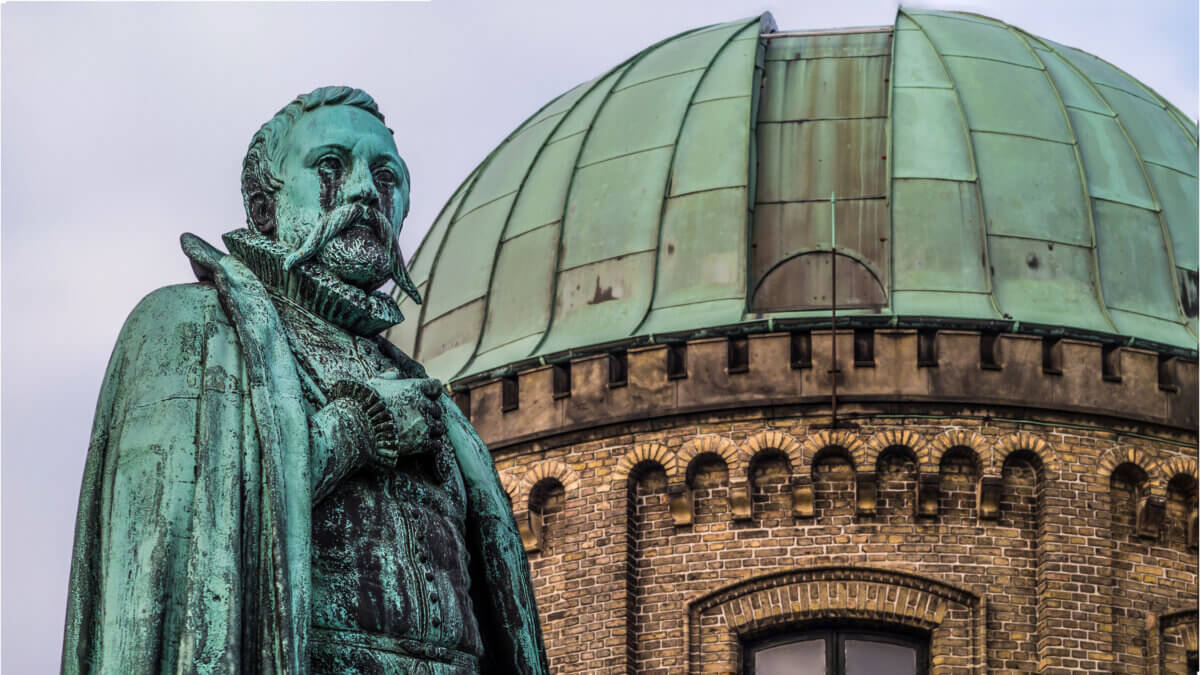
(Credit: Asmus Koefoed/Shutterstock)
ODENSE, Denmark — In the annals of scientific history, few figures loom as large as Tycho Brahe, the Danish nobleman whose detailed observations of the stars above laid the foundation for modern astronomy. However, while Brahe’s celestial pursuits are well-documented, his earthly experiments in alchemy have long remained shrouded in mystery. Now, a groundbreaking study is shedding light on Brahe’s early experiments, offering a rare glimpse into the laboratory work of one of history’s most renowned scientists.
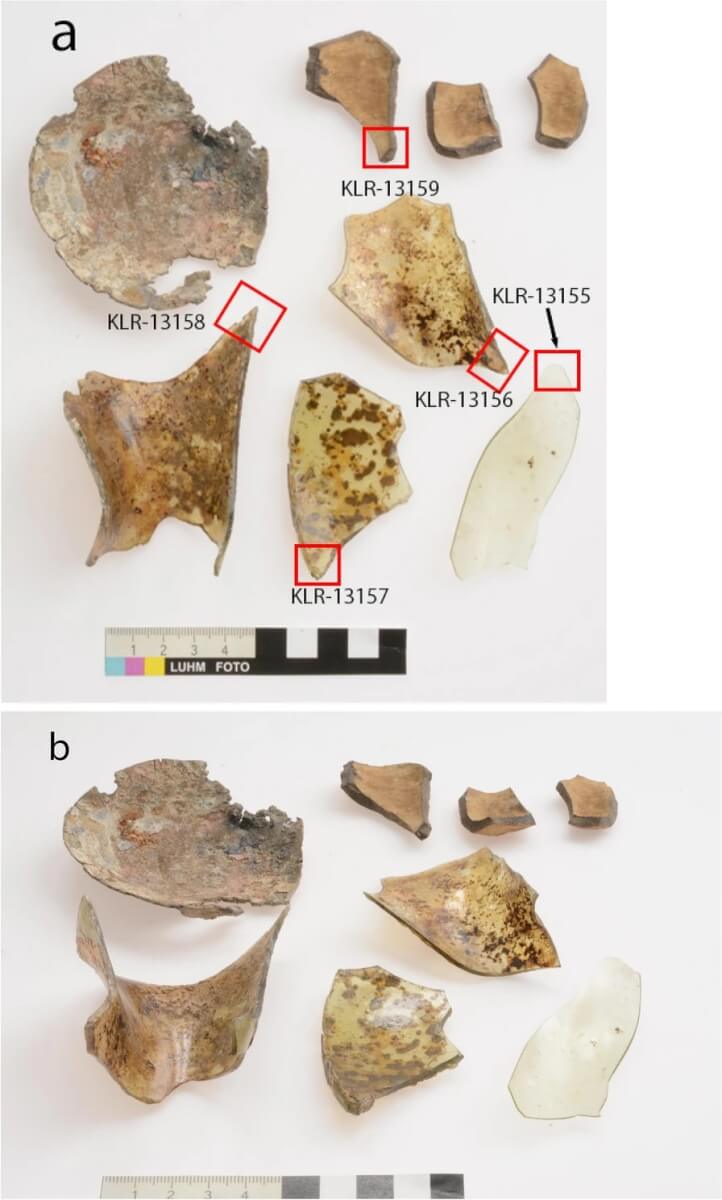
Researchers from the University of Southern Denmark and the National Museum of Denmark analyzed glass and ceramic fragments excavated from the ruins of Brahe’s castle, Uraniborg, on the island of Ven (now part of Sweden). Built in the 1580s, Uraniborg was not just an astronomical observatory but also housed a state-of-the-art alchemical laboratory where Brahe conducted experiments in chemistry and medicine-making.
Using advanced analytical techniques, the team examined the chemical composition of these centuries-old fragments, searching for traces of the substances Brahe and his assistants once worked with. Their findings, published in the journal Heritage Science, provide the first experimental evidence of the alchemical work conducted at Uraniborg between 1580 and 1597.
The researchers detected elevated levels of several elements on the surfaces of the glass and ceramic shards, including copper, antimony, gold, and mercury. Intriguingly, these elements align with historical accounts of Brahe’s most famous medicinal creation, the “Medicamenta tria” or “three medicines.” This elixir, shrouded in secrecy during Brahe’s lifetime, was said to be a potent remedy for various ailments, from epilepsy to skin diseases.
“Most intriguing are the elements found in higher concentrations than expected—indicating enrichment and providing insight into the substances used in Tycho Brahe’s alchemical laboratory,” says Kaare Lund Rasmussen, Professor Emeritus and an expert in archaeometry from the University of Southern Denmark, in a media release.
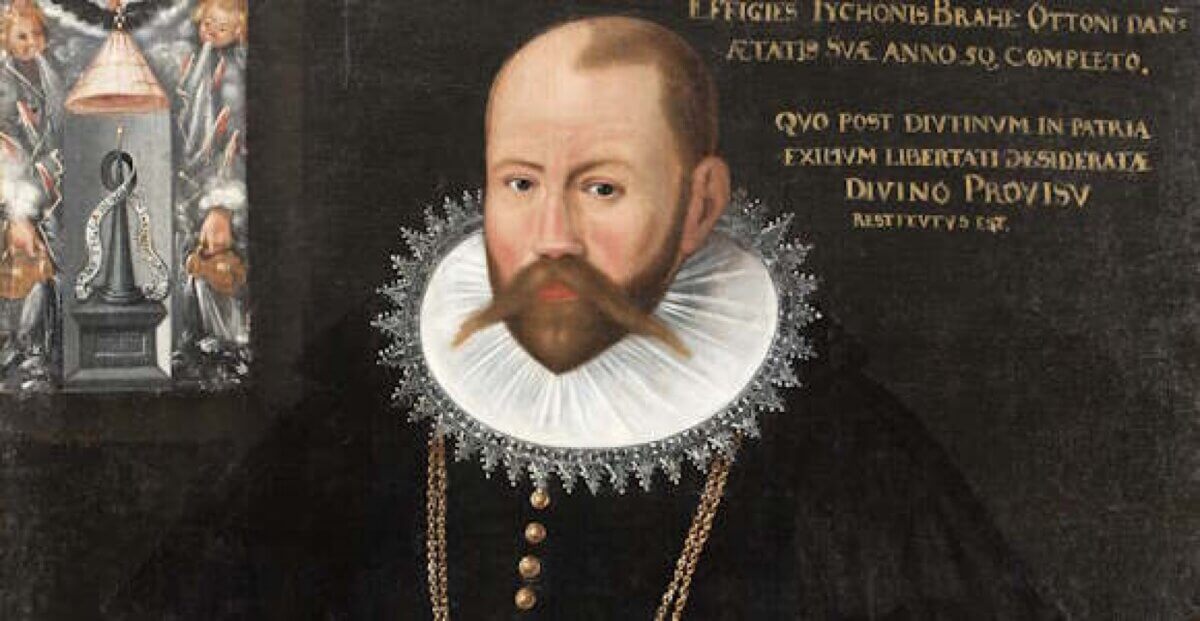
While alchemy is often associated with the quest to turn base metals into gold, Brahe’s focus appears to have been more practical. Like many educated people of his time, he subscribed to a worldview that saw connections between celestial bodies, earthly elements, and human health. Brahe believed that by understanding these relationships, one could create powerful medicines to heal the body.
The presence of gold in the samples is particularly noteworthy. While Brahe explicitly distanced himself from attempts to create gold artificially, he did use the precious metal in some of his medicinal preparations. This finding challenges previous assumptions that the elevated levels of gold found in Brahe’s hair and bone samples were solely due to a luxurious lifestyle. Instead, it suggests that Brahe may have ingested gold as part of his own medical treatments.
Perhaps most surprisingly, the researchers found traces of tungsten on one of the glass shards. This element wasn’t isolated or named until long after Brahe’s time, raising intriguing questions about the nature of the minerals and materials he worked with.
“Tungsten is very mysterious. Tungsten had not even been described at that time, so what should we infer from its presence on a shard from Tycho Brahe’s alchemy workshop?” Lund Rasmussen continues.
These discoveries offer a tantalizing glimpse into the intersection of astronomy and alchemy in the Renaissance mind. For Brahe, studying the heavens and manipulating earthly matter were two sides of the same coin – both were attempts to unlock the secrets of nature and harness them for human benefit.
While we may never know the exact formulas of Brahe’s elixirs or the full extent of his alchemical experiments, this research brings us closer to understanding the work of a true Renaissance polymath. It reminds us that the boundaries between disciplines were far more fluid in the past and that even the greatest scientists of history were products of their time, blending cutting-edge observation with beliefs and practices that may seem strange to modern eyes.
“It may seem strange that Tycho Brahe was involved in both astronomy and alchemy, but when one understands his worldview, it makes sense. He believed that there were obvious connections between the heavenly bodies, earthly substances, and the body’s organs. Thus, the Sun, gold, and the heart were connected, and the same applied to the Moon, silver, and the brain; Jupiter, tin, and the liver; Venus, copper, and the kidneys; Saturn, lead, and the spleen; Mars, iron, and the gallbladder; and Mercury, mercury, and the lungs. Minerals and gemstones could also be linked to this system, so emeralds, for example, belonged to Mercury,” explains study co-author Poul Grinder-Hansen.
Paper Summary
Methodology
The researchers used a technique called Laser Ablation Inductively Coupled Plasma Mass Spectrometry (LA-ICP-MS) to analyze the chemical composition of the glass and ceramic fragments. This method involves using a laser to vaporize tiny amounts of material from the sample surface. The vaporized material is then analyzed using a mass spectrometer, which can detect and measure very small quantities of different elements. By scanning across the surface of the fragments, the researchers could map out where different elements were concentrated.
Key Results
The analysis revealed elevated levels of several elements on the surfaces of the fragments, including nickel, copper, zinc, tin, antimony, tungsten, gold, mercury, and lead. Four of these elements – copper, antimony, gold, and mercury – are known to have been used in Brahe’s “Medicamenta tria” preparations. The presence of tungsten was unexpected and particularly intriguing, as this element wasn’t isolated until long after Brahe’s time.
Study Limitations
The study was limited by the small number of samples available for analysis – only four glass shards and one ceramic shard. This means that the findings may not represent the full range of materials and elements used in Brahe’s laboratory. Additionally, the researchers note that some elements that might have been present originally could have been lost over time due to environmental factors.
Discussion & Takeaways
The study provides the first experimental evidence of the types of materials Brahe worked with in his alchemical laboratory. The findings align with historical accounts of Brahe’s medicinal preparations and challenge some previous assumptions about his practices. For example, the presence of gold in the samples suggests that the elevated levels of gold found in Brahe’s remains may be due to his own medical treatments rather than just a luxurious lifestyle.
The research also highlights the interconnected nature of different scientific disciplines in the Renaissance period. For Brahe, astronomy and alchemy were closely linked, both being ways to understand and manipulate nature. This study helps to paint a more complete picture of Brahe as a Renaissance polymath, working across what we now consider separate fields of study.
Finally, the unexpected presence of tungsten raises intriguing questions about the materials available to alchemists of the time and the potential for discoveries that were ahead of their time. This finding underscores the value of applying modern analytical techniques to historical artifacts, as they can reveal information that was unknown or unrecognized in the past.


