
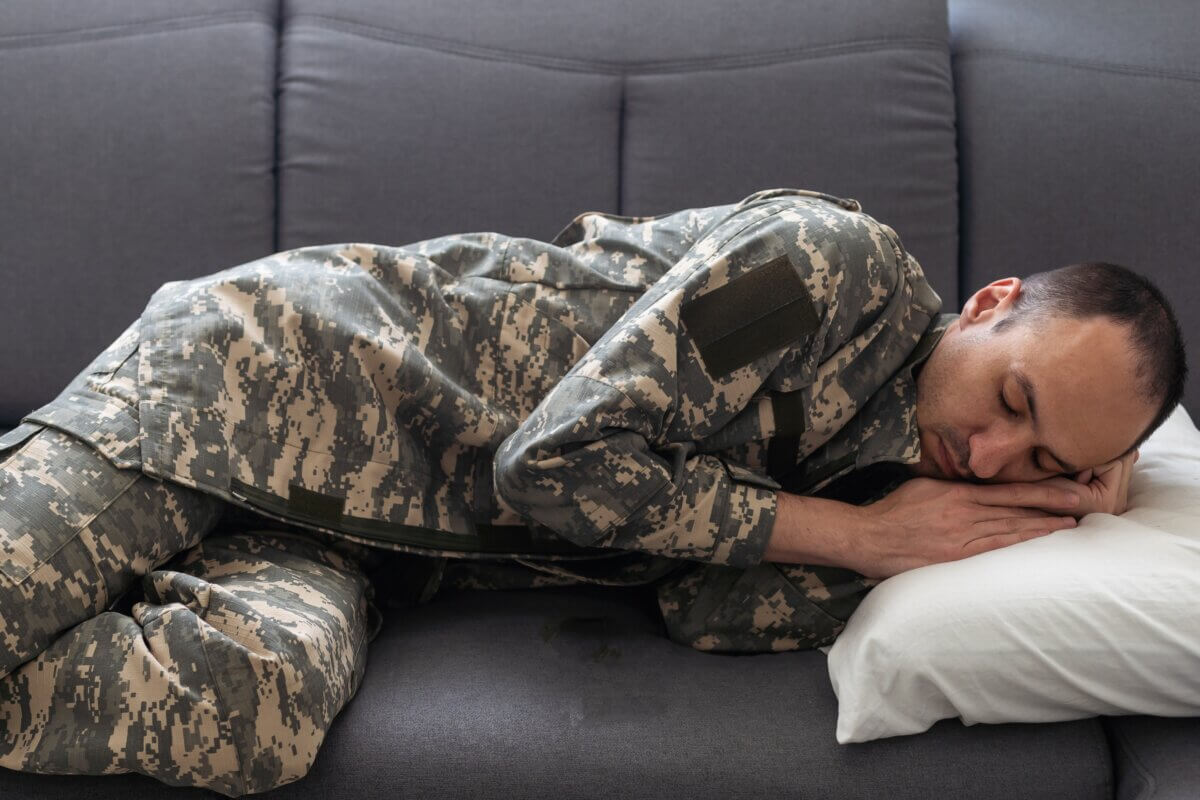
(© Prostock-studio - stock.adobe.com)
TUCSON, Ariz. — Imagine being able to “turn off” your racing thoughts with a 40-second burst of magnetic pulses. For people plagued by chronic insomnia, this might soon become a reality.
Researchers at the University of Arizona are pioneering a groundbreaking approach to combat sleeplessness among military personnel, targeting a persistent problem that affects an astounding 85% of service members. With a $3 million grant from the Department of Defense, Dr. William “Scott” Killgore and his team are developing a non-drug intervention that could transform how we treat sleep disorders.
The core of the problem is frustratingly familiar to anyone who has ever struggled to fall asleep: an inability to quiet the mind.
“Many people with insomnia describe being unable to ‘turn off’ their thoughts when trying to fall asleep,” explains Killgore in a university release.
The culprit? A brain network called the default mode network (DMN), which becomes hyperactive during rest, churning out a constant stream of internal dialogue, worries, and ruminations.
The solution is elegantly simple: a handheld device that uses targeted magnetic pulses to temporarily disrupt this overactive brain network. In just 40 seconds, the device delivers rapid, repetitive magnetic bursts to specific brain regions, effectively “silencing” the mental chatter that keeps people awake.
Preliminary studies have already shown promise. Participants experienced improved sleep after just a single session of what researchers call “continuous theta burst stimulation.” Now, the team is launching a more comprehensive three-year study involving 120 participants with chronic insomnia.
The research goes beyond just helping military personnel. As department chair Dr. Jordan Karp notes, this could be “an important discovery for sleep science” that offers “a tangible, drug-free treatment option for those grappling with chronic insomnia.”
What makes this approach particularly compelling is its noninvasive nature. Unlike sleeping pills that can have significant side-effects, this method uses a brief, well-tolerated magnetic stimulation. Participants will be monitored using advanced sleep trackers and portable brain wave monitors to assess both short-term and sustained improvements.
Two active-duty military consultants with personal experience of sleep disorders are helping shape the study, ensuring the research directly addresses the needs of service members. The goal is not just to provide temporary relief but to develop a sustainable solution that can be integrated into military healthcare.
As the study progresses, it represents more than just a potential treatment — it’s a beacon of hope for those who have struggled with sleepless nights, offering a glimpse of a future where a quick, precise intervention could mean the difference between restlessness and restorative sleep.


Struggled with not being able to go back to sleep. Bought ome gummies and problem solved
Hello. What are these, please?
Where and when will the people know how and when this is on the open market? I have someone in my family that my need this, and could have used this for some time.
Things like this already do exist. Several of my family members use a handheld device for both anxiety and insomnia. it uses electrical impulses – a bit like.a TENS machine – and you can control the intensity of the impulses. Do a search for Calm Carry to find them. There are cheaper versions already too, but I can only speak for the Calm Carry ones as that’s what we’ve used.